
Iceland (with a baby)
August 2025
Iceland’s capital and gateway city, Reykjavik, is a short 6 hour flight away from Minneapolis-St Paul. We didn’t hesitate to pick this safe and baby-friendly destination as our first international trip with the little one. We chose not to rent a campervan or attempt to drive the entire 800+ miles of the Ring Road on this trip, instead opting to sleep in cabins and guesthouses and going at our own slower pace.
We spent just over a week in Iceland and we saw about a quarter of the island country. We fell in love with its forbidding beauty and decided we will be back when our daughter can fully participate in and enjoy the adventure activities!
At the end of August autumn was already in the air. And sulfur, which was the first thing we noticed upon landing and deplaning in Keflavik International airport. To visit Iceland means to be immersed in its geothermal activity, and the characteristic smell that goes along with that.
After making the Atlantic crossing we arrived in the early morning. Fortified with coffee and skyr, the thick and tangy local yogurt, we picked up our rental car and were on our way.
The Golden Circle
For the first part of our Icelandic itinerary we chose to stay in the Selfoss area, which allowed us easy access to the attractions of the Golden Circle, and to our next destination, Vik, further south.
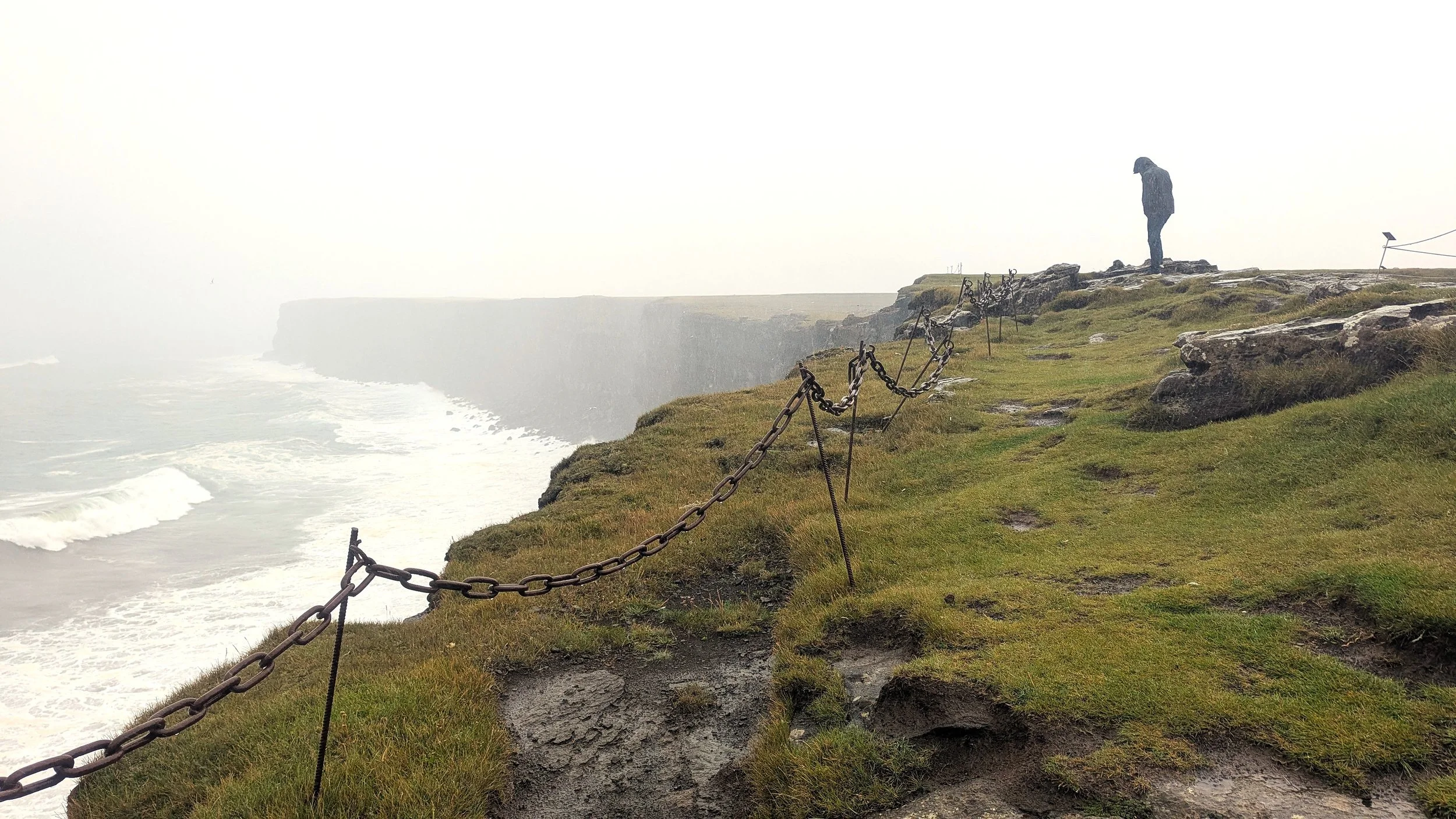
Our first taste of Iceland
We took the scenic route from the airport which goes through the fresh lava fields of the Reykjanes peninsula and skirts along the southern coast. When we got to Selfoss we picked up some soup and bread from a local cafe and drove just outside of town to check into our first accommodations, Bitra Guesthouse. We spent two nights there and absolutely loved the place. Not only did they allow us to check in early, provided a crib with soft bedding, but also upgraded us to a larger room at no extra charge. Immaculately clean, full of functional amenities, and offering a delicious Icelandic breakfast in the morning, this guesthouse was perfect for us.
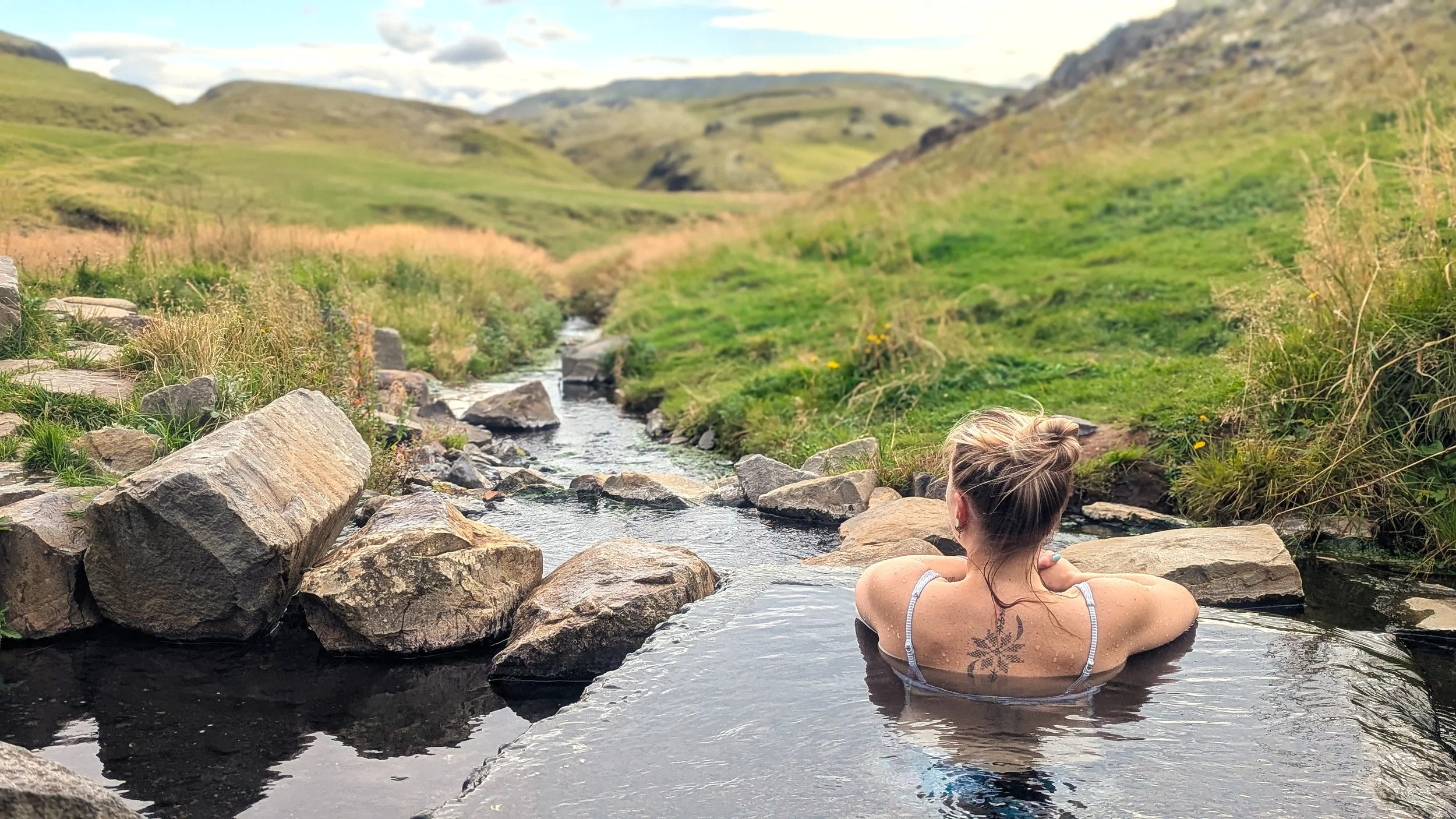
After all three of us took a leisurely nap, we decided to spend the afternoon soaking in the warm mineral water. Spoilt for choice in this active geothermal region we settled on the small rustic Hrunalaug hot spring located just outside the village Flúðir. We got lucky and had the place almost to ourselves, which was amazing as there are only three tiny pools. The baby supervised from her car seat as we soaked and felt the stress of the travel and the airport dust melt away.
After a decent night’s rest we set off for Thingvellir National Park. Originally situated at the rift of the Northamerican and the Eurasian tectonic plates (we were told the current location of the rift is somewhere underneath the lake), this place is, perhaps, the most important in Icelandic history. A UNESCO World Heritage Site, Thingvellir was a continuous place of assembly for Icelandic parliament for over 800 years, making it one of the oldest in the world.
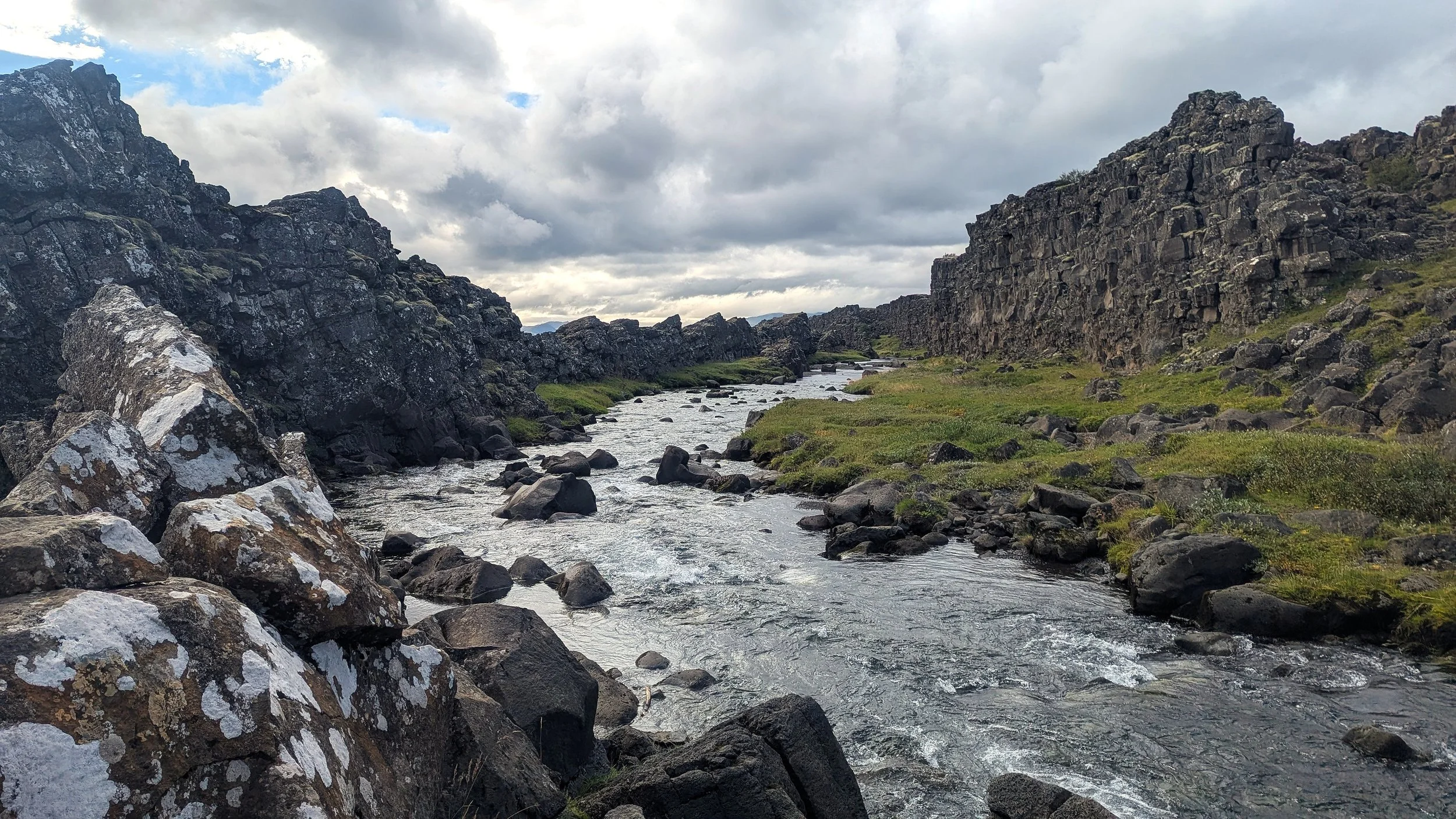
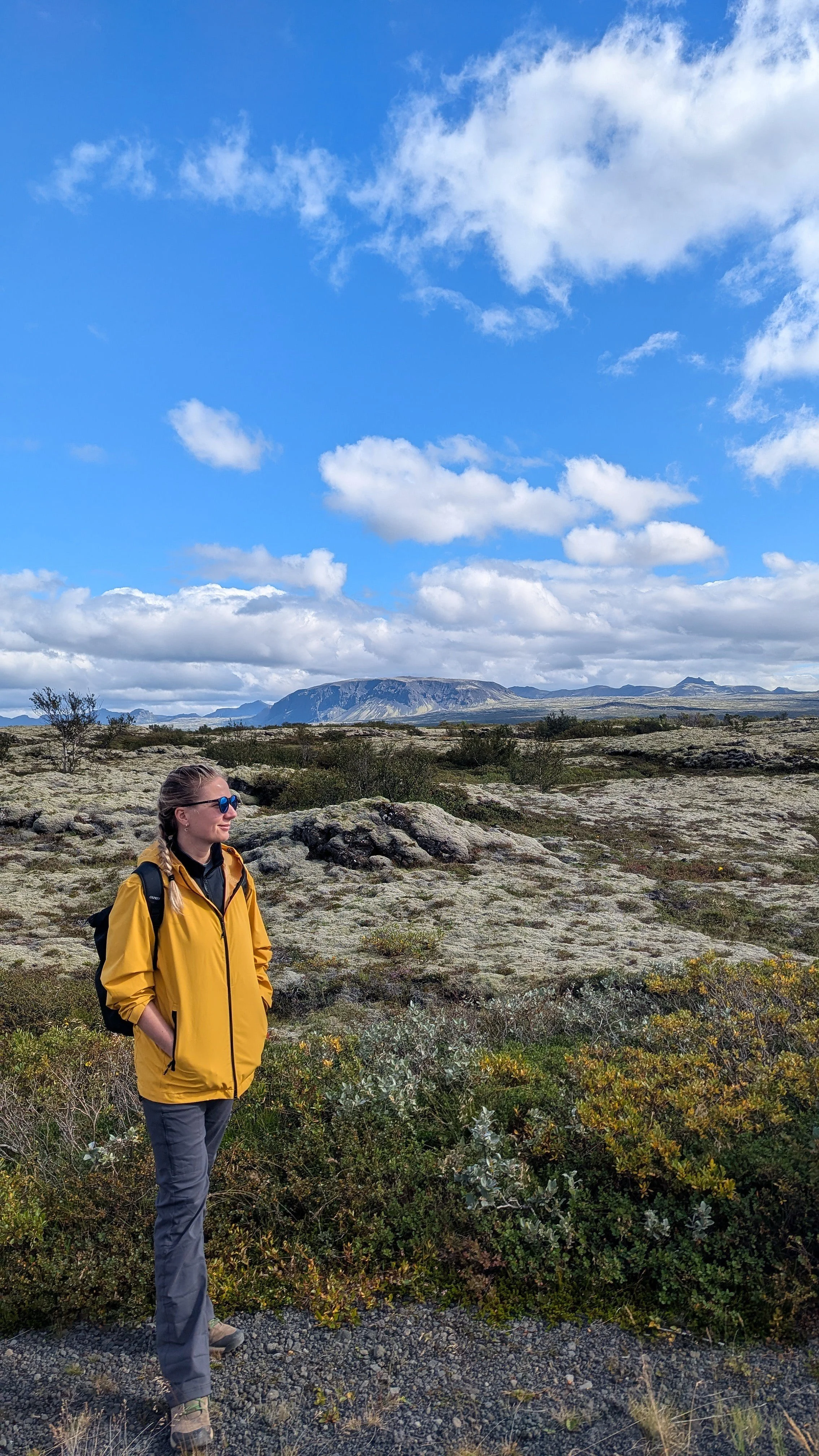
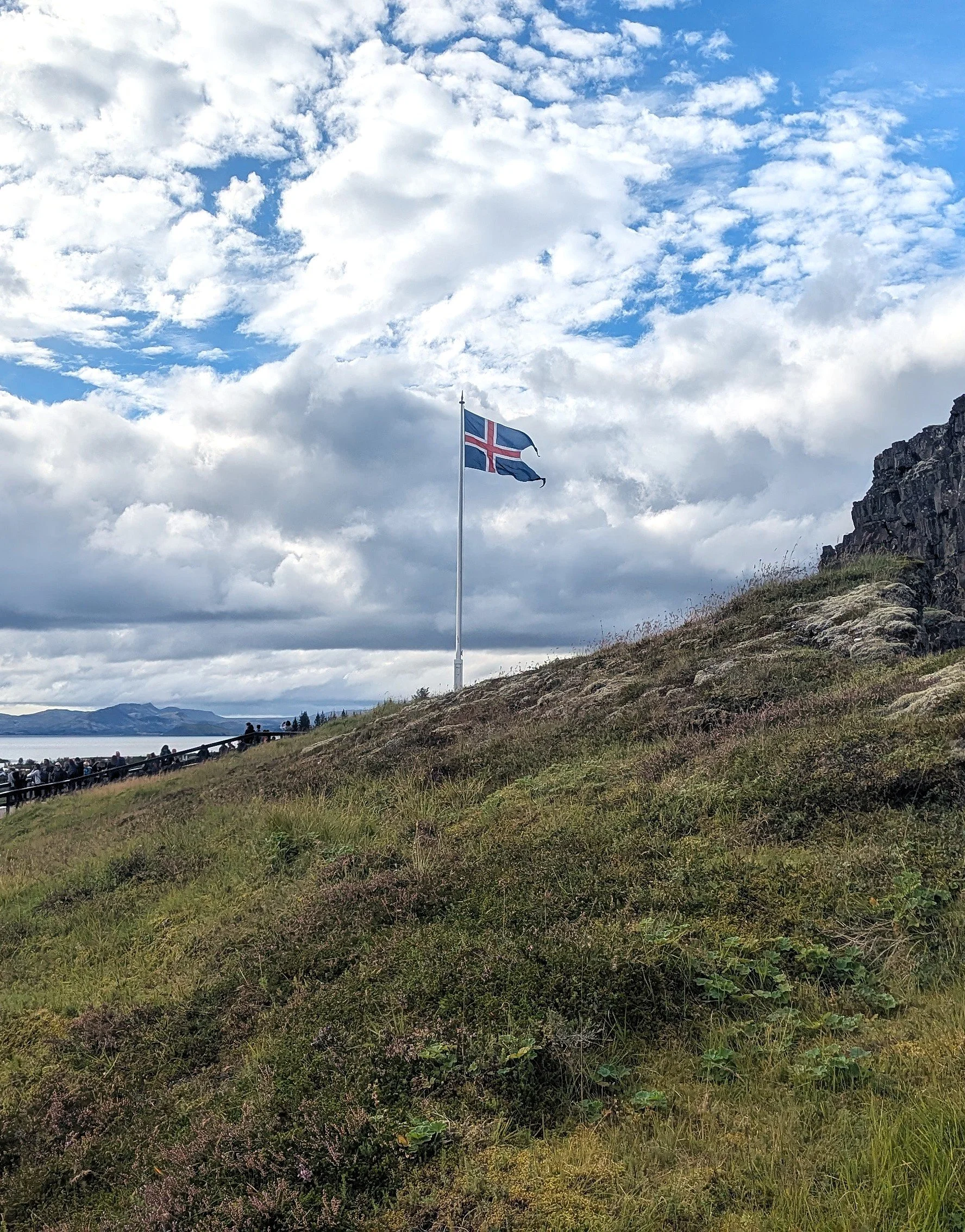
The park is stunning and has a powerful energy to it, with the moody moors and glacial hills in the background. The Silfra fissure filled with ice cold glacial melt water is located inside the park, where dry suit snorkeling and diving is a popular adventure.
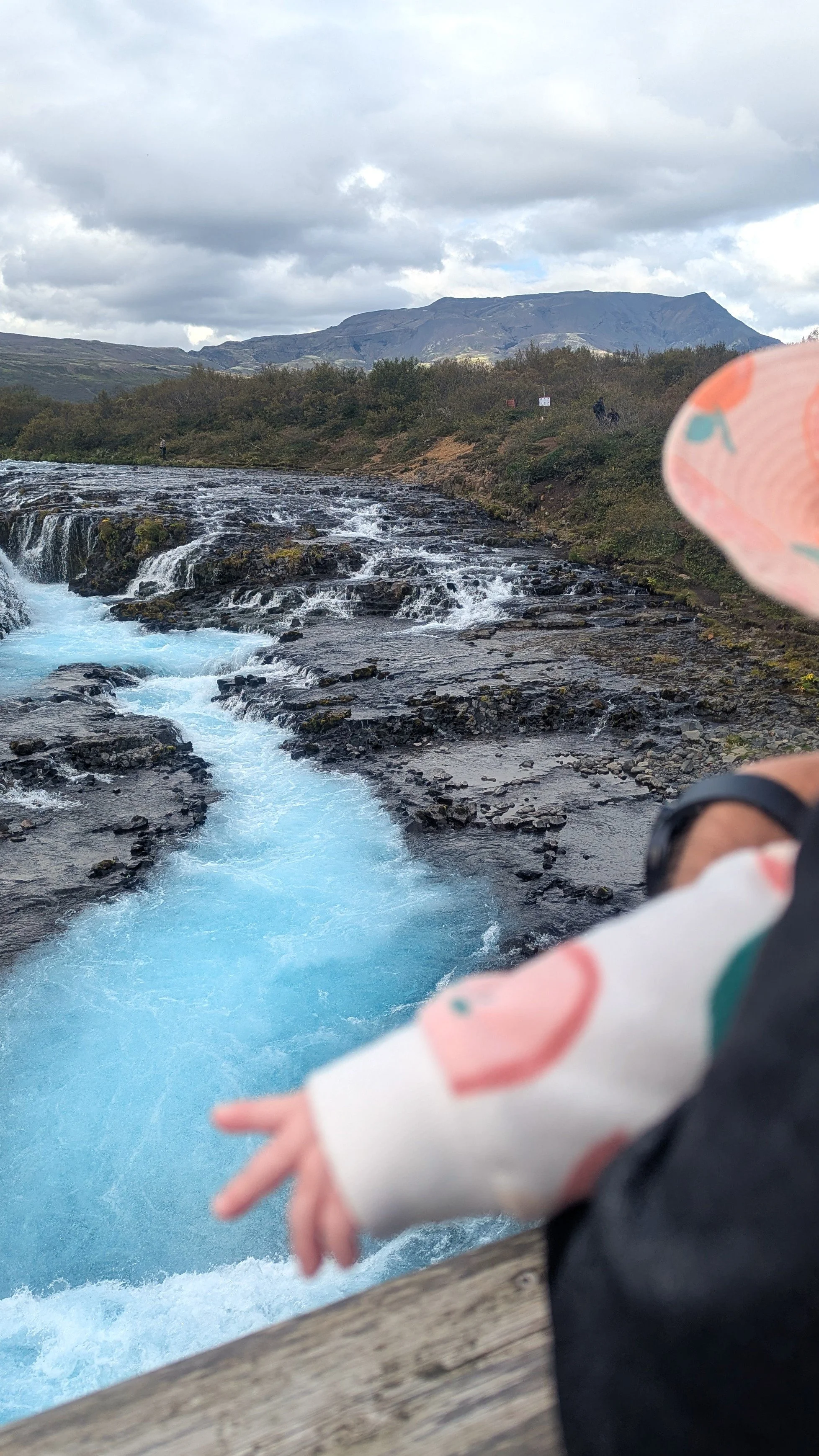
From Thingvellir we drove to Bruarfoss, located down a gravel road from highway 37 on the way to Geysir. Just like at Thingvellir and most of the rest of the places we visited, we paid for parking using the convenient and fast Parka app. This stop and a short walk to the falls was well worth it - the rapidly churning water of the most unreal shade of blue is absolutely stunning.
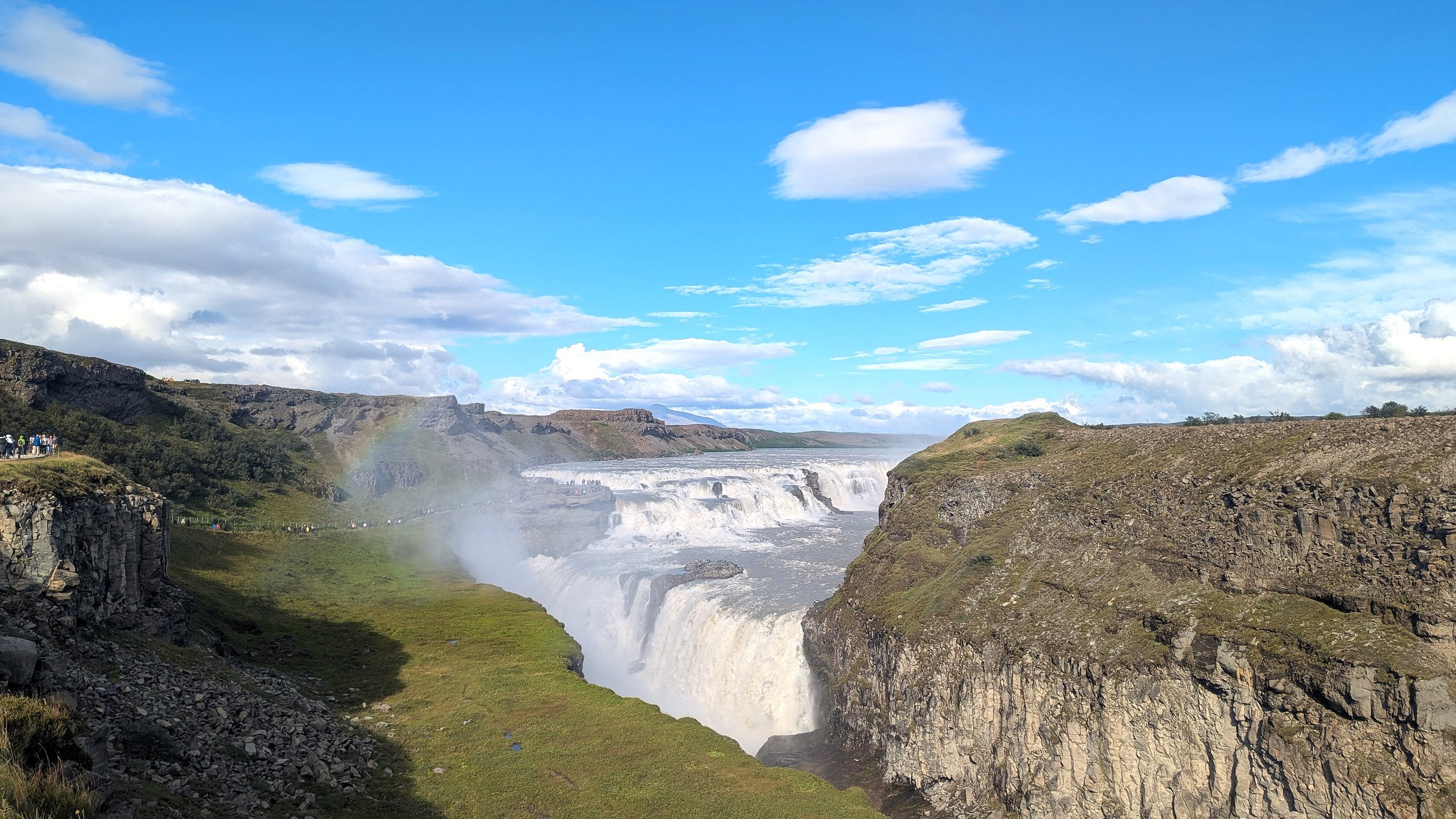
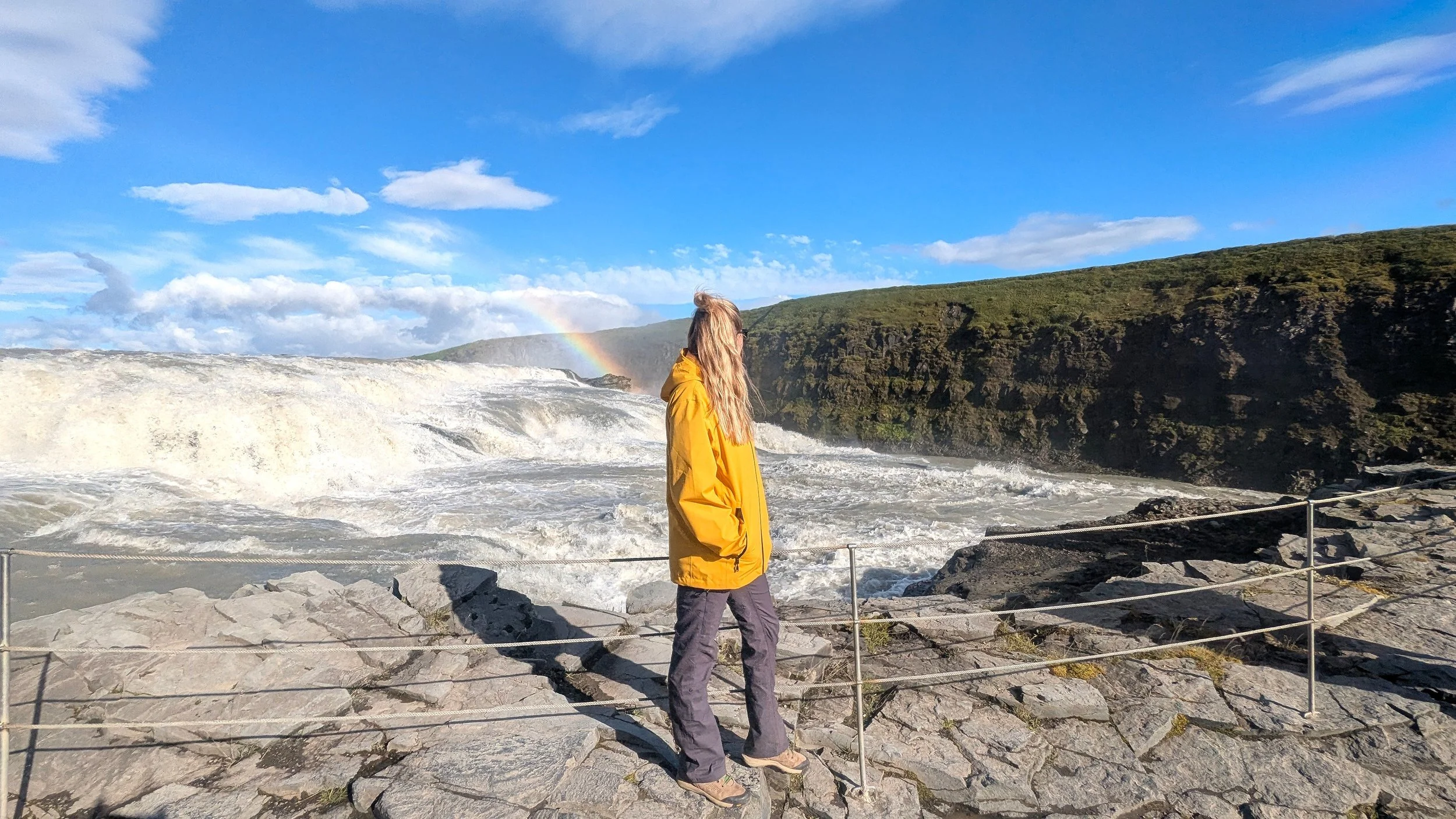
For our final stop of the day, we arrived at Gullfoss. Blessed with sunshine and blue skies, we were absolutely blown away by this mighty waterfall and the beautiful basalt canyon it plunges into. We parked at the lower lot since we had the stroller, but stairs connect the upper lot, the building with a bathroom, a gift shop, and a cafe, with the falls below.
Road to Vik
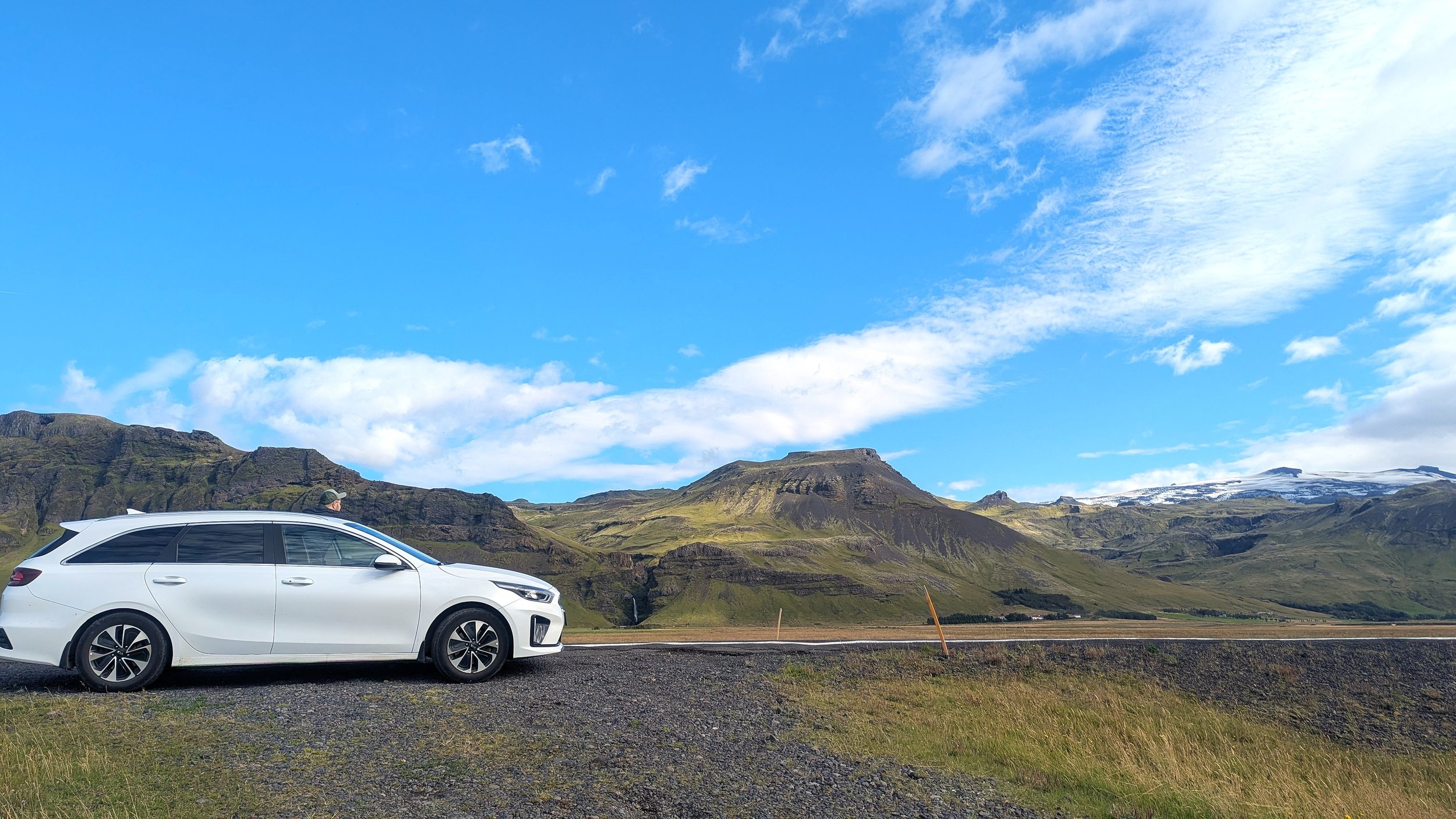
The following morning we checked out and set off further down the Ring road, towards Vik. The views along the way are stunning, and there are many pull offs to take advantage of.
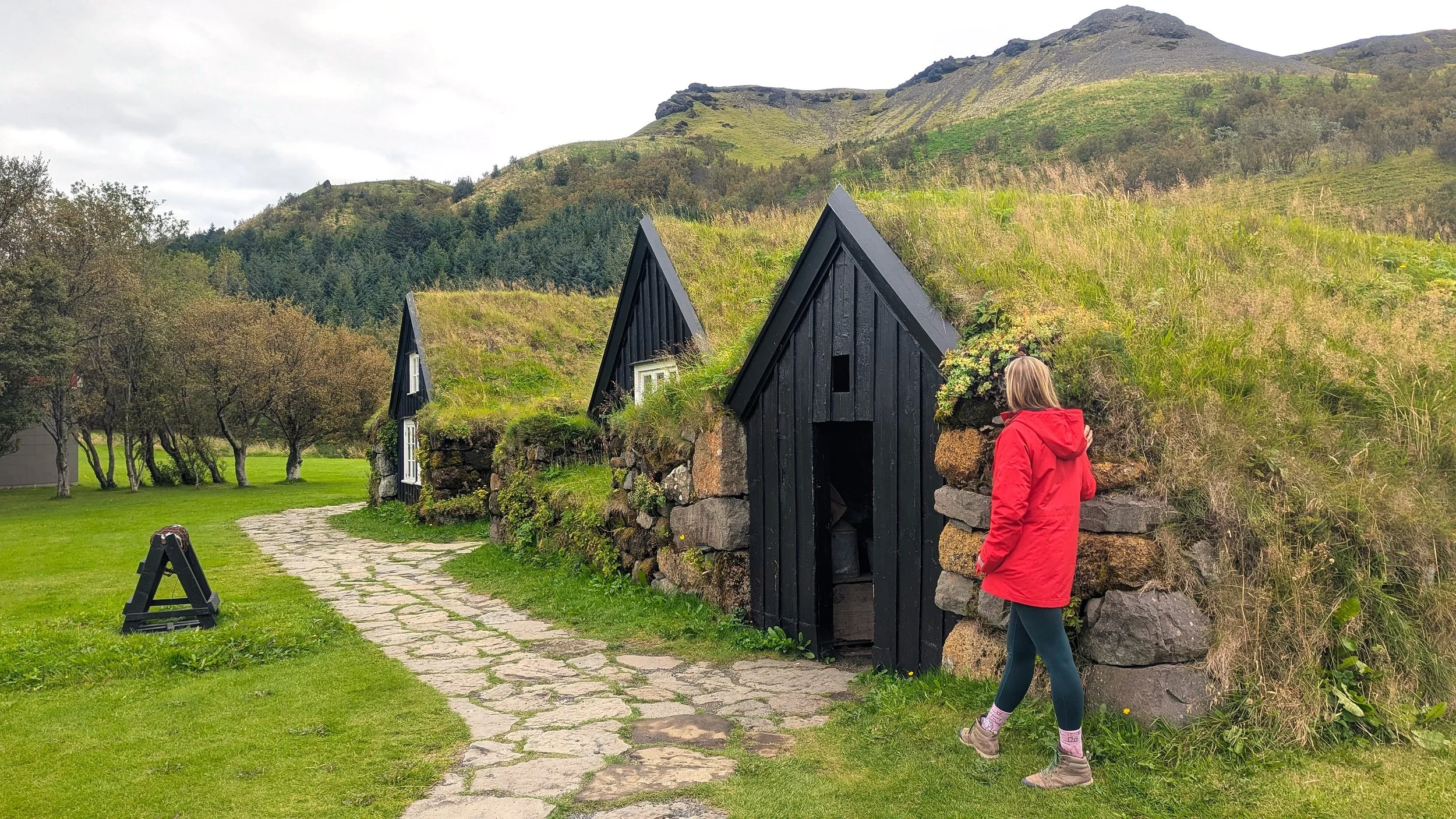
We broke up the drive and stopped at Skogar. Mostly famous for the mighty Skogafoss, the village features a well curated Open Air museum with many examples of traditional Icelandic architecture. There is a turfhouse and a wooden house built in the badstofa style, with one communal multipurpose room sitting above the sheep and cow shed. A testament to just how recent Iceland’s progress is is the fact that one of the houses on display was lived in until the 1980s.
The museum also has a cafe, so we got some coffee and let the baby crawl around the grass for a bit. On our way out of Skogar we picked up some deliciously fresh fish and chips from Mia’s Country Van.
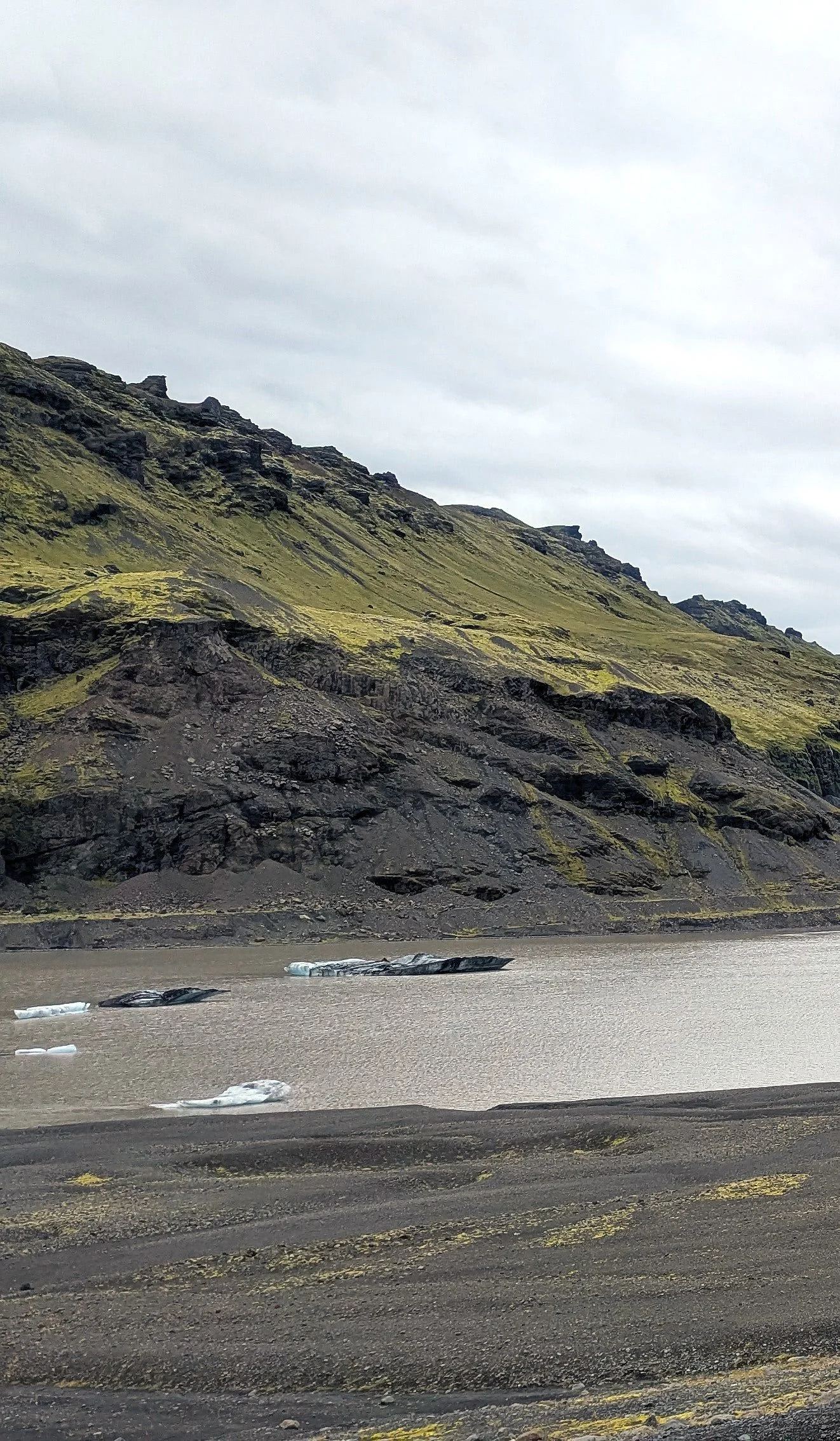
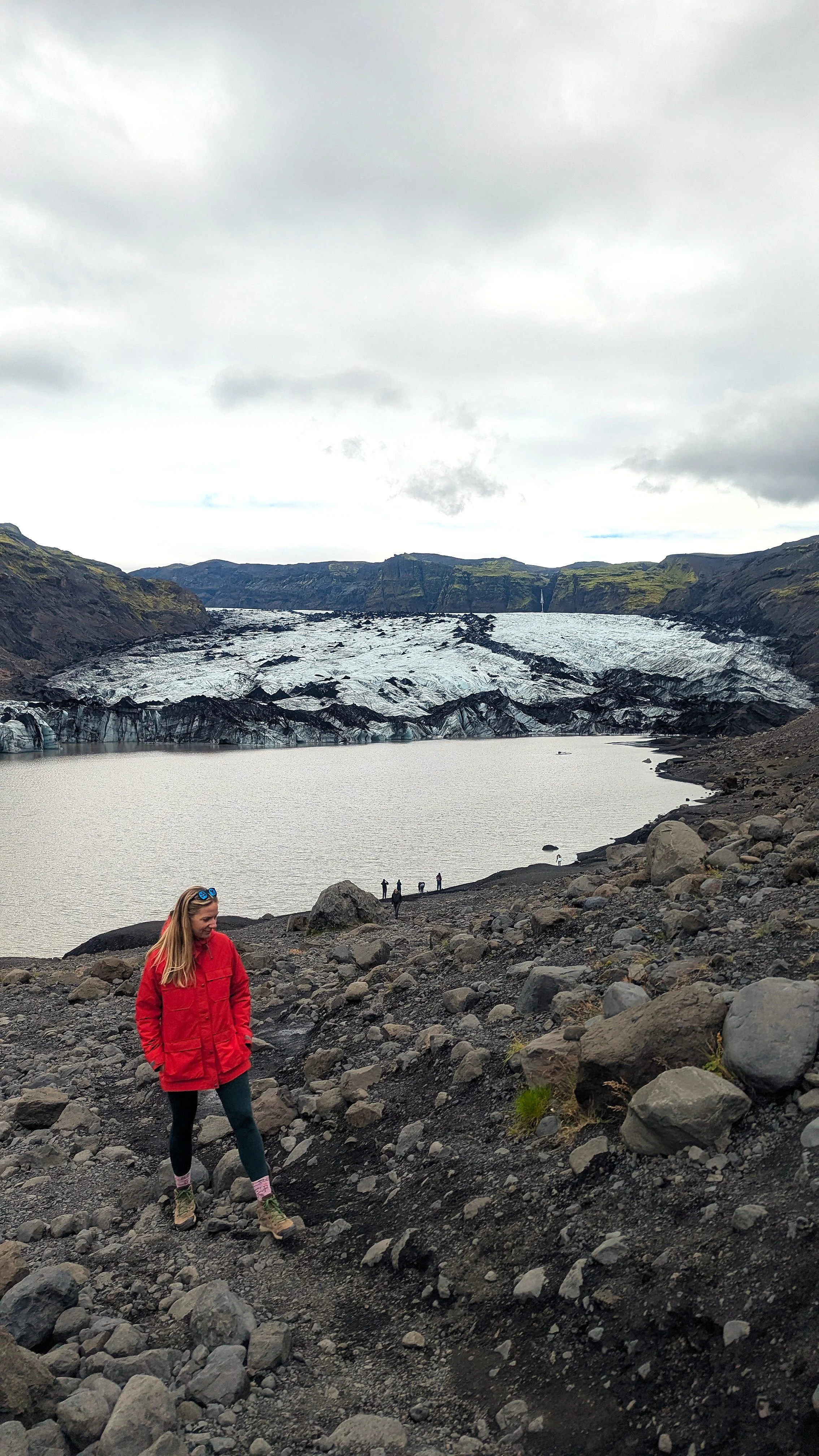
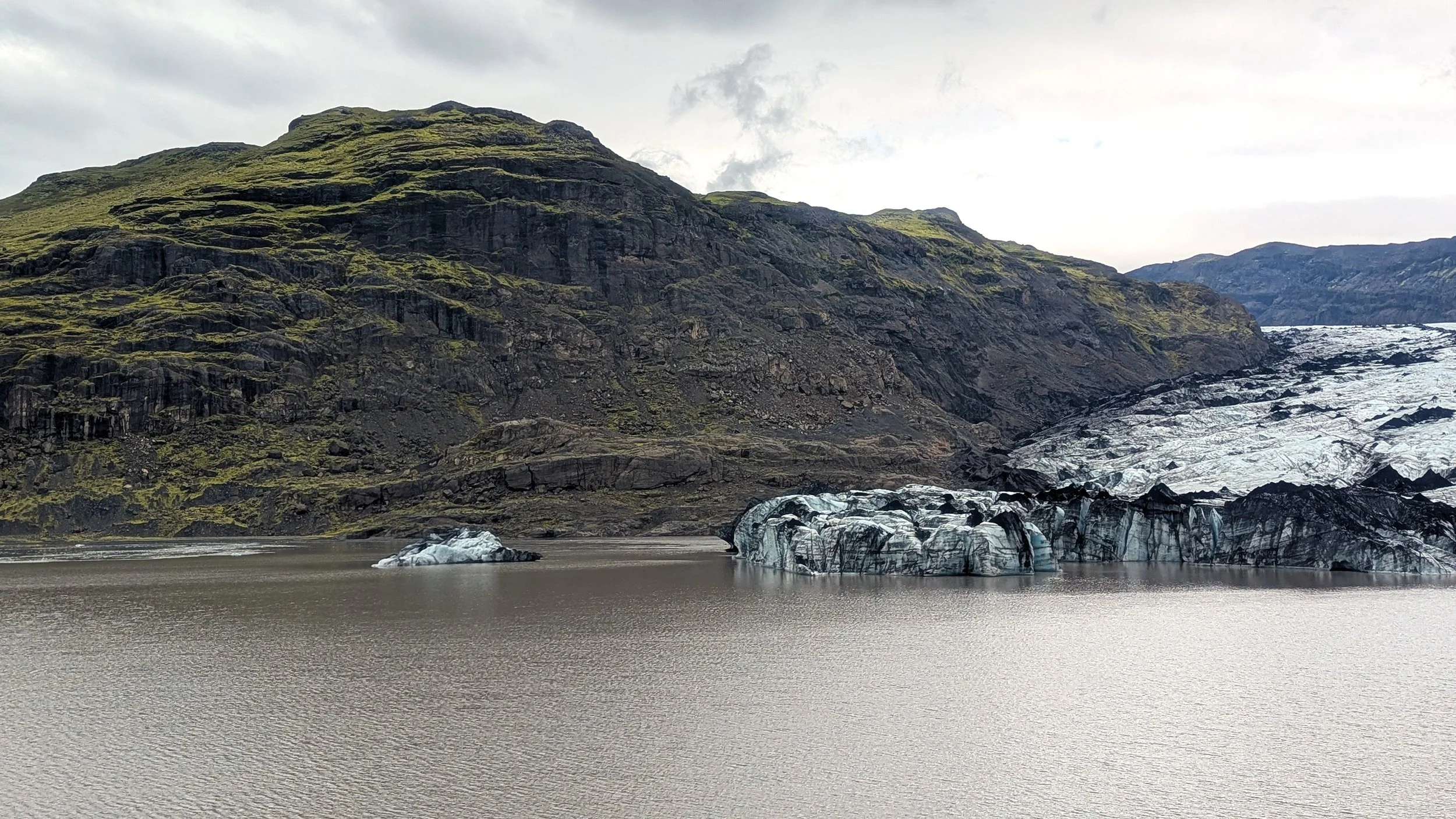
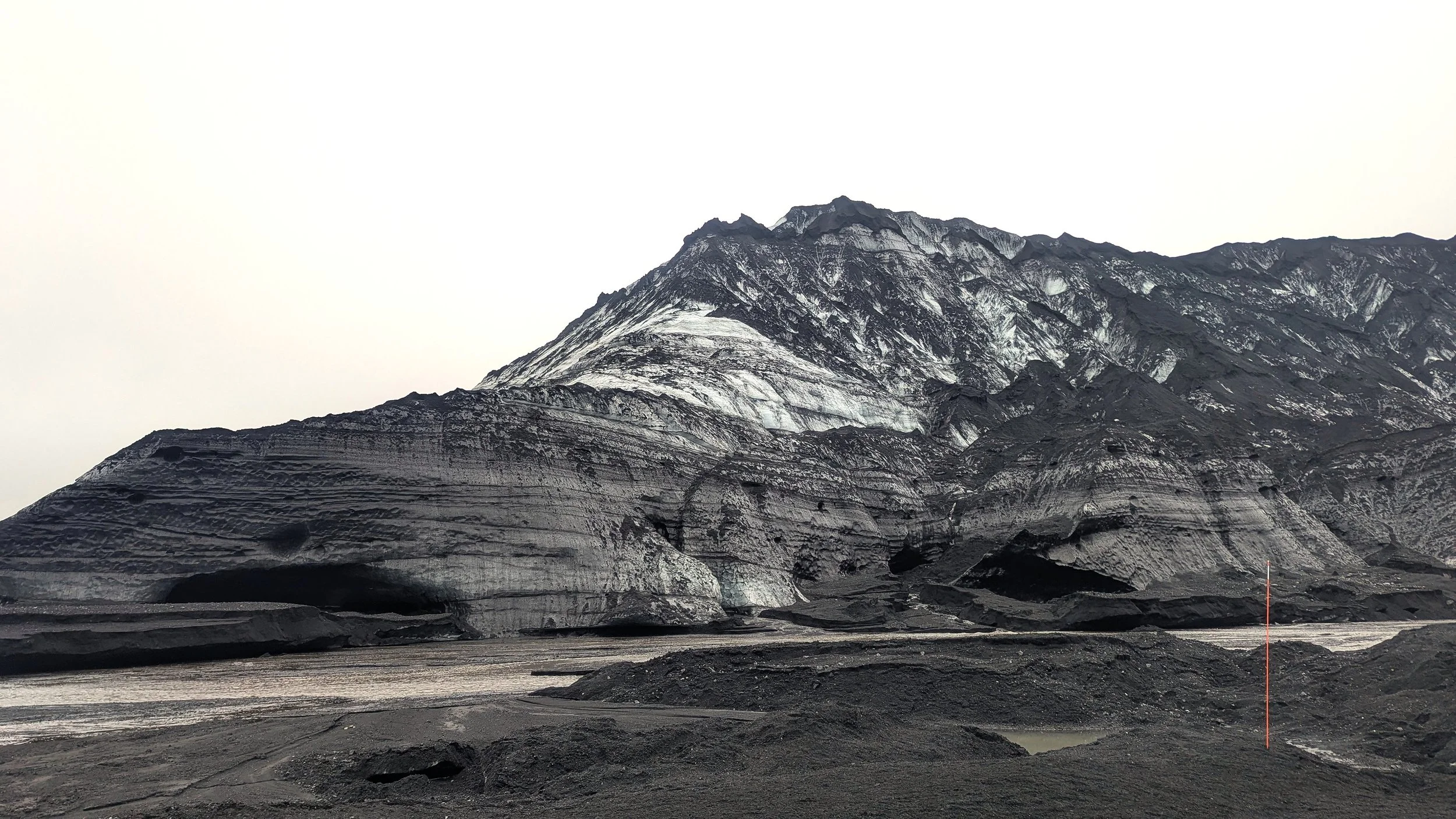
A short drive south we arrived at our next destination, the access point for the Sólheimajökull glacier. While far from the country’s largest, this one can be viewed after a short walk from the parking lot. Organized tours for hiking on top of the glacier and for kayaking in the glacial lagoon depart from the same parking lot. The black veins of the volcanic ash against the ice against the green hills above make an unforgettable impression. Unfortunately, this glacier, like the many in Iceland and around the world, is retreating at a very fast rate.
Vik
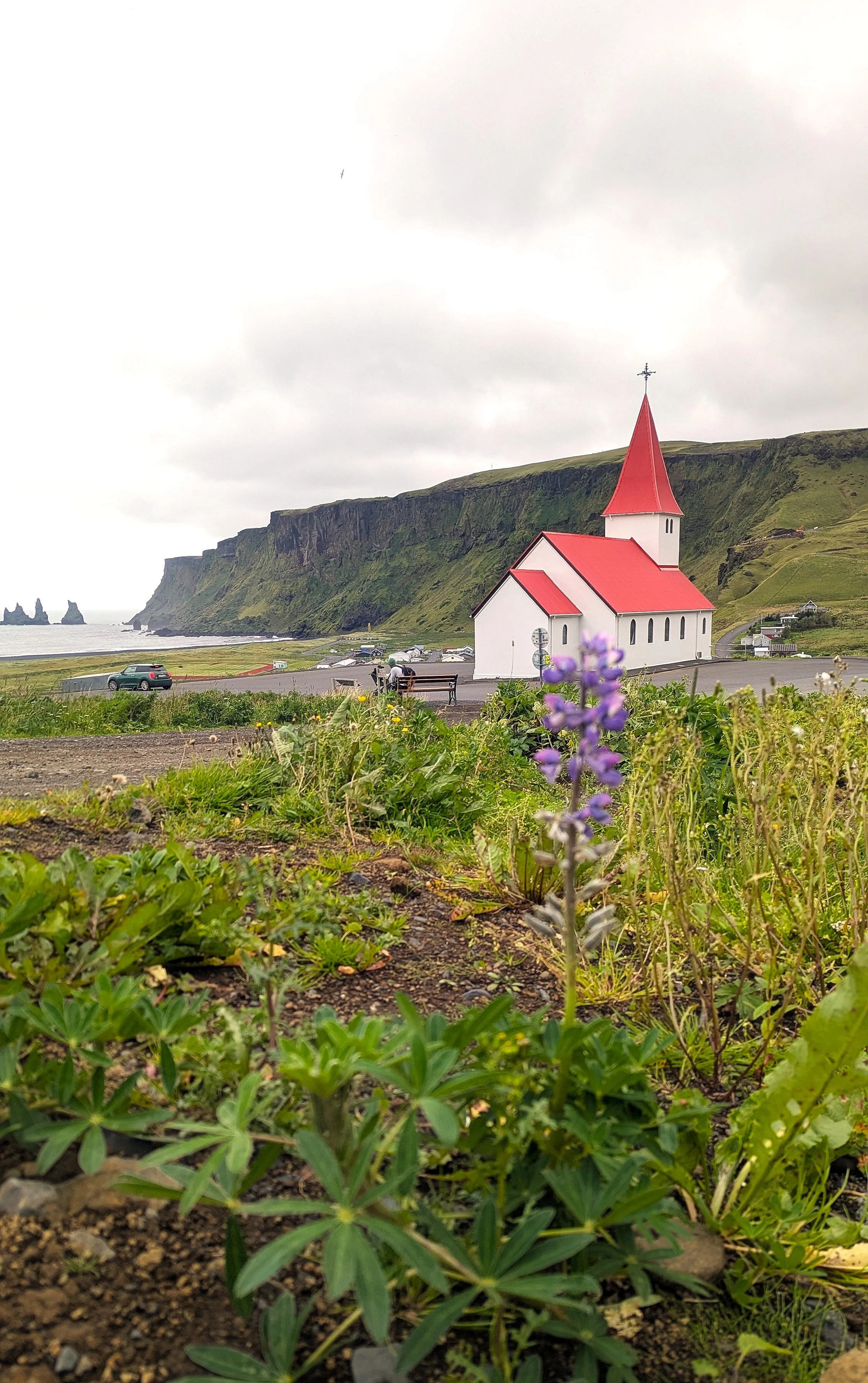
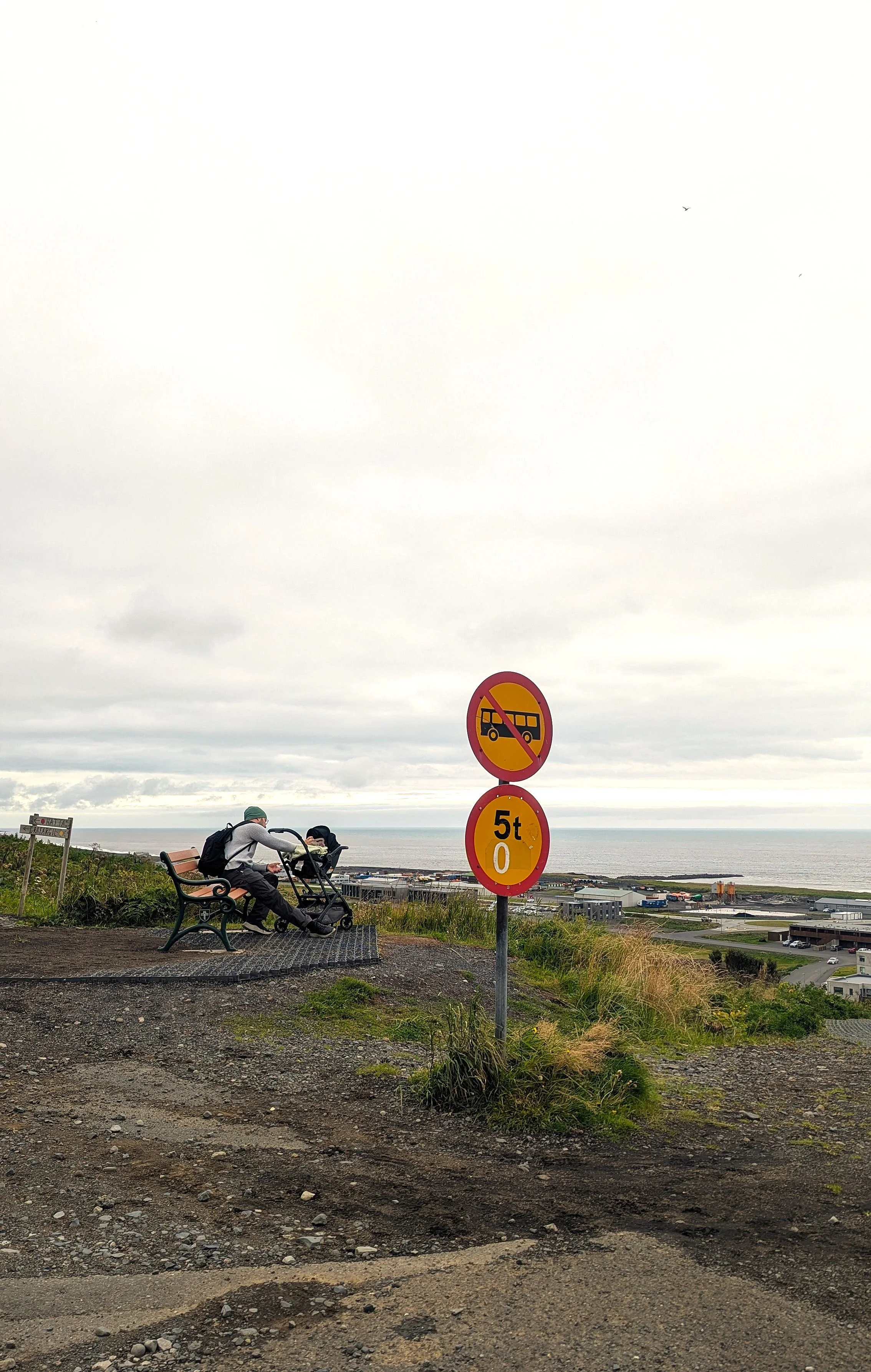
After checking into our accommodations in Vik, we took a short walk around the small town and made our way up to the Vík í Mýrdal Church for the panoramic views. While in the summer months the hills are covered in beautiful (but invasive) purple lupine, we caught sight of the wilted angelicas. This native plant holds significant historical and cultural importance in Iceland as a source of food, medicine, and protection.
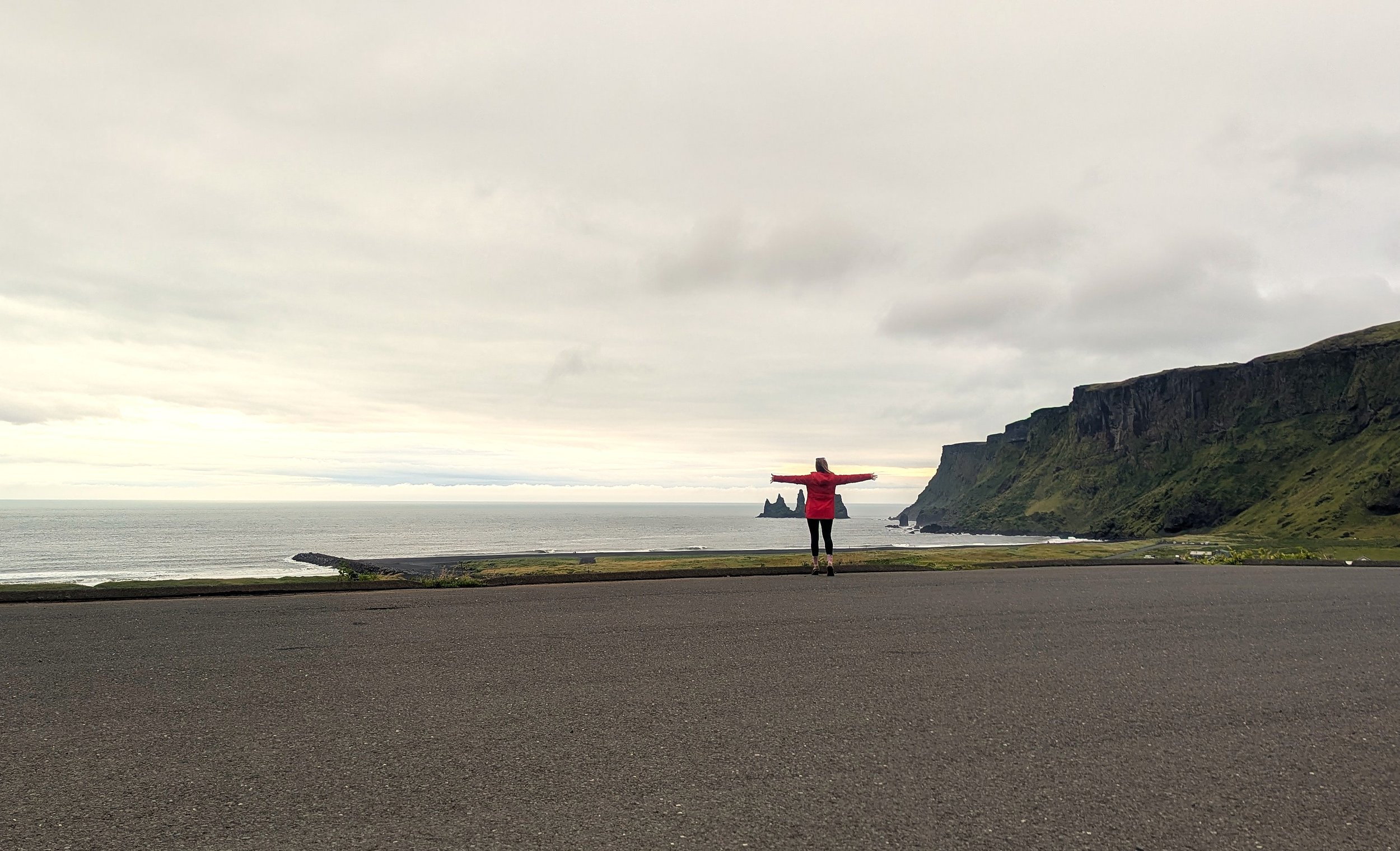
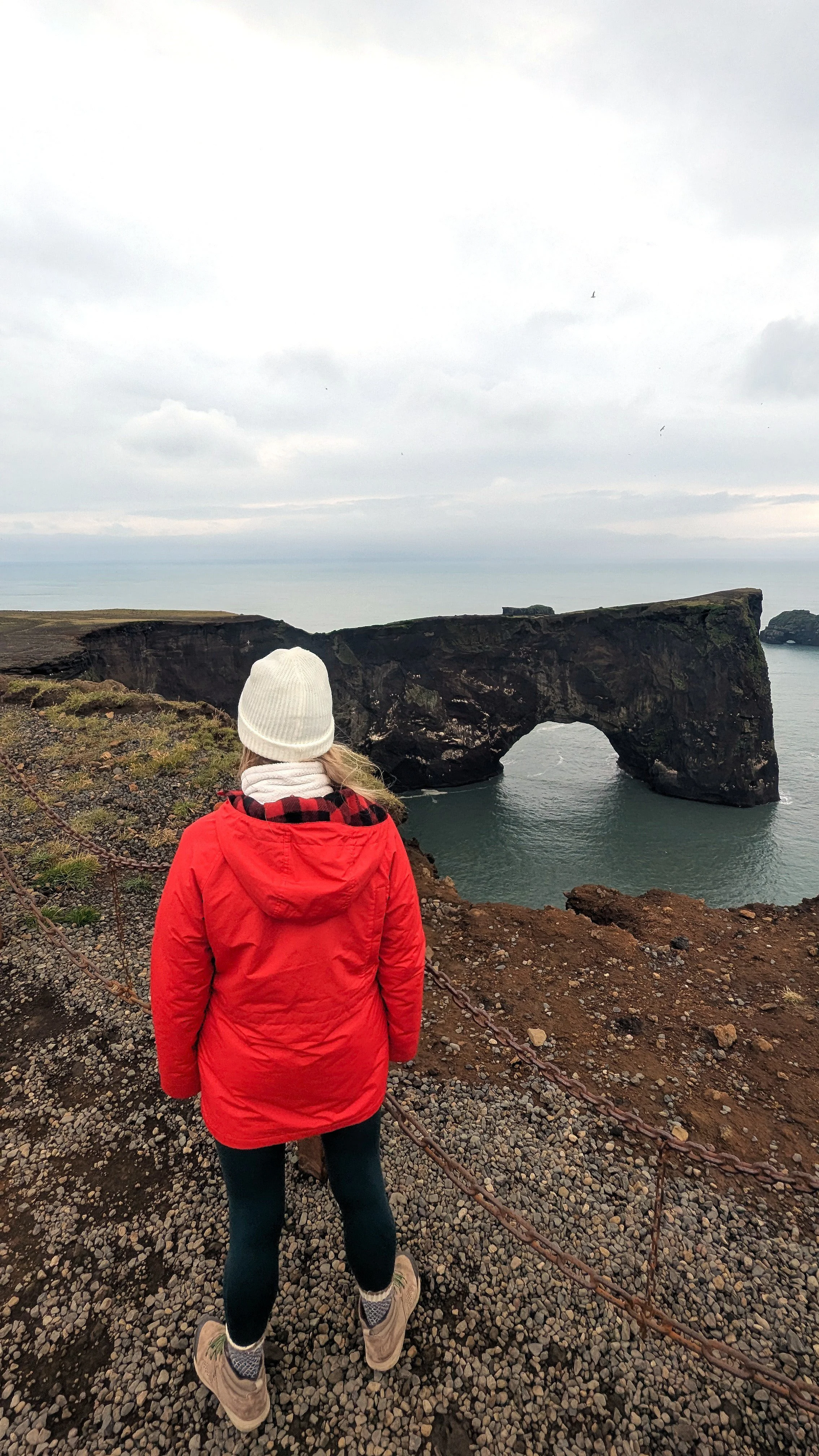
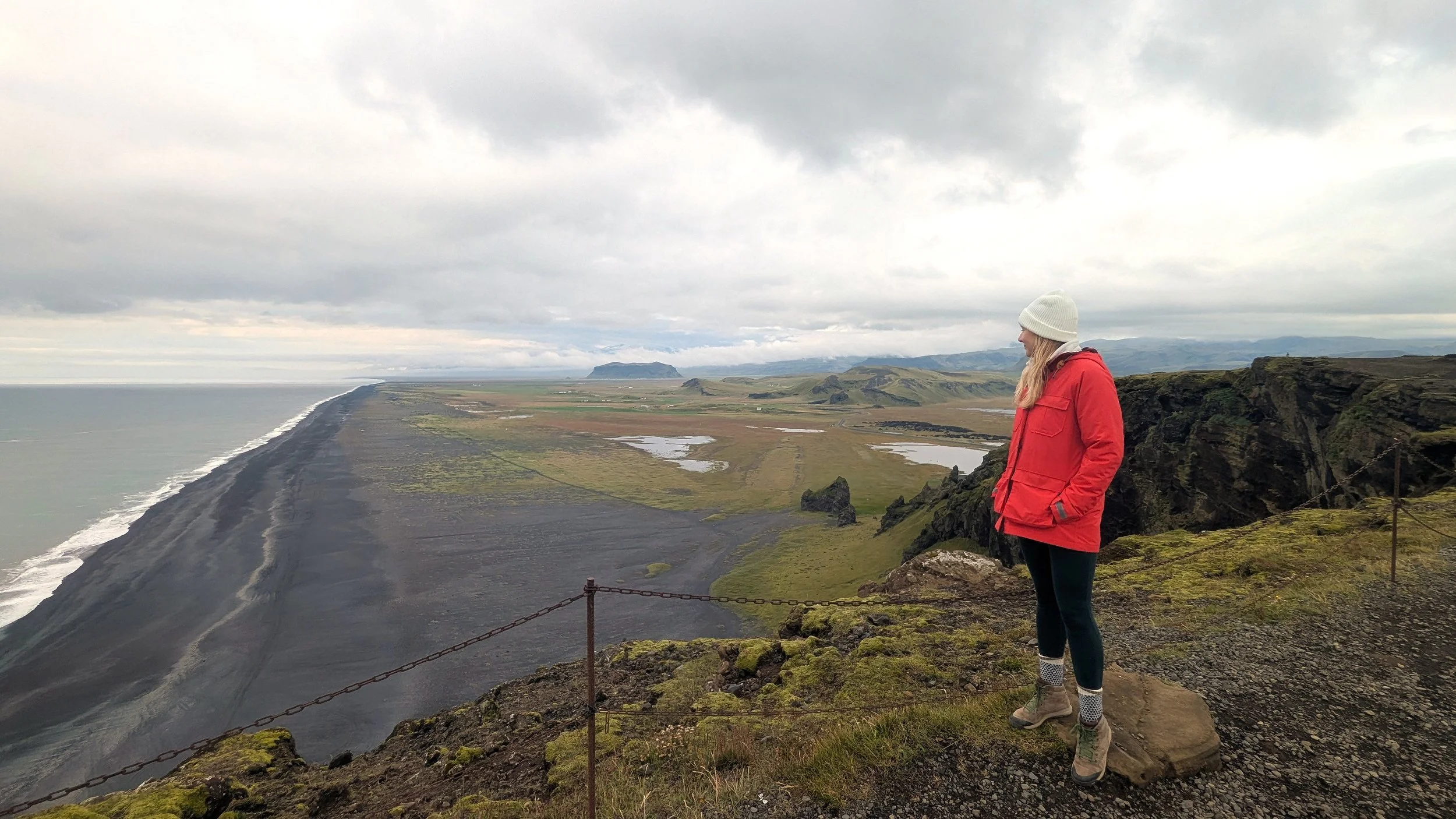
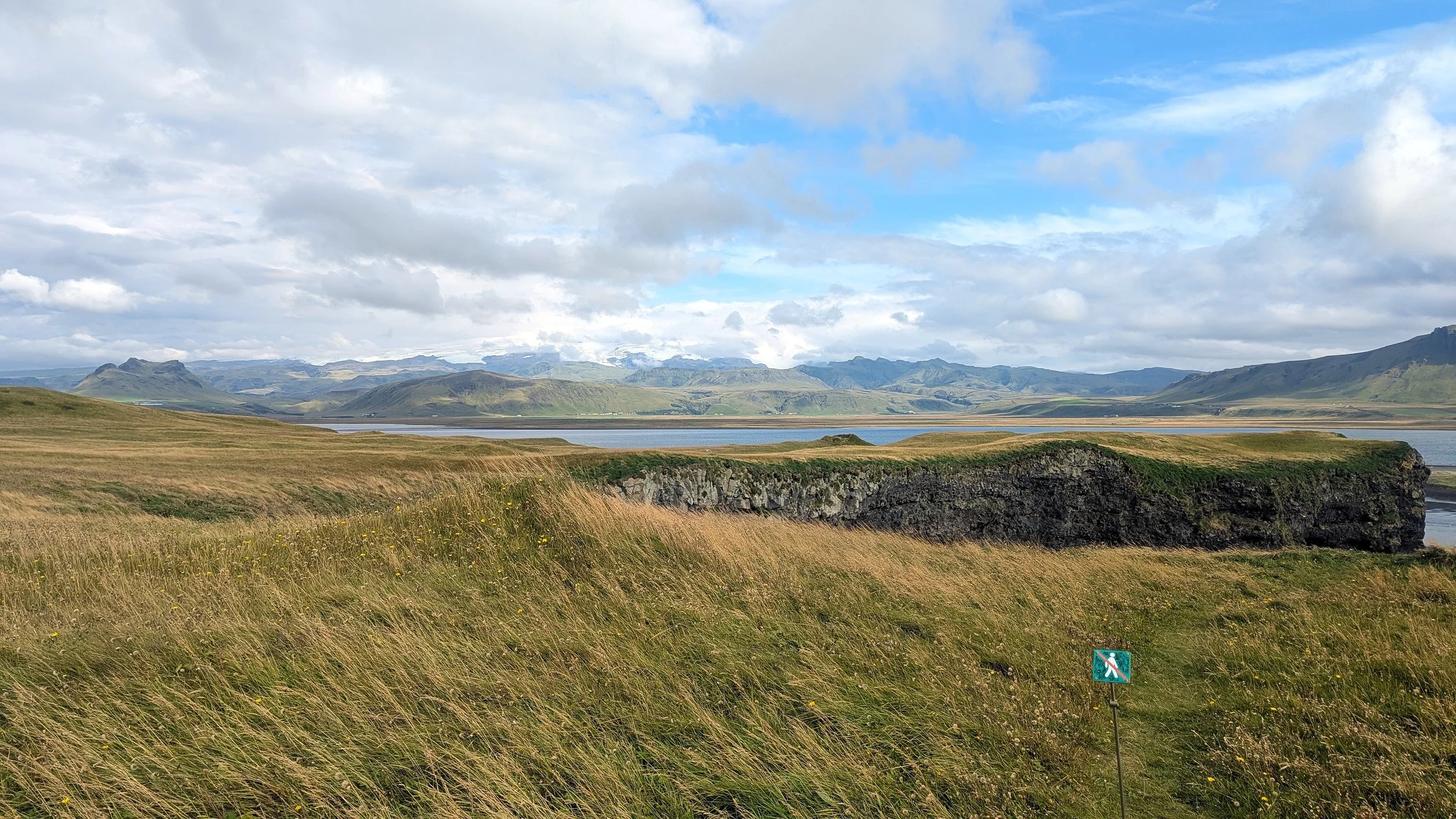
The next morning the sky cleared up so we set off for our first destination, Dyrhólaey. The famous cliff's left fork features stunning views of the beach and the sea arches. The right fork leads to the lighthouse and puffin cliffs. While most of the birds were already gone when we visited at the end of August, we did see a few still nesting in the grassy cliffs. To have better chances of seeing the quirky birds, visiting in the morning or evening of the summer months is recommended.
Even outside of puffin season the place is absolutely worth a visit. Framed by the green rolling hills and the glaciers inland, the black sand beaches and rugged cliffs leave an incredible impression.
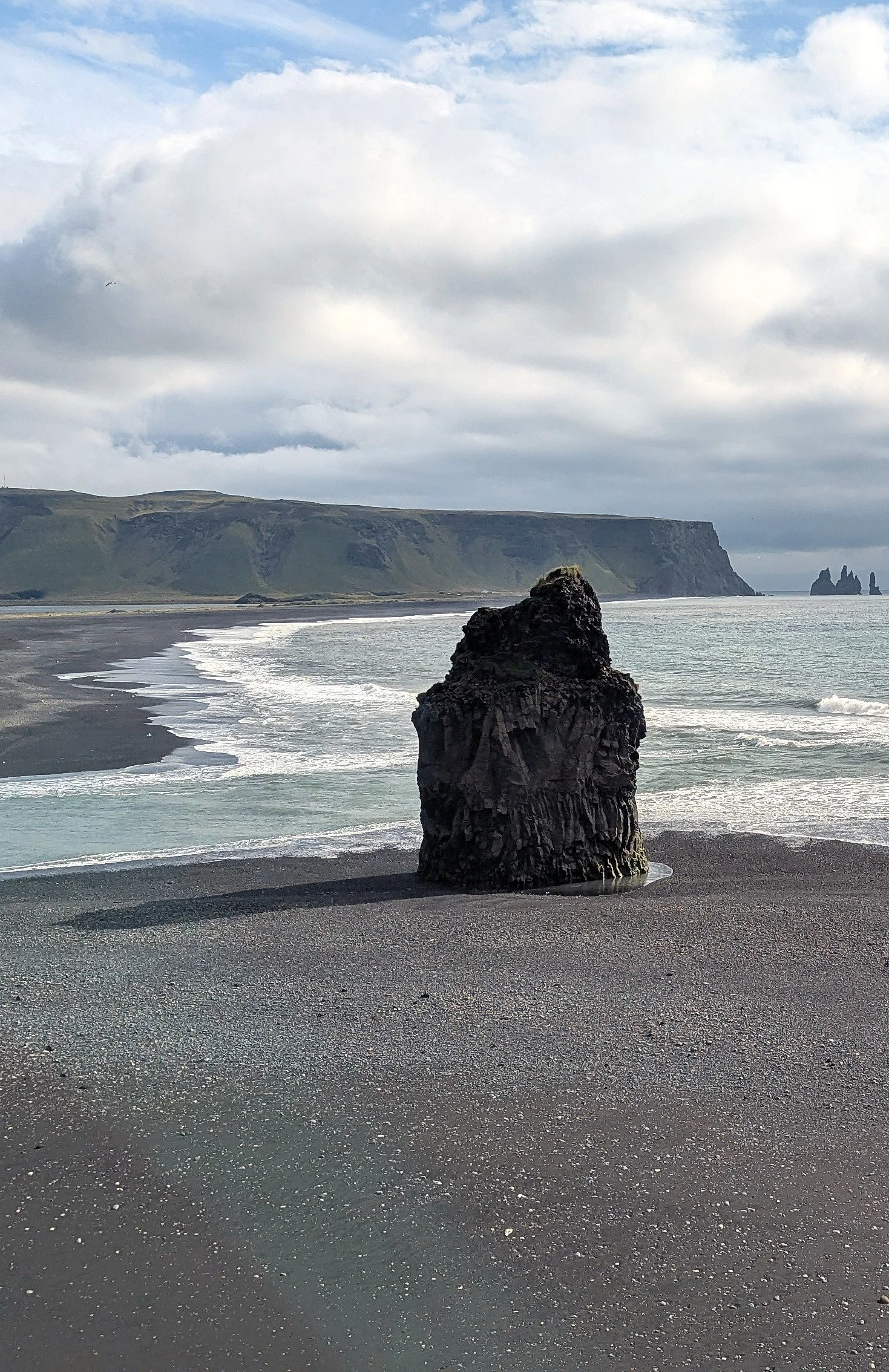
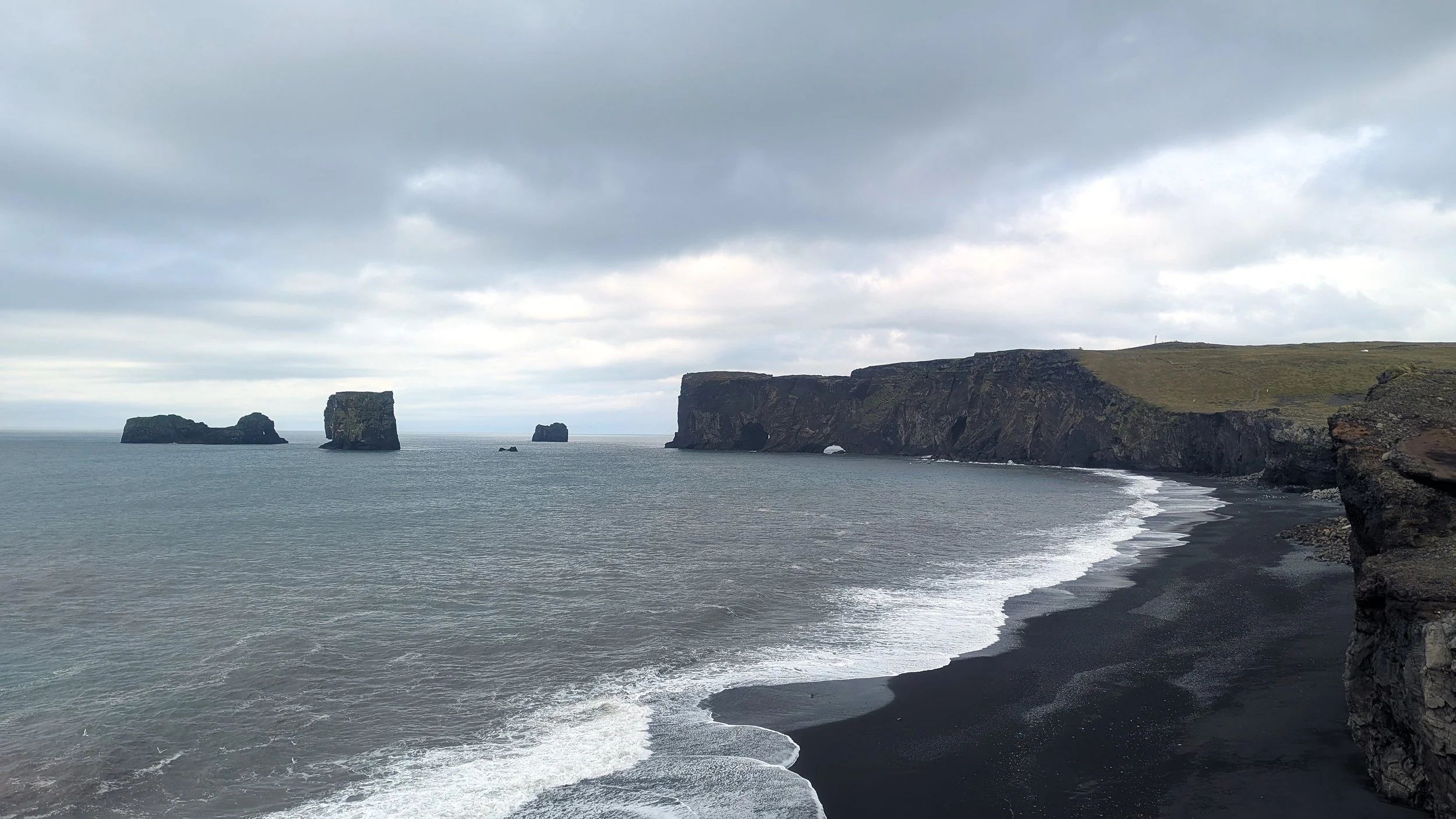
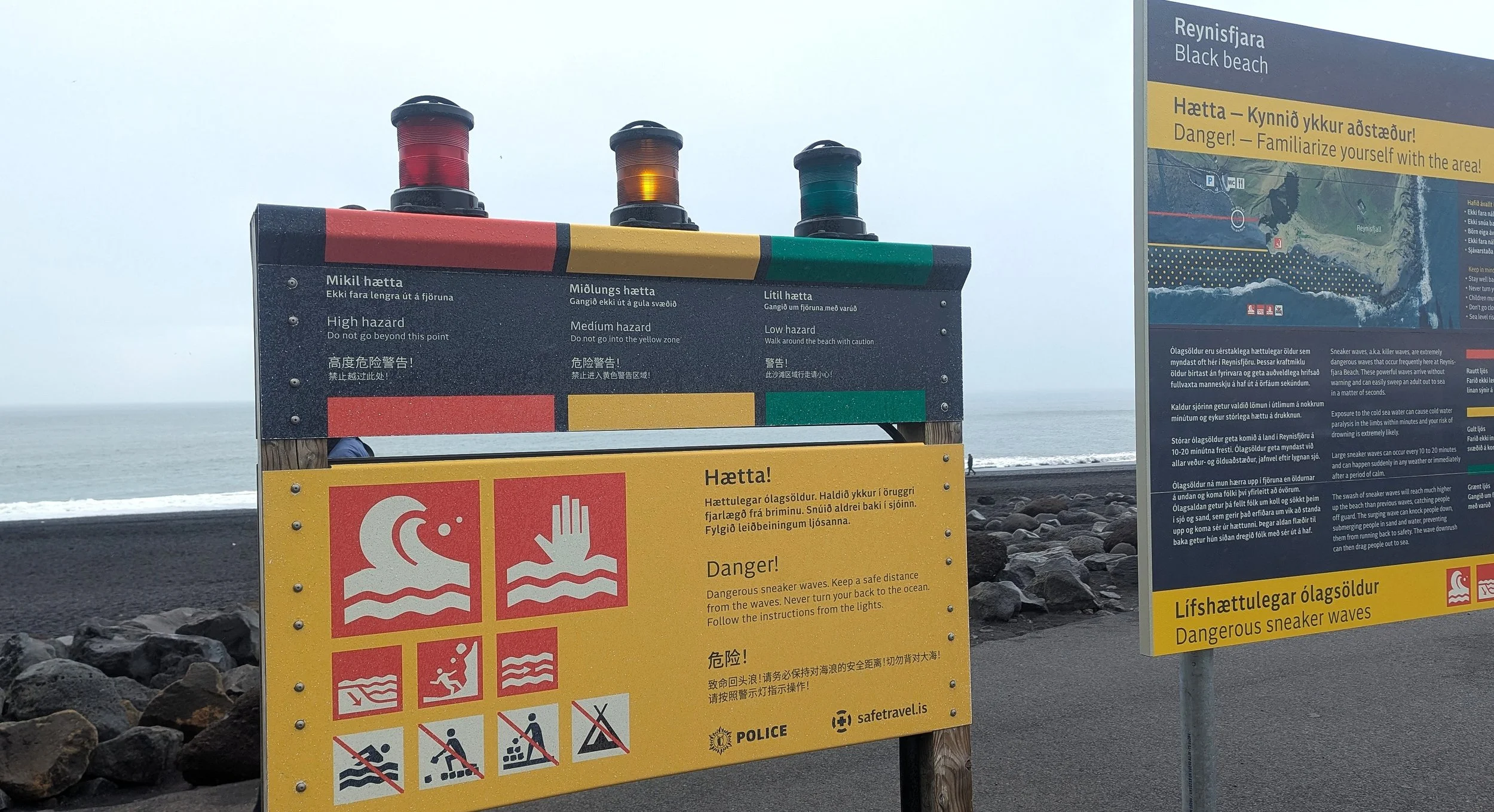
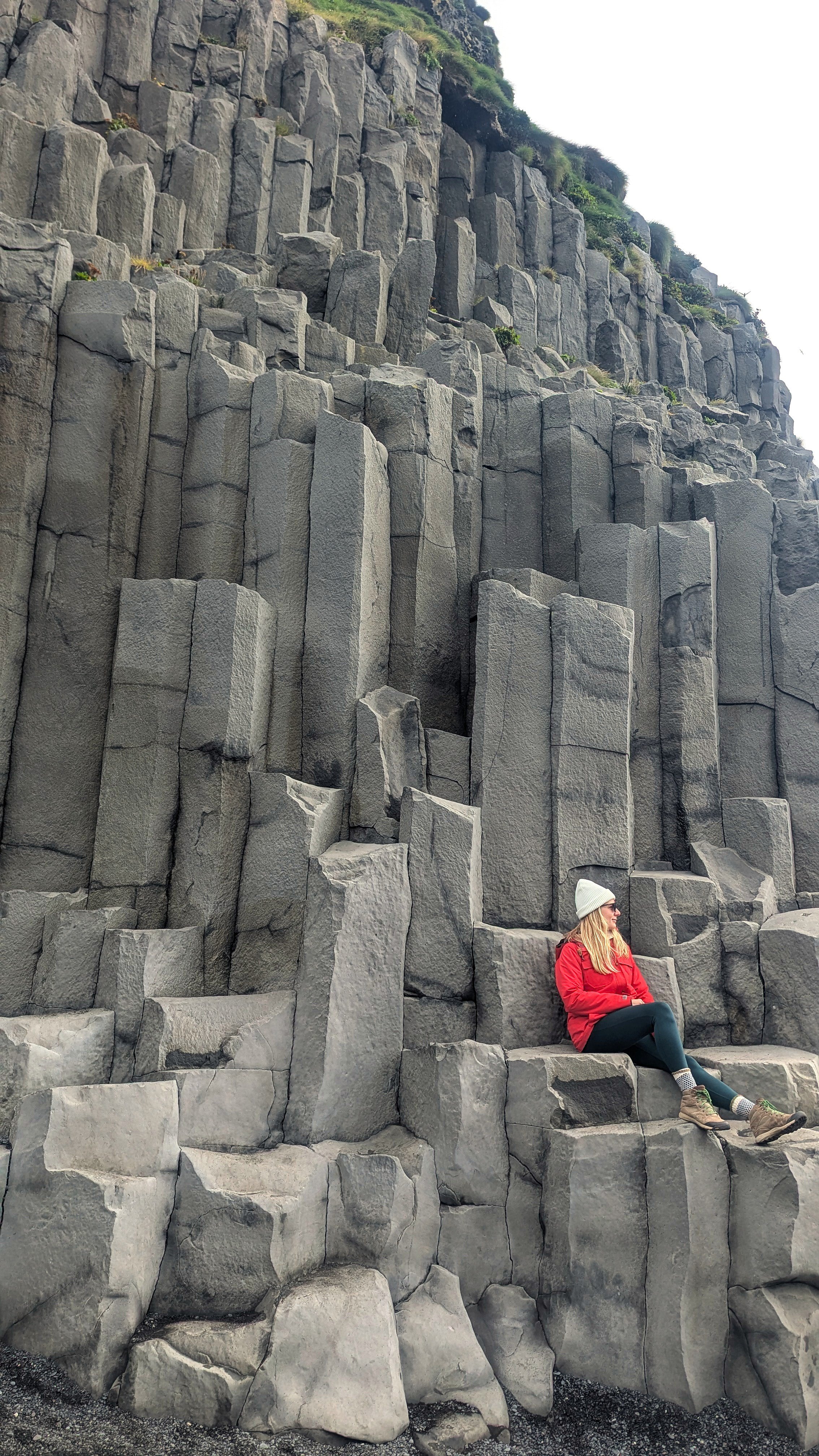
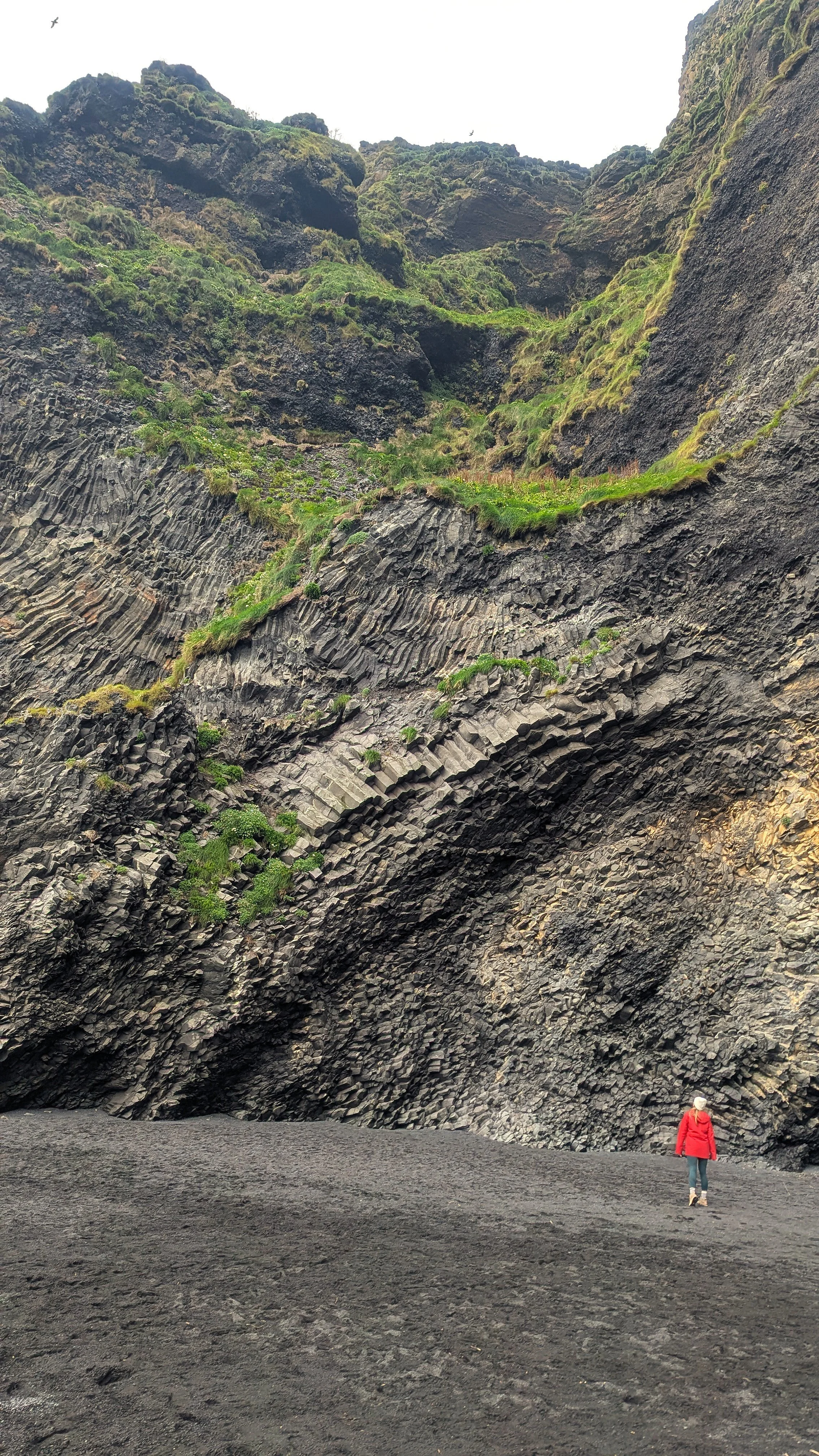
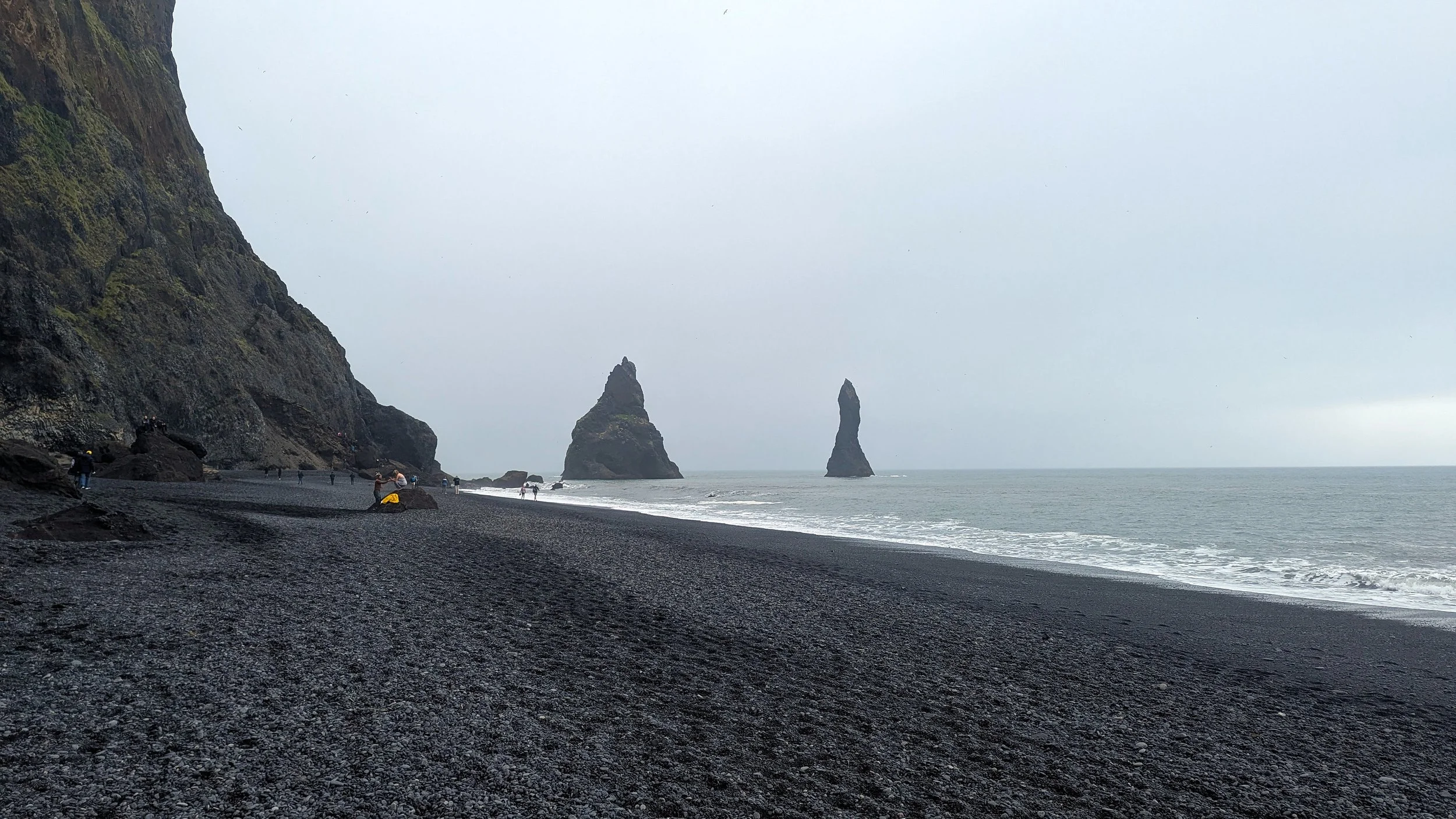
Our next stop was the famous, or infamous, Reynisfjara beach. At least five people drowned here in the last decade, swept into the treacherous undertow. To prevent further fatalities the locals have installed a warning system and ask to take the risk seriously. It started to rain when we arrived, but the access to the basalt columns and the stunning black beach beyond was open. Much to our surprise we saw a sizeable group of puffins lolling on the waves not too far from shore.
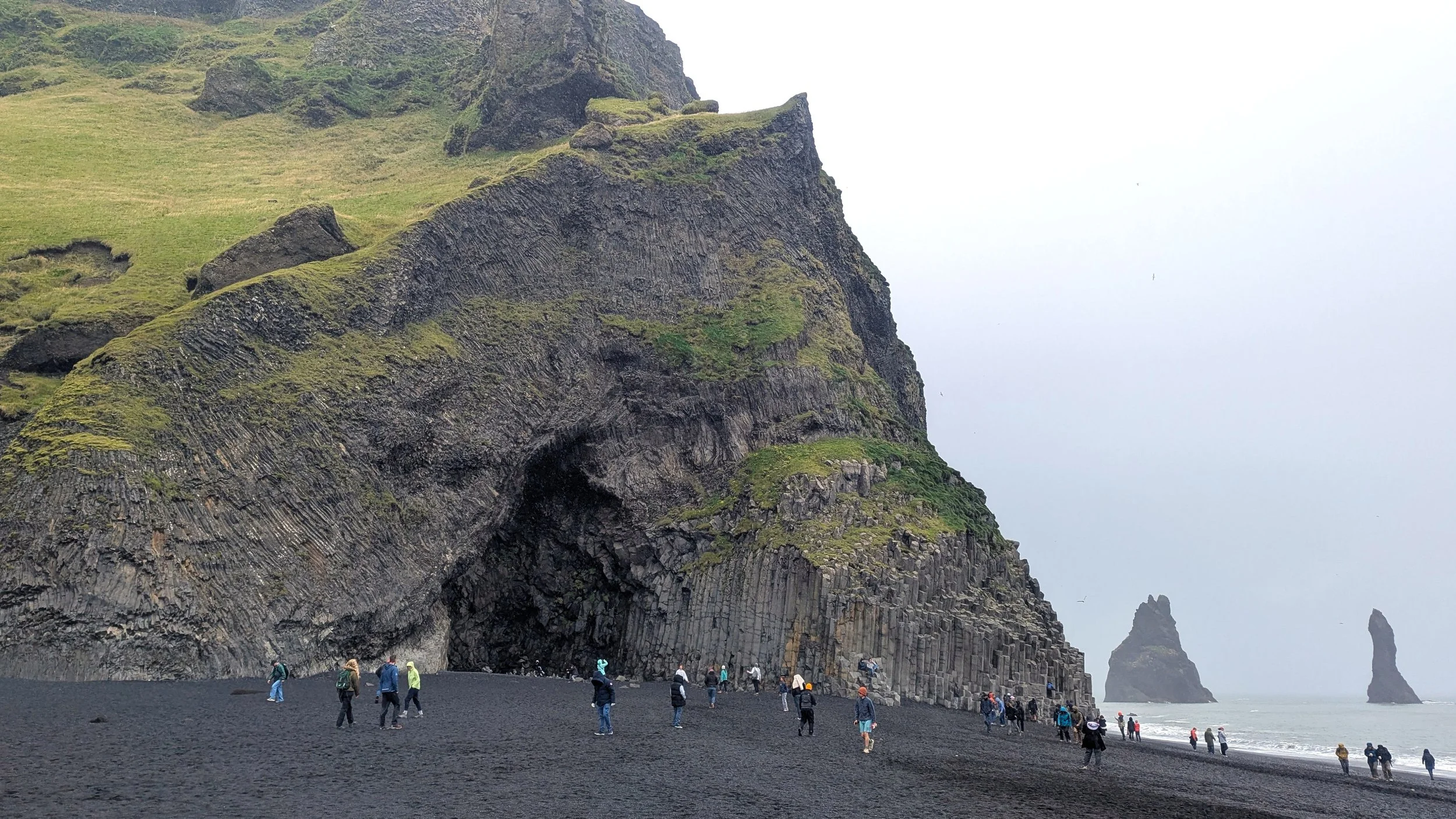
Note: As of February 2026, the beach appearance has been dramatically reshaped by nature. Coastal erosion coupled with a mountain slope collapse mean that the famous basalt columns now sit in the water and are not accessible. This is a reminder that nature tourism is never a guarantee for experiencing the destination as seen in magazines and blogs.
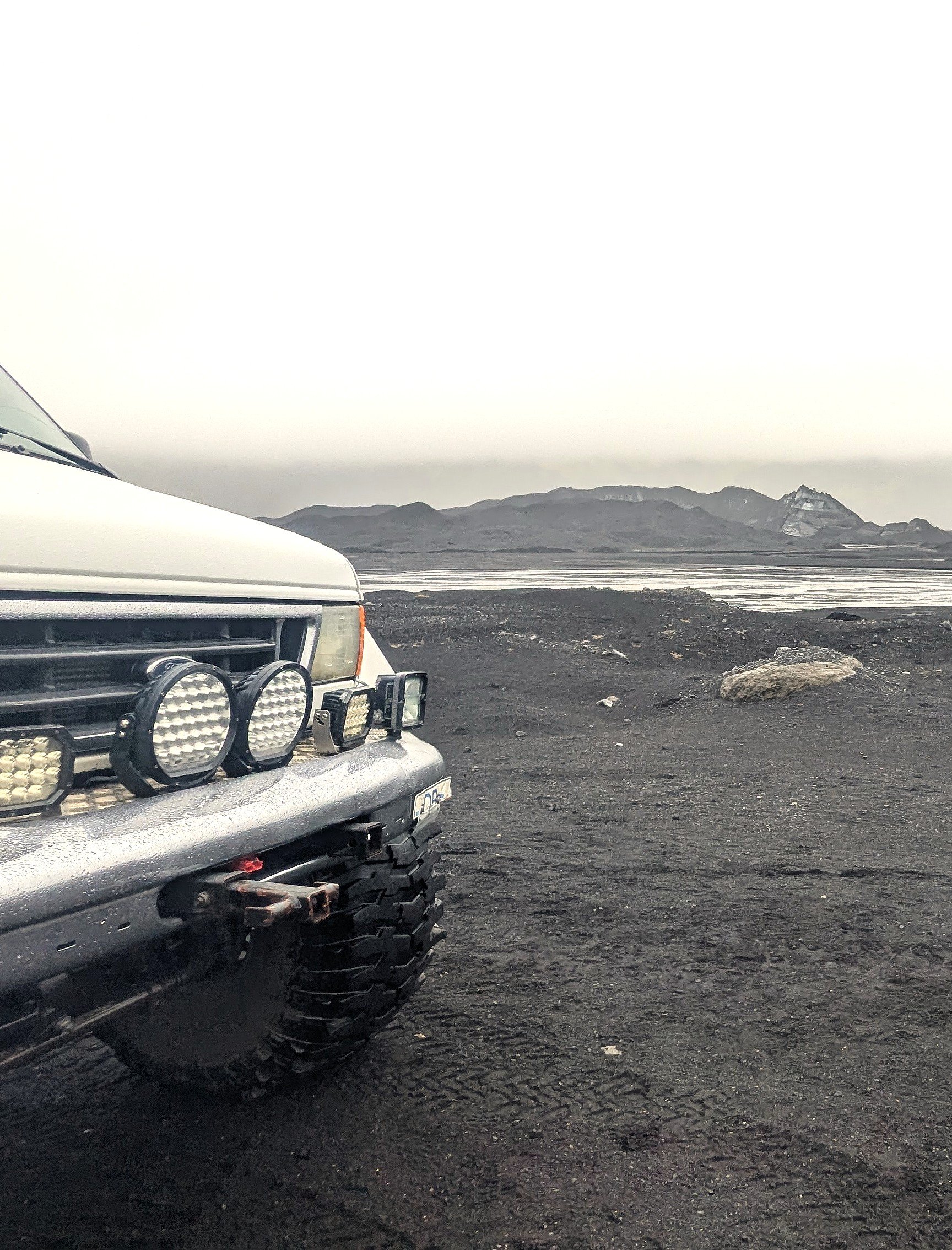
After lunch and a nap I joined a late afternoon tour of the Katla ice cave. Organized by Arctic Adventures, this tour had a convenient pick up spot in the center of Vik. Two aftermarket Sprinter vans lifted onto extra large tires with an inflation system took us off road and down through the thickening fog towards the glacier.
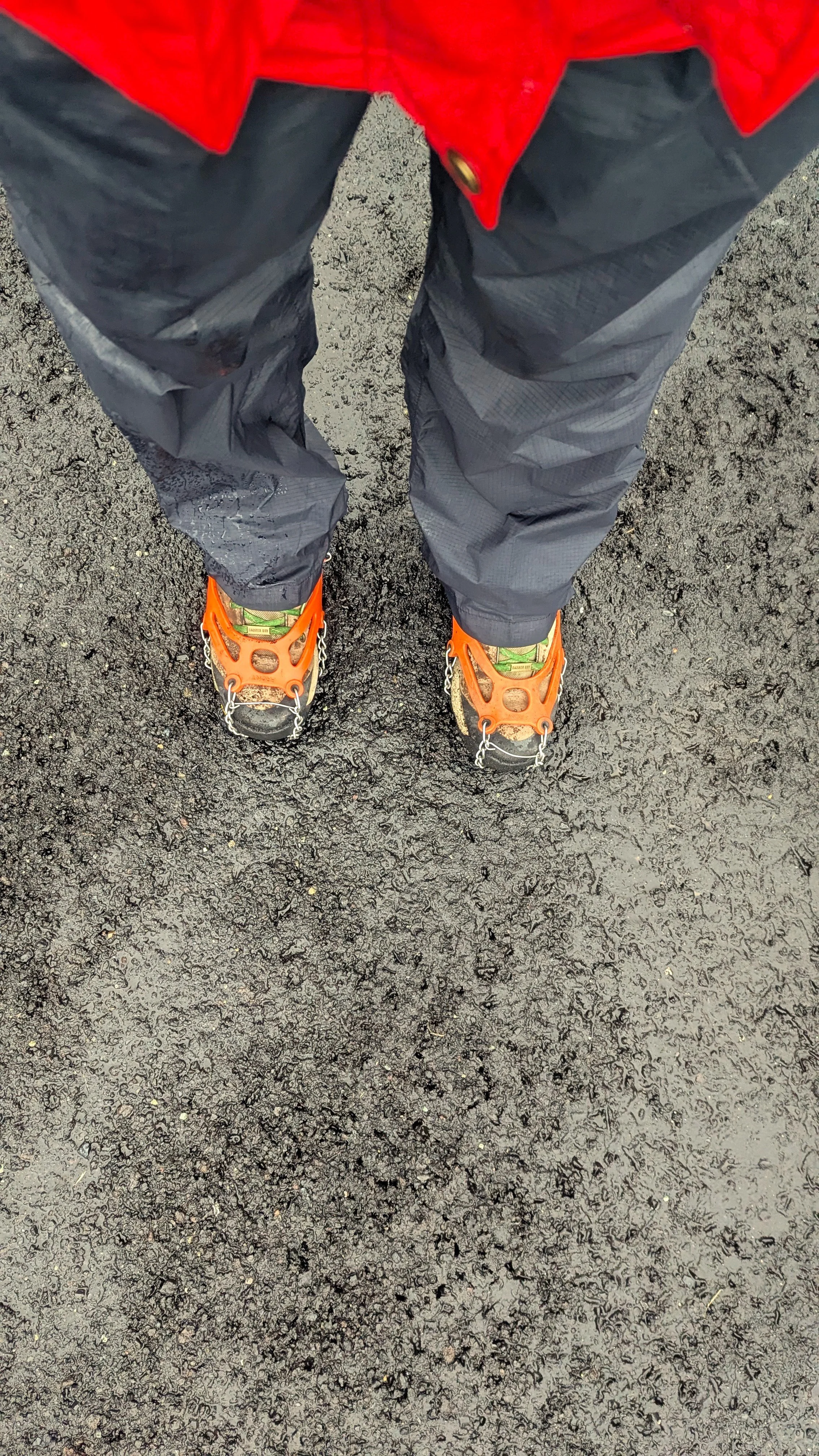
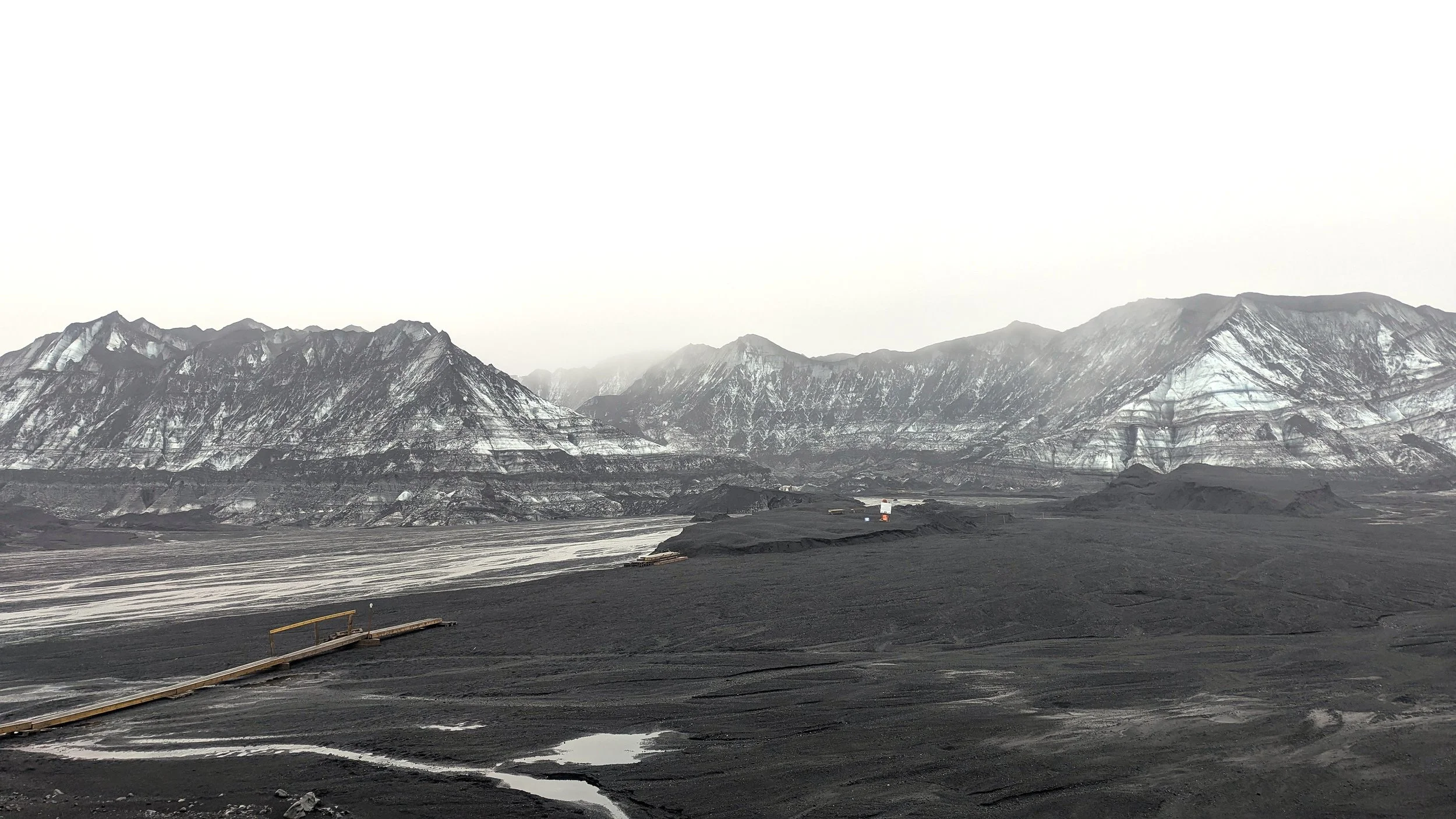
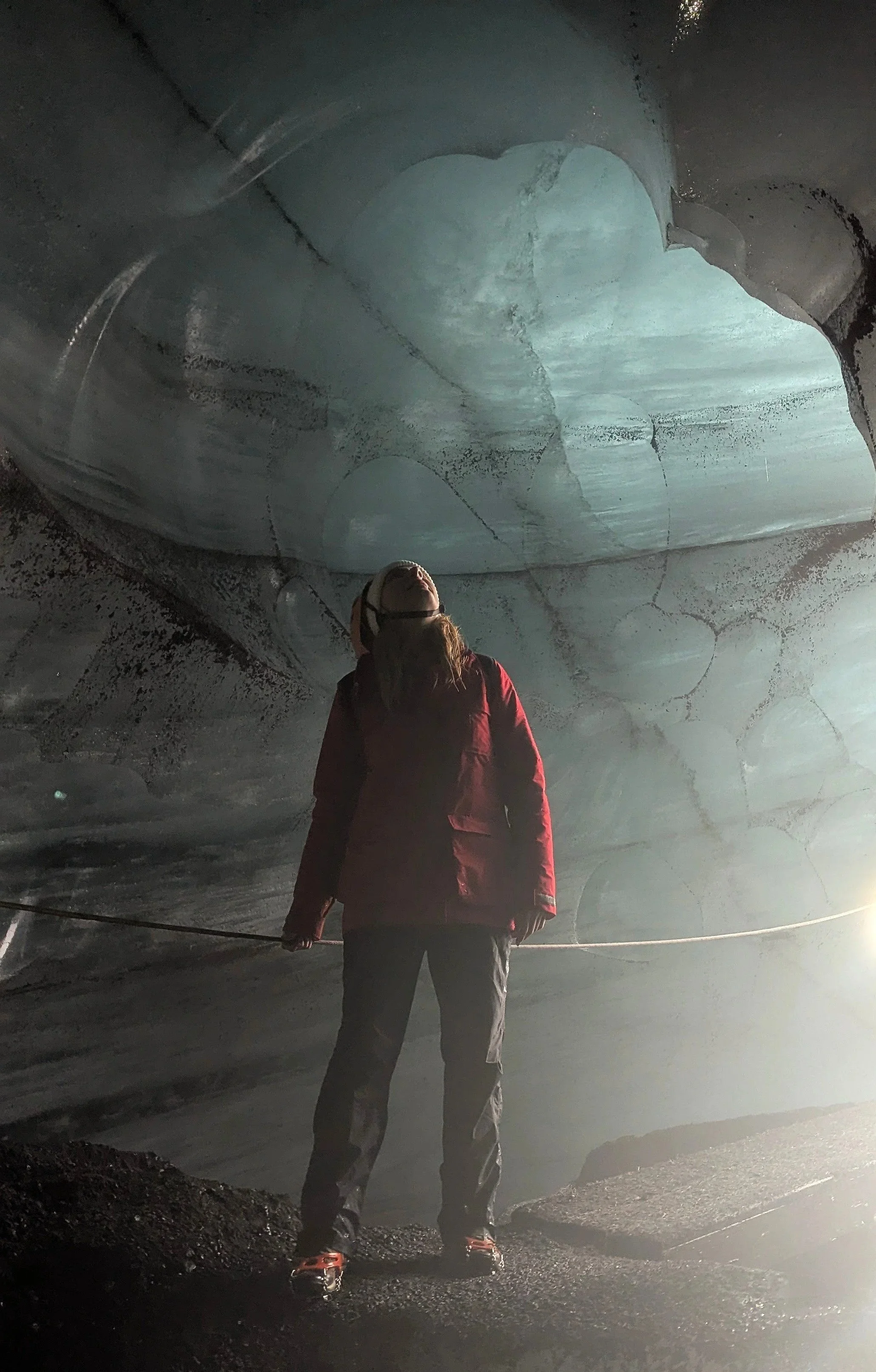
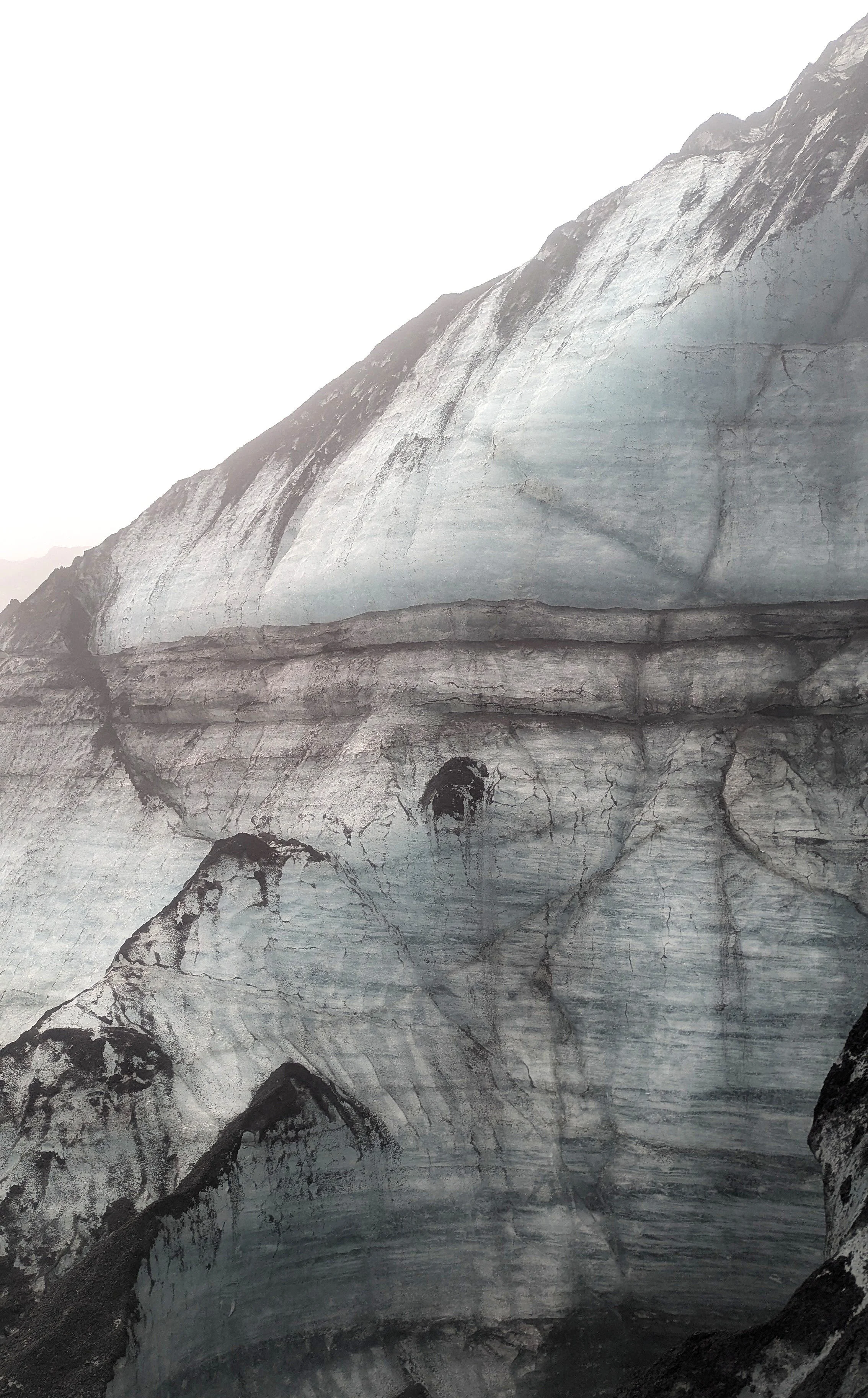
The site of the glacier sitting on top of an active volcano was truly otherworldly. After we got our helmets and cramp-ons we walked up the glacier and into the ice cave. The glacier we saw was striped top to bottom. Each layer of volcanic ash frozen into the ice, like a ring on a tree, indicates an eruption of the volcano. This cave was a recent discovery. As the glaciers melt the ice caves collapse, and new ones open up. These days drones are used to locate previously unknown cave sites.
Road to Reykjavik
The next morning the gloomy rainy weather continued. We tried getting coffee at the famous Skool Beans cafe, but the line was just too long for us to wait. Instead, we drove up to Crepes.is stand. Having procured two coffees and one giant ham and cheese crepe dripping with the famous Icelandic remoulade sauce, we hit the road toward Reykjavik.
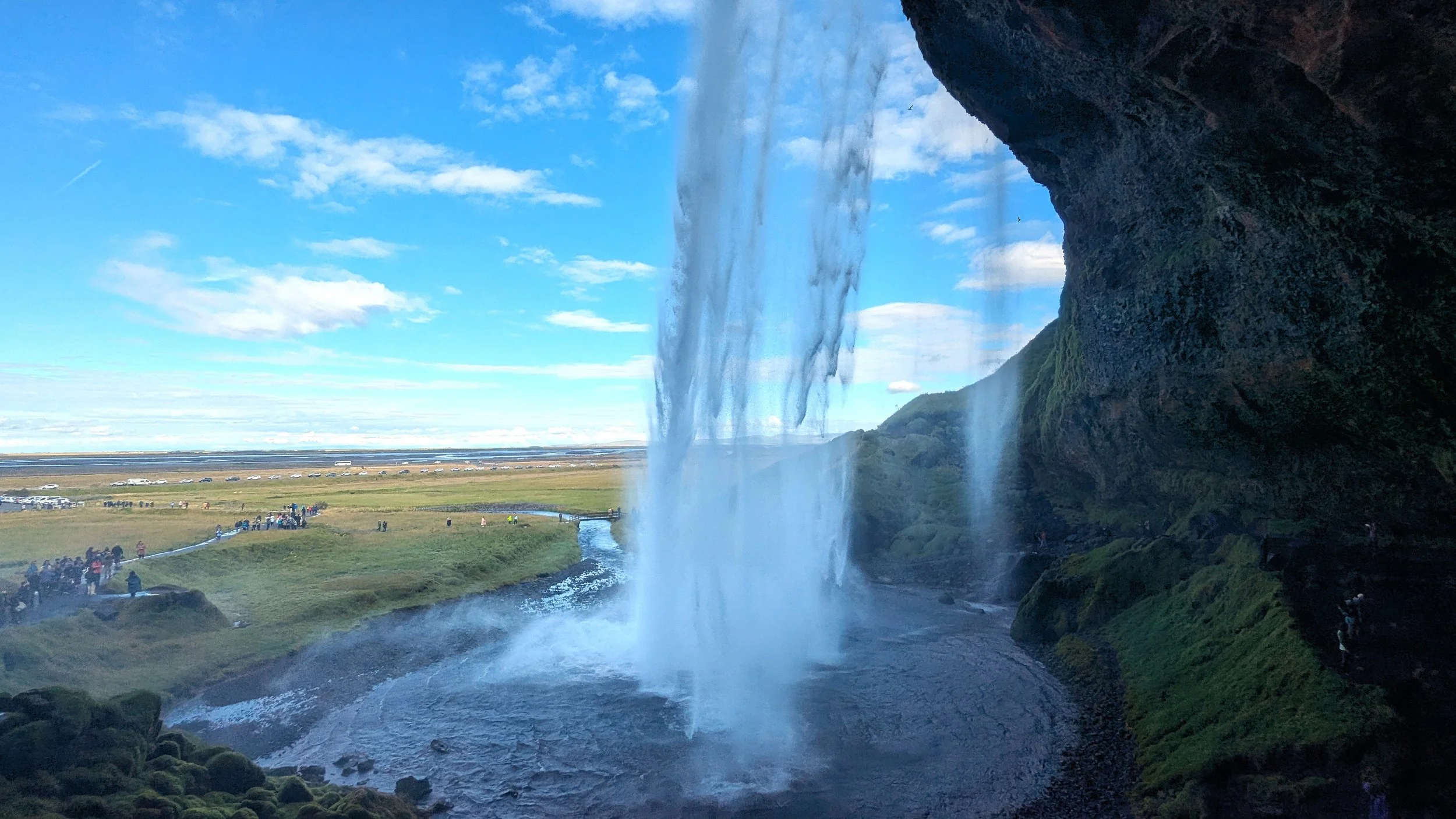
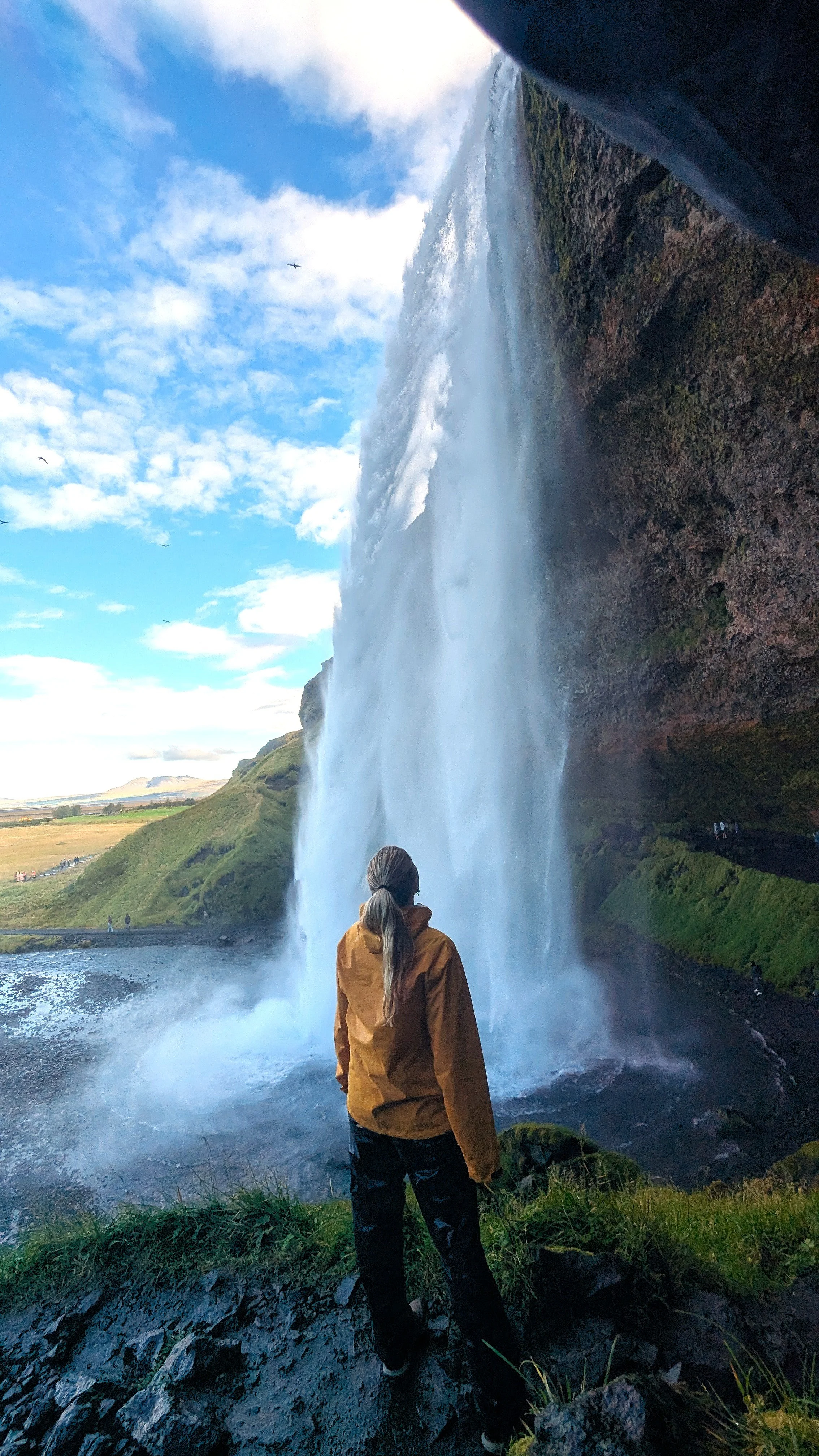
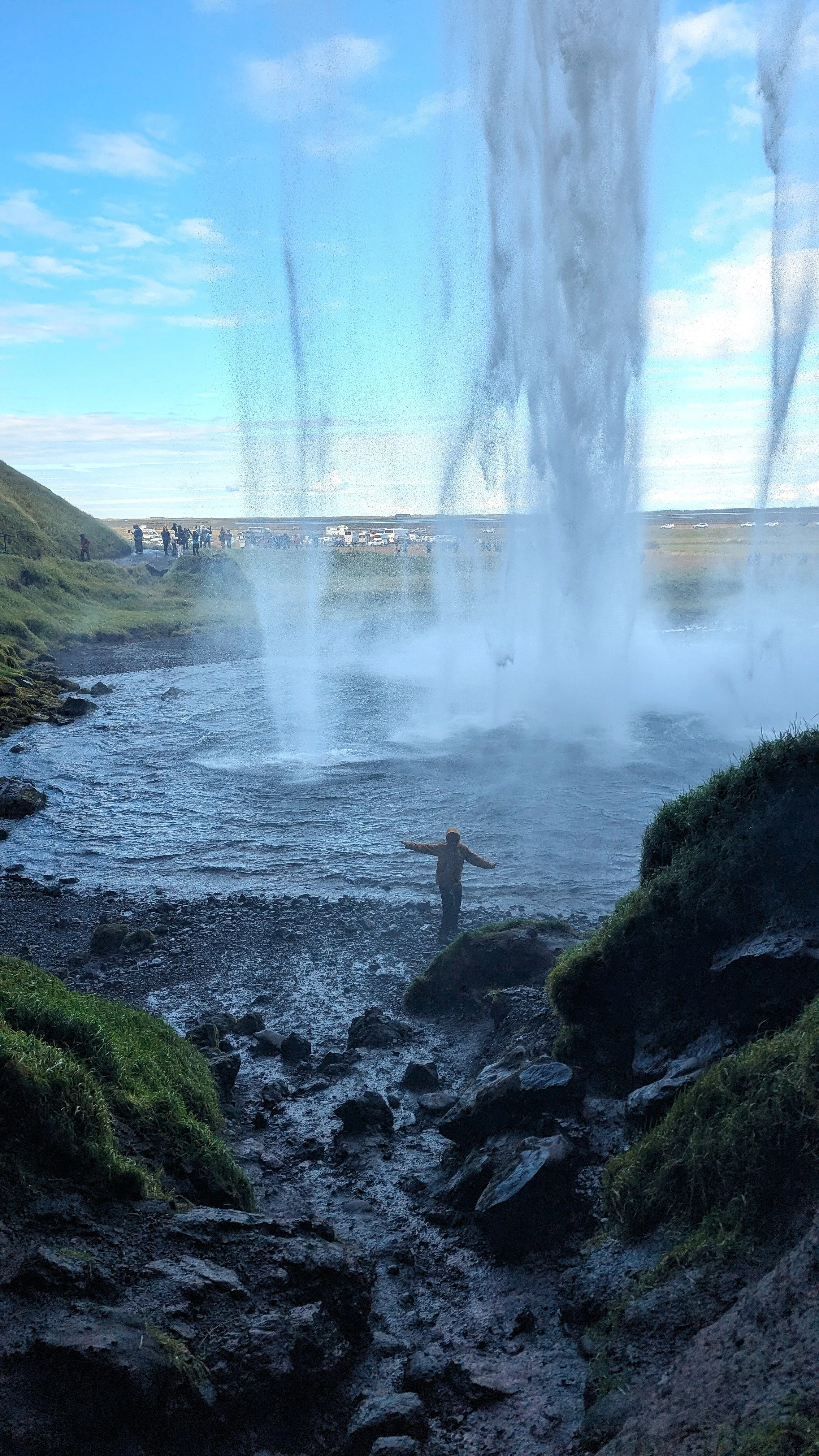
We decided to split the drive by stopping at another famous waterfall, Seljalandsfoss. Visible from the road, an enormous mass of water plunges down 200 feet from a sheer cliff. The parking lot was busy, but we used our trusty Parka app again and didn’t have to wait in line to pay. While the waterfall is said to be at its most magical at sunset, a morning visit did not disappoint.
We were happy we wore our rain jackets and rain pants, as the power of the plunging water creates a strong wind that carries the spray all around. The cliff walls behind the falls are covered in every species of moss, lichen, and fungus, which the baby was excited to study.
Evidently not soaked enough we walked a few more minutes to another waterfall, Gljúfrabúi. Located inside a gorge, the “Canyon Dweller” is a true hidden gem.
Back on the road, we stopped in Selfoss at Bókakaffið coffee and bookshop, where we enjoyed sipping coffees while browsing for books, cards, and prints.
Our final stretch took us through the thermal valley of Hveragerdi, where multiple fumaroles and steam stacks rising above moss covered lava indicate the thermal activity of the region.
Reykjavik
We chose to stay in the outer suburb of Hafnarfjörður for its proximity to the airport in Keflavik. But we were so glad we did. A cosy residential neighborhood that wraps around a park and a harbour, it was quiet and provided us a small glimpse of real Icelandic life.
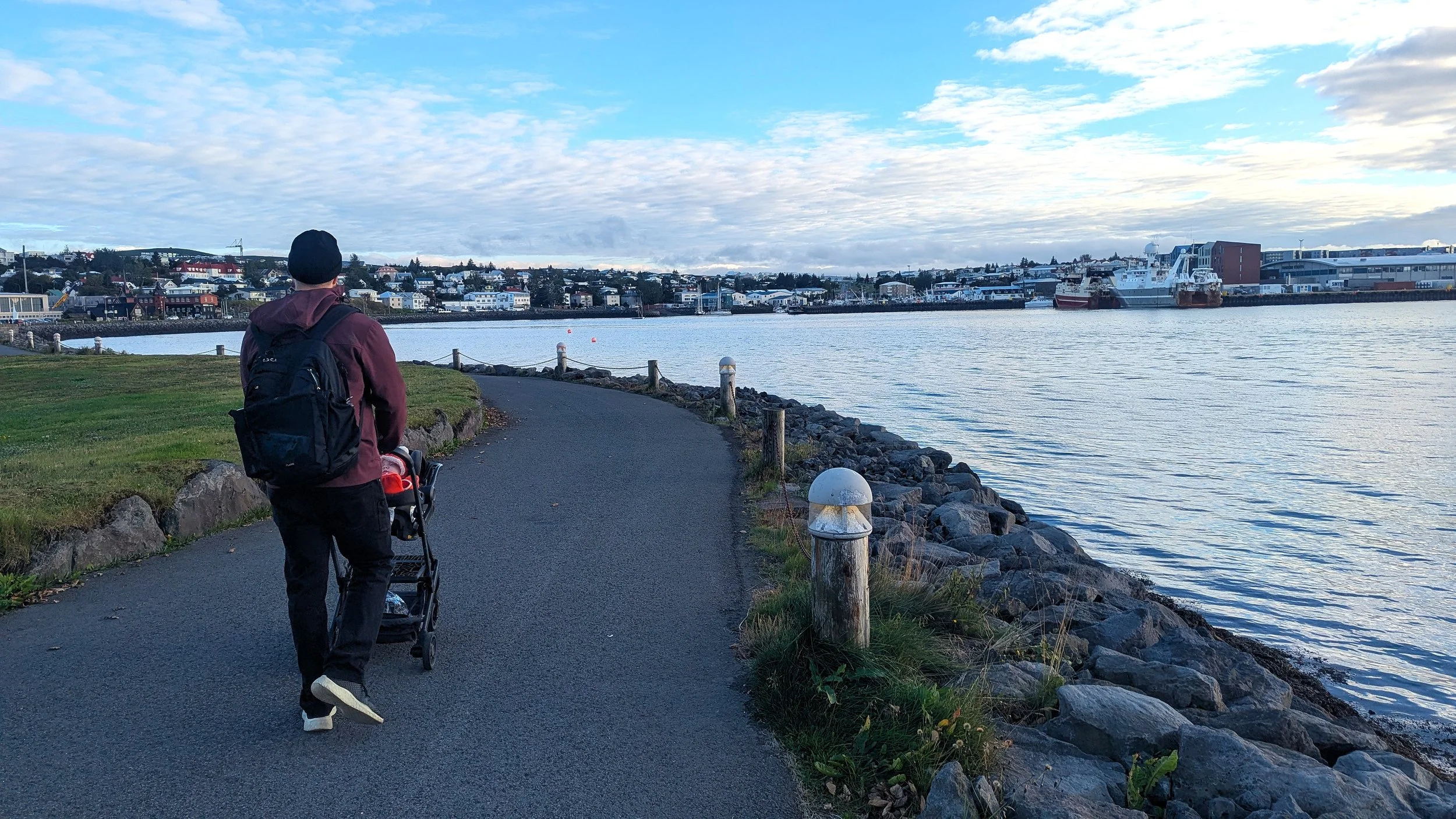
Hafnarfjörður
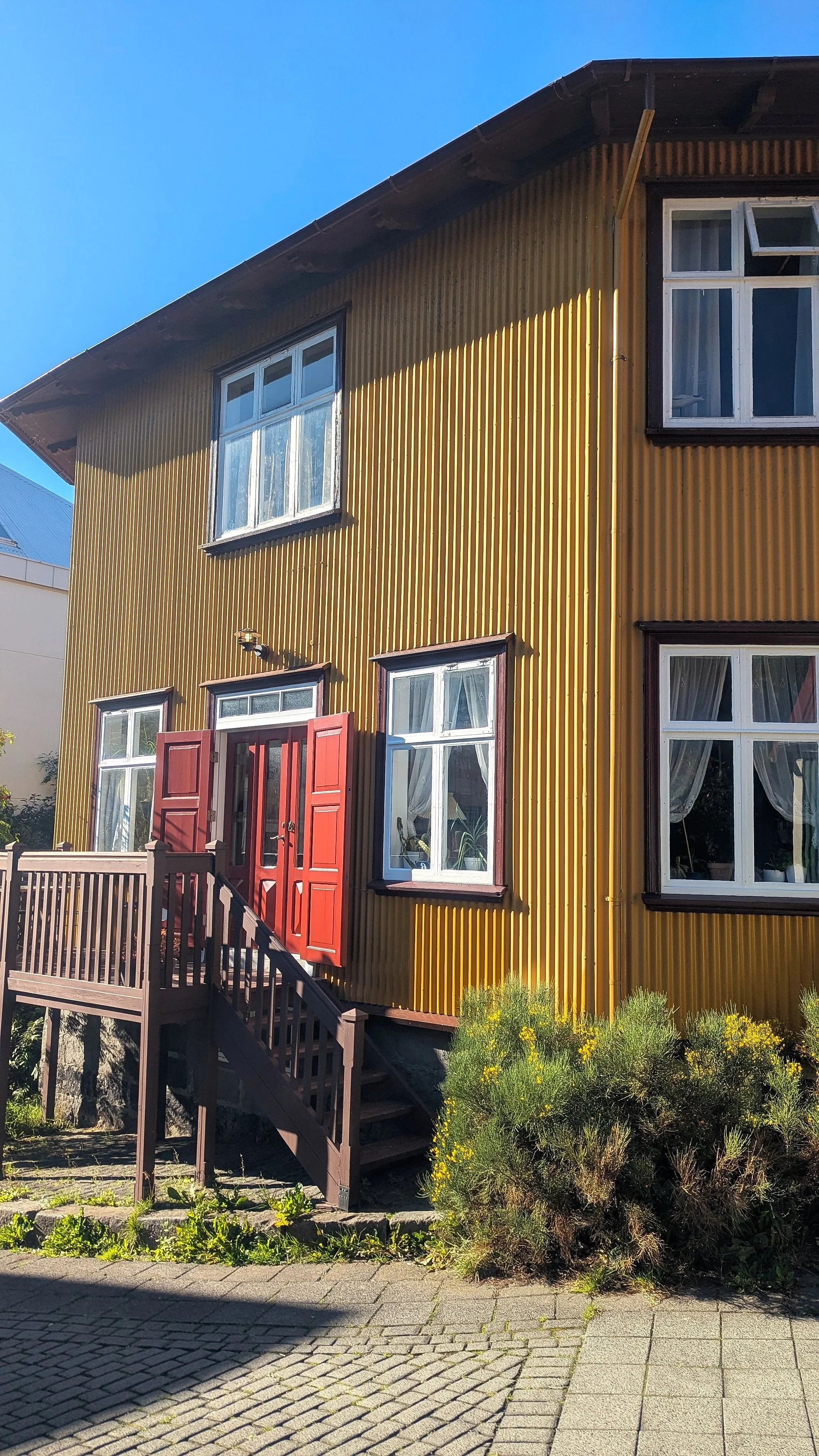
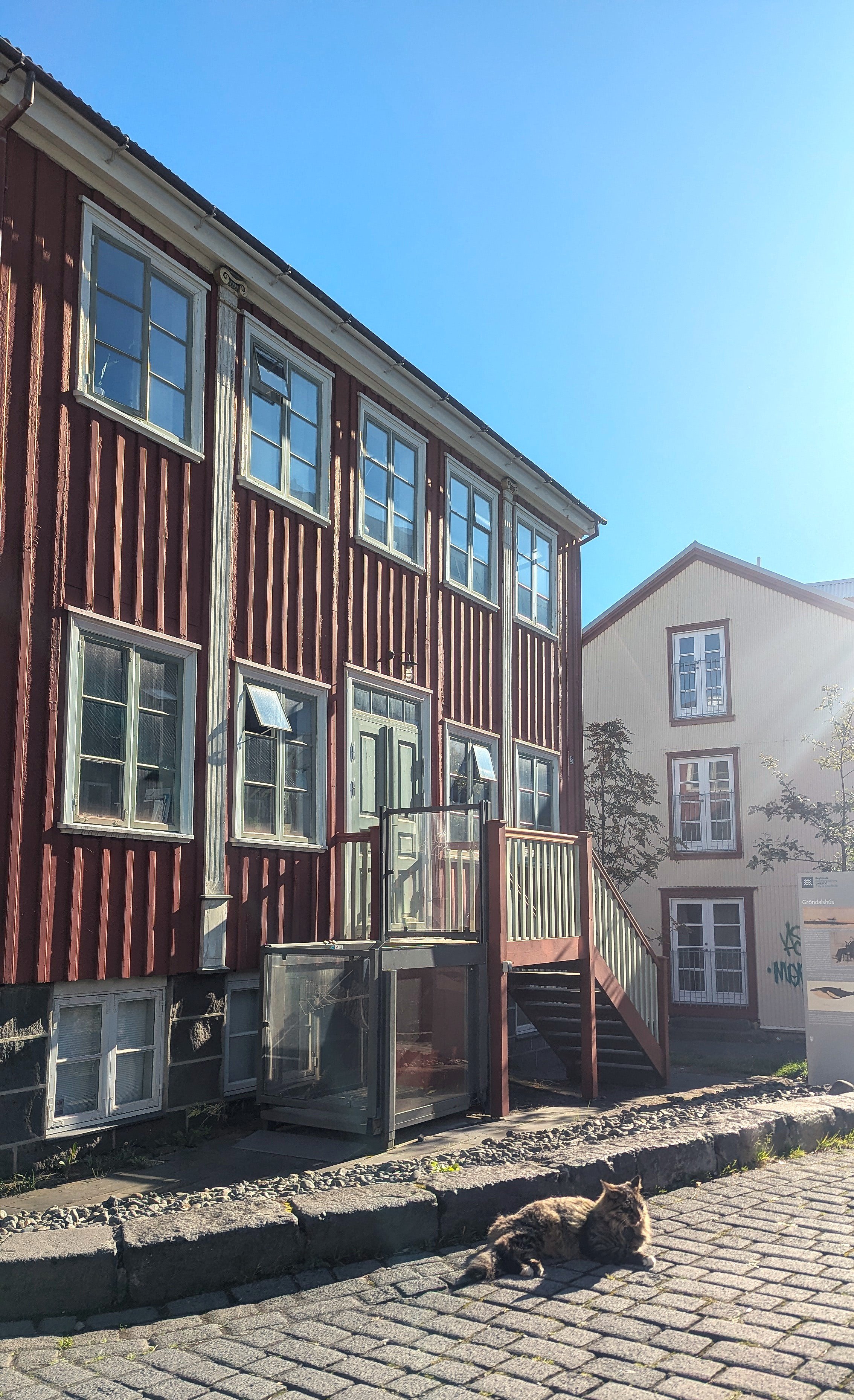
The next morning we started at the City Hall next to the tranquil lake Tjörnin and followed the Rick Steeves’ walking tour at our own leisurely pace. We were blessed with a warm sunny day to explore this northernmost capital city. Everything is compact and within walking distance. We learned that Iceland used to import British corrugated metal in exchange for their wool. For an island with almost no trees, this was a great siding material, and painting it was necessary to weatherproof it. Today, colorful siding is a part of the local culture and charm.
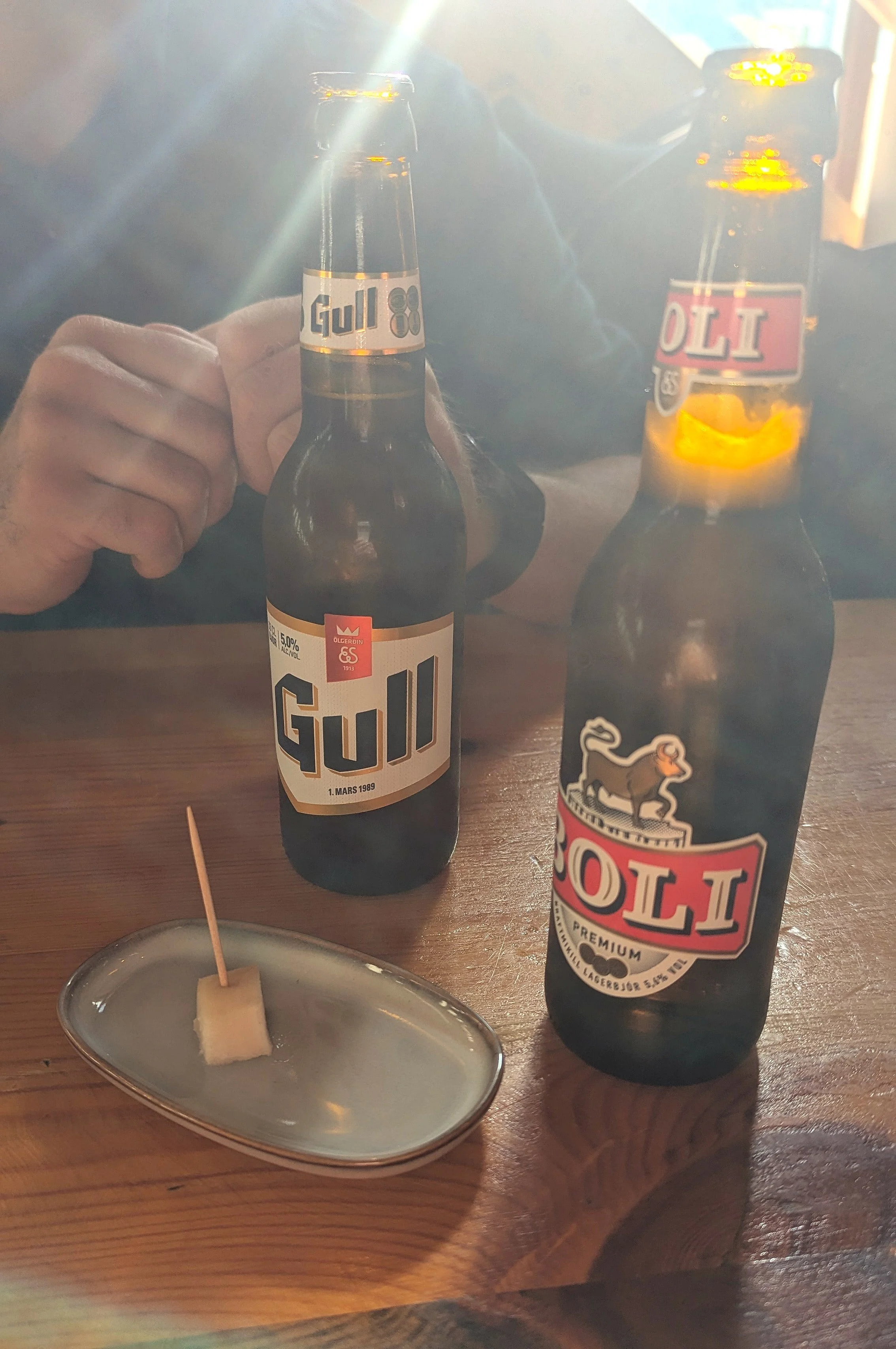
After trying the famous Icelandic hotdog at the iconic Bæjarins Beztu Pylsur, we continued in the search of more delicious food, and stopped at Seabaron on the waterfront. We enjoyed a variety of grilled local fish skewers, very fresh and delicious! The same, unfortunately, could not be said for the fermented shark, which smelled and tasted so much like a glass cleaner, that it instilled even more respect for the Icelanders into us.
We took an afternoon nap break, and returned downtown again to visit the famous Hallgrimskirkja. Built on the highest hill of the city, and shaped after the characteristic Icelandic basalt columns, the church is as imposing as it is austere. In front is a fine statue of Leif Erikson who is believed to be the first European to reach North America.
We wanted to see Reykjavik and the Faxaflói bay from above so we purchased tickets and took the elevator up to the bell tower. Unprepared, we discovered that the bells rang every 15 minutes, when they started booming right above our heads. The baby wailed in terror, but the views were beautiful.
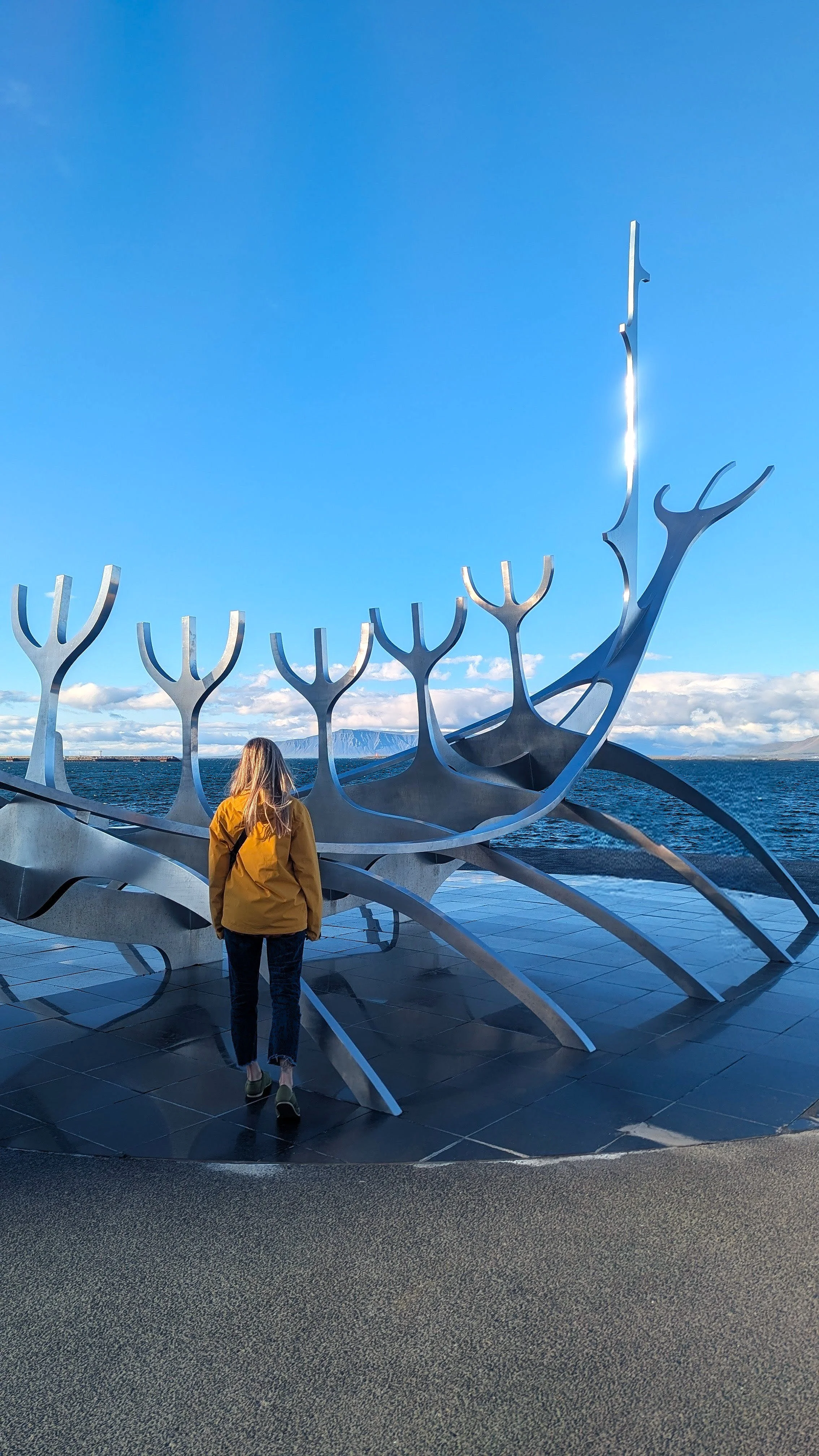
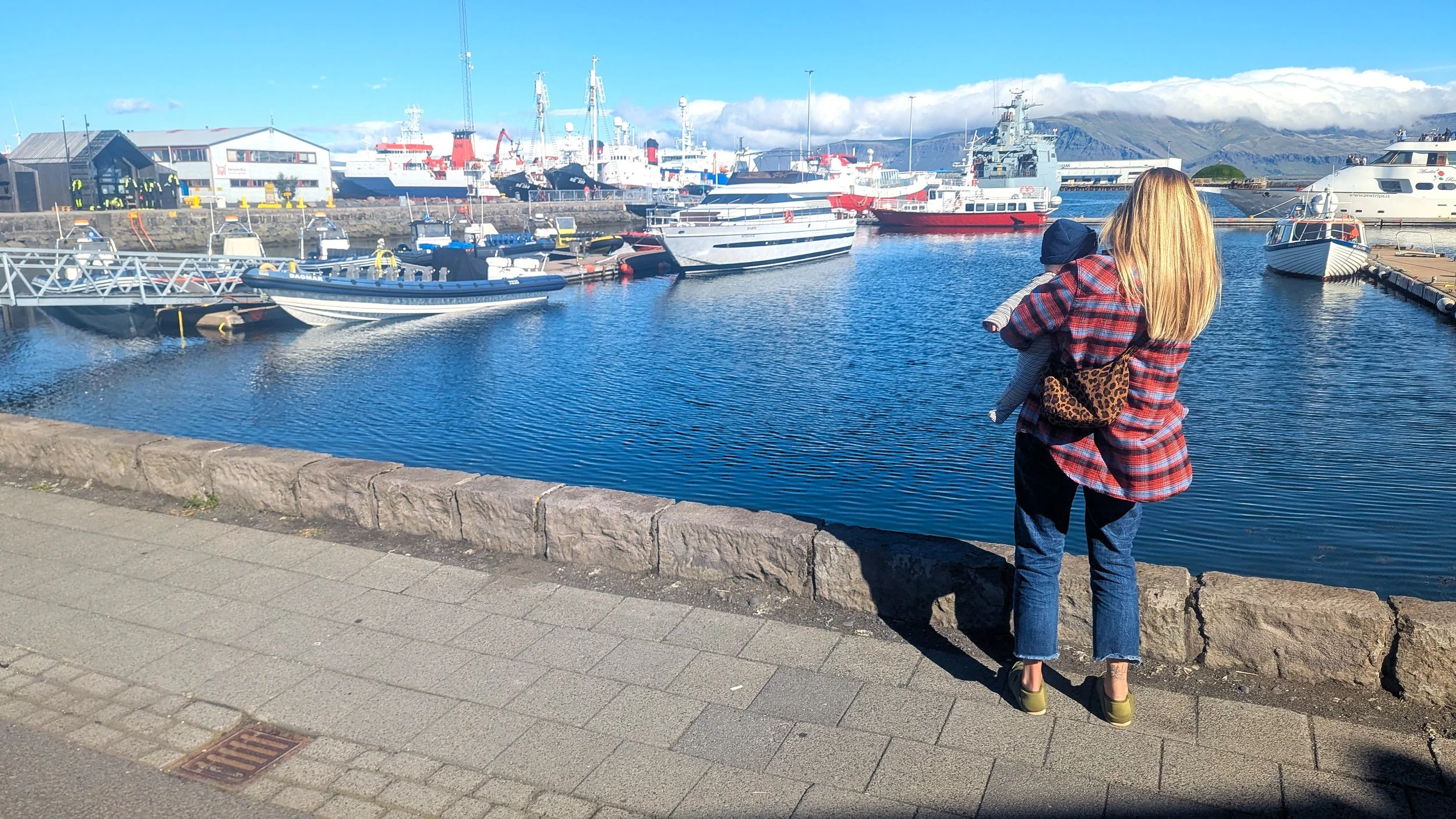
A short walk down to the water is the Sun Voyager sculpture, which shone in the late afternoon sun. The wind of the bay reminded us that fall in Iceland was imminent. Summer here was decidedly over.
For our final day on the island we drove up to Hvalfjörður, a stunning fjord just north of Reykjavik and east of Akranes. The natural beauty of the area is unparalleled. We know we will be returning, if just to visit the luxurious Hvammsvik Hot Springs spa situated right on the shore and overlooking the mountains beyond.
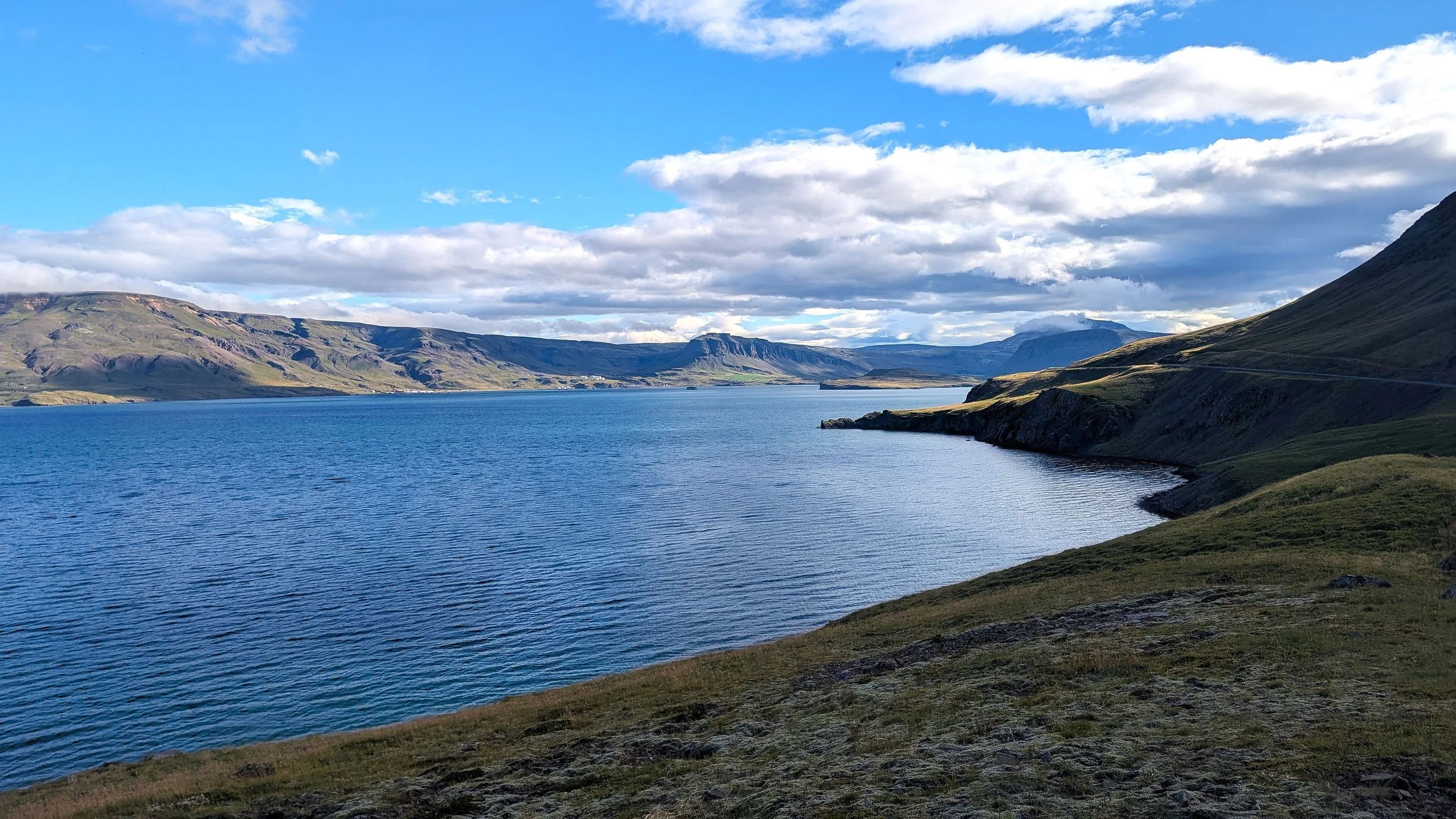
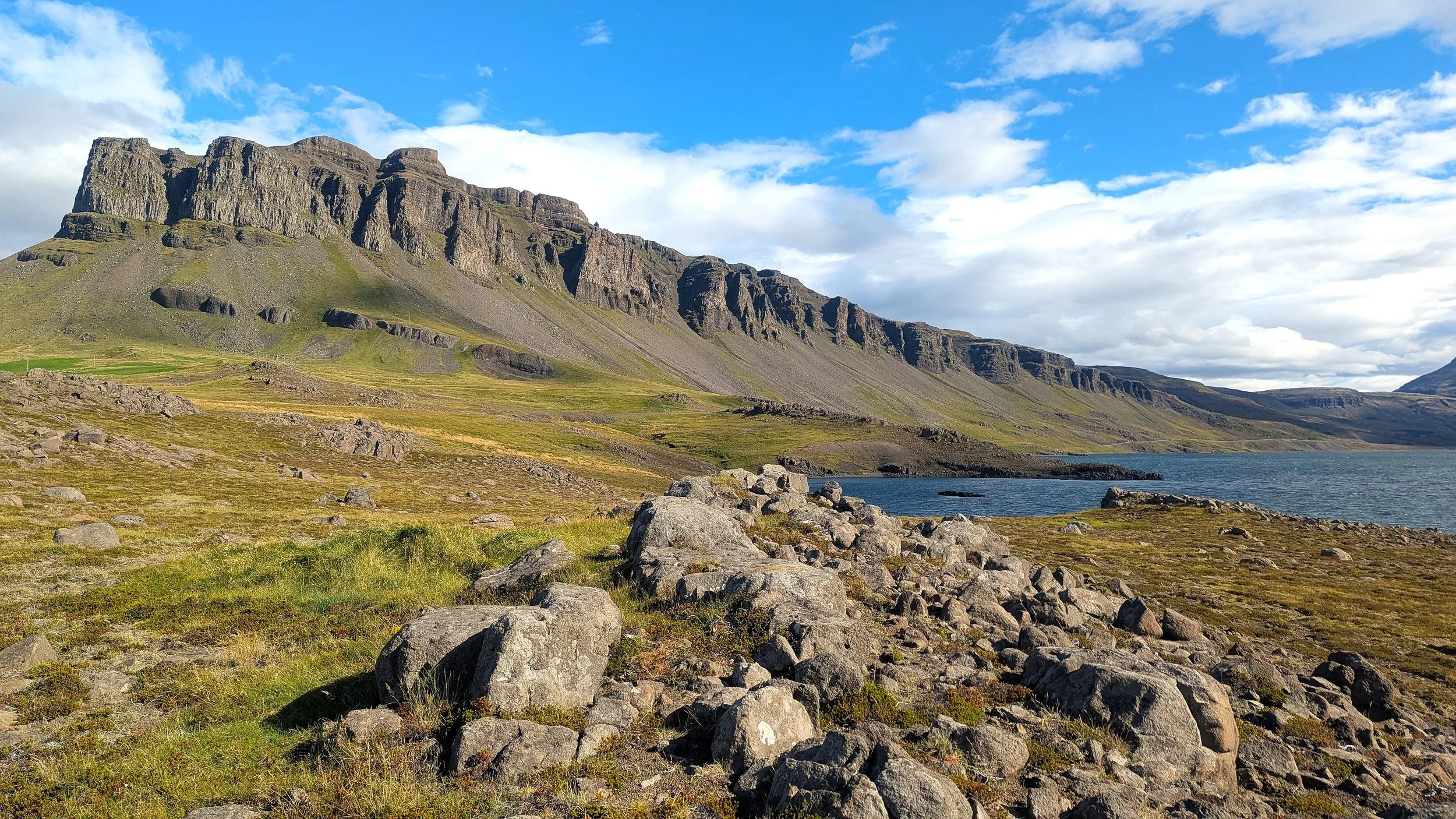
We spent our last evening at the grocery store stocking up on edible souvenirs of salted licorice and dried fish snacks. Our last icelandic sunset on the balcony of our apartment with a bowl of licorice ice cream in hand, and we were ready to return home the next day.
