
Switzerland to Italy
May - June, 2024
Traveling between Switzerland and Italy can be done via several overland routes, but none are fast or completely straightforward. The good news is, you are treated to the Alpine views all along the way. So we booked our train tickets ahead of time, stocked up on snacks, and trusted one of the best public transportation systems in the world to get us where we needed to go!
We covered quite a lot of ground on this trip but found the contrast between the Swiss Alps and the Italian Po River Valley to be perfect for a fun and varied adventure.
Geneva and Lac Leman
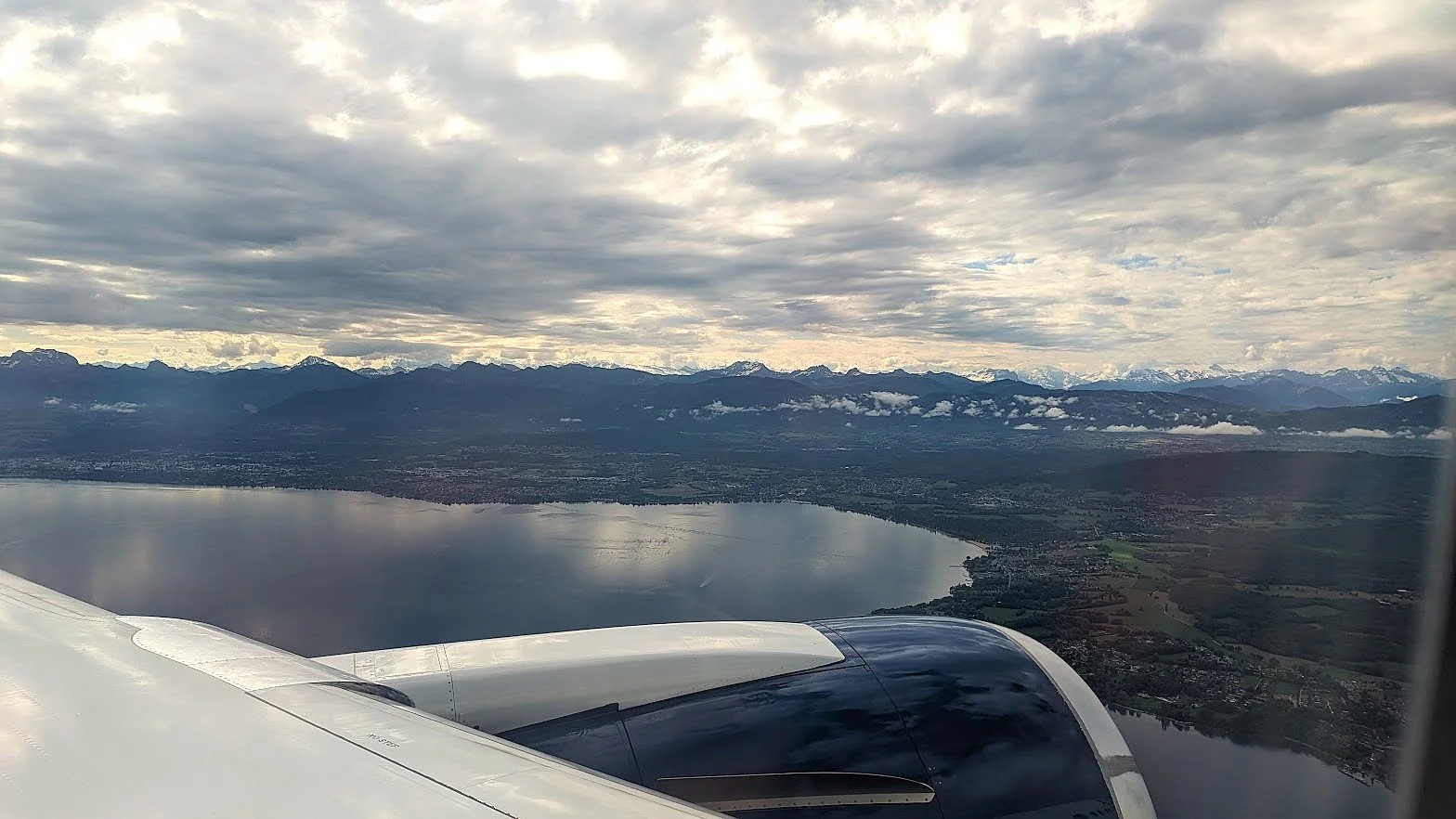
Geneva from air
Bienvenue! We were now in French speaking Switzerland.
Geneva is Switzerland’s second-largest city after Zurich (where most international flights arrive), though the capital is Bern. It is also home to the headquarters of the United Nations, the Red Cross, and one of the world’s largest concentration of international organizations.
Located on Lac Leman, and surrounded by the Jura and Alps Mountains, Geneva greeted us with a fantastic view upon landing. We hopped on the SBB train at the airport which took us to Gare Cornavin in the center of the city in only 15 minutes. We stored our luggage and set off to find early lunch and recover from our 14+ hours of traveling. Groggy and tired usually describes landing in Europe from North America. This time we were extra chewed up as our flight out of Minneapolis was significantly delayed. When we finally made it to JFK we had to sprint across the terminal with our bags on our shoulders!
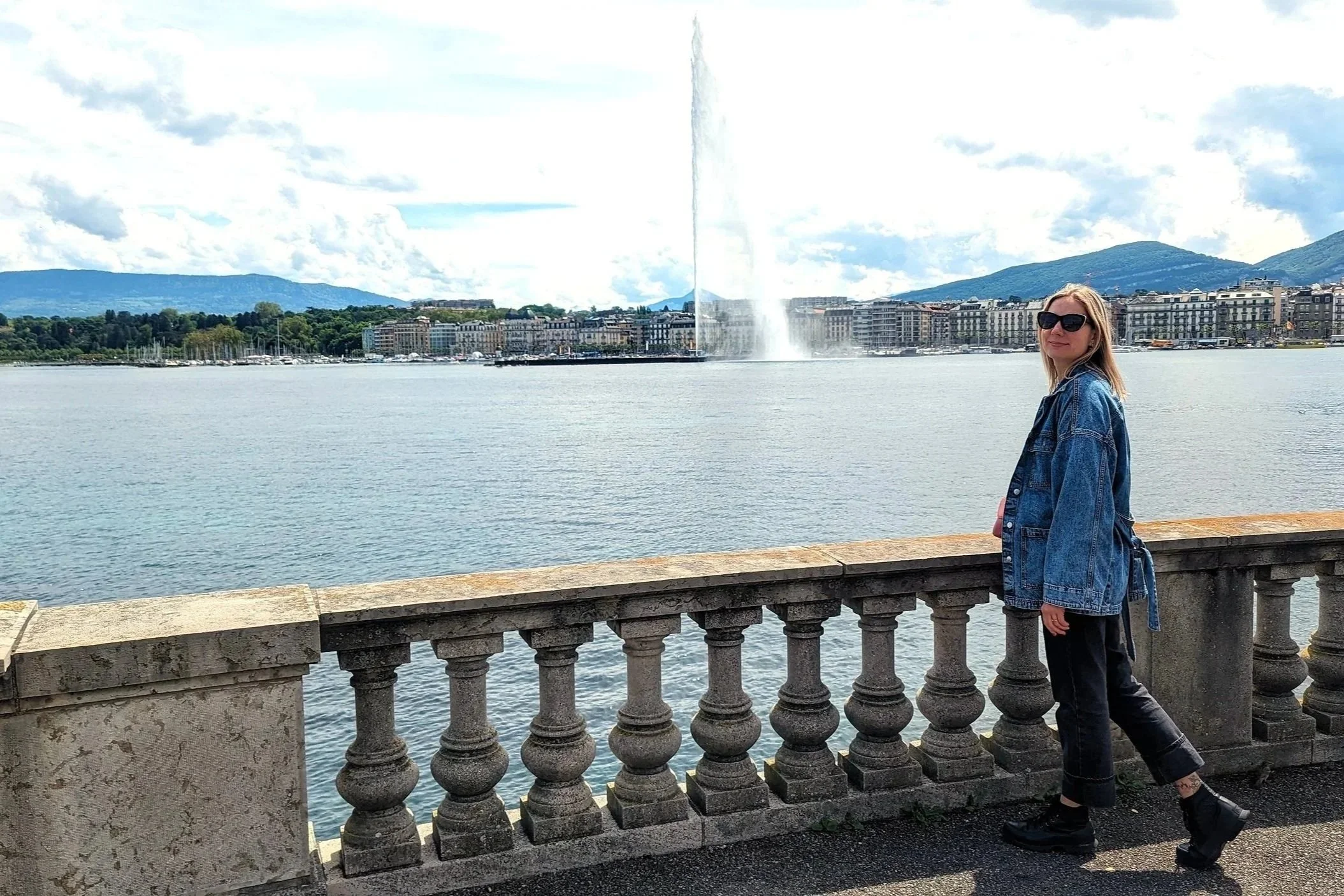
Switzerland is not known for its food culture and the prices at cafes and restaurants make eating out cost prohibitive not only for travelers on a budget, but for many locals as well. Thankfully, we saw many impromptu picnics on the grass and felt very comfortable to do the same. We stopped in at the Lebanese counter service Saj Eat for a couple fresh man’oushe wraps and headed to the waterfront. Sitting in a small park under blooming chestnut trees we enjoyed the freshness of Lac Leman air and the deliciousness of fresh flatbreads. We caught many jealous glances from little kids walking by, so we knew our first meal in Switzerland was a success!
Strolling down the beautiful lakefront after our lunch we had only one regret: We did not bring our swimsuits and the public lake baths Bains des Pâquis looked so fun and inviting. After a lakeside espresso in lieu of swimming, we headed up to Geneva’s medieval quarter.
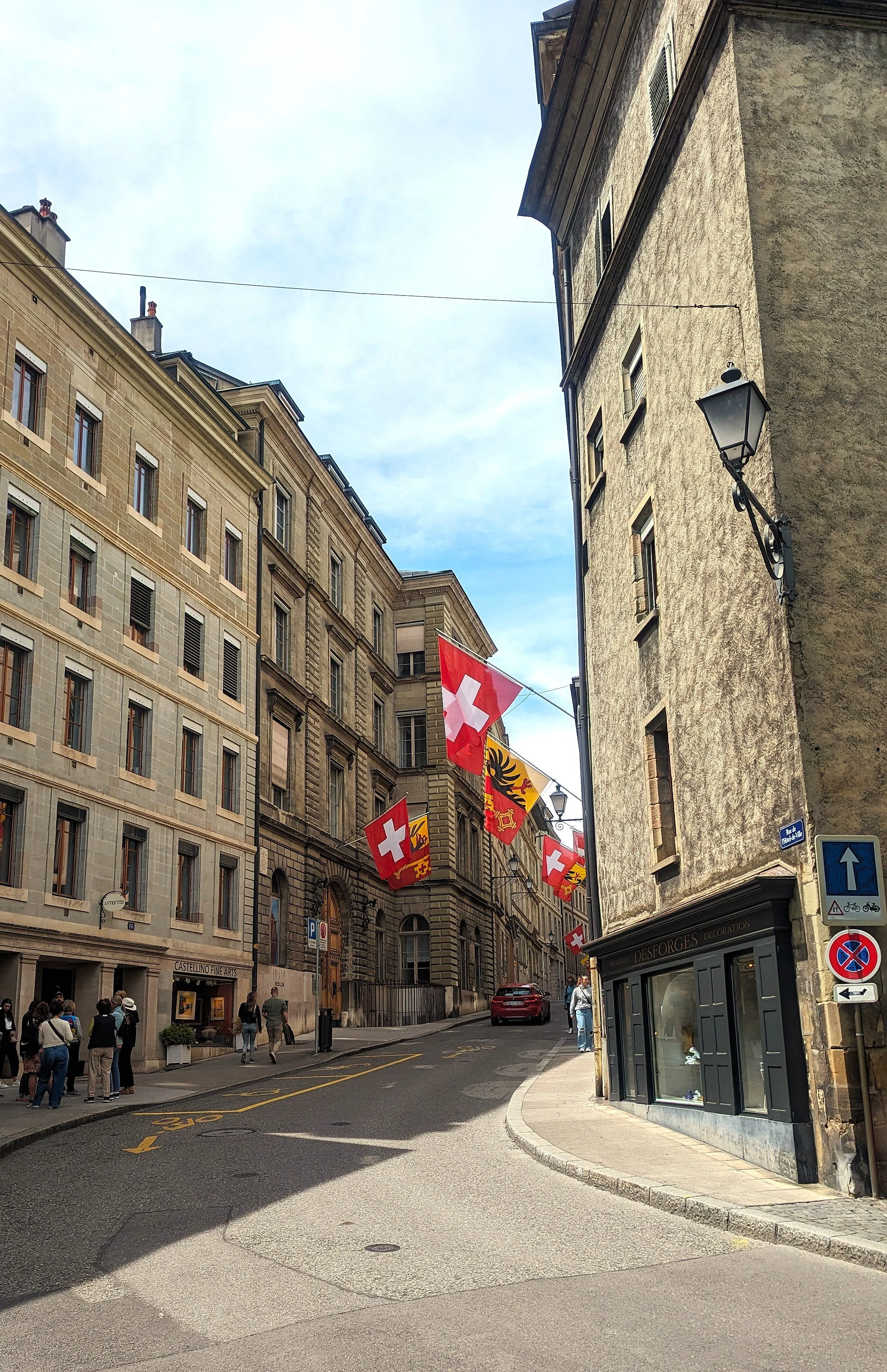
Everywhere in Switzerland we discovered public water fountains with cold and delicious drinking water, and Geneva was no exception. We were thrilled to fill our water bottles as we made our way up a steep hill to St Pierre Cathedral, Maison Tavel, and L’Ancien Arsenal. We turned into a narrow side street, and stumbled upon a perfect mid-afternoon pit stop. Pages and Sips, an English bookstore and cafe, offers not only delicious teas, coffees, and wines, but also a lively yet chill atmosphere perfect for that first jet lagged afternoon.
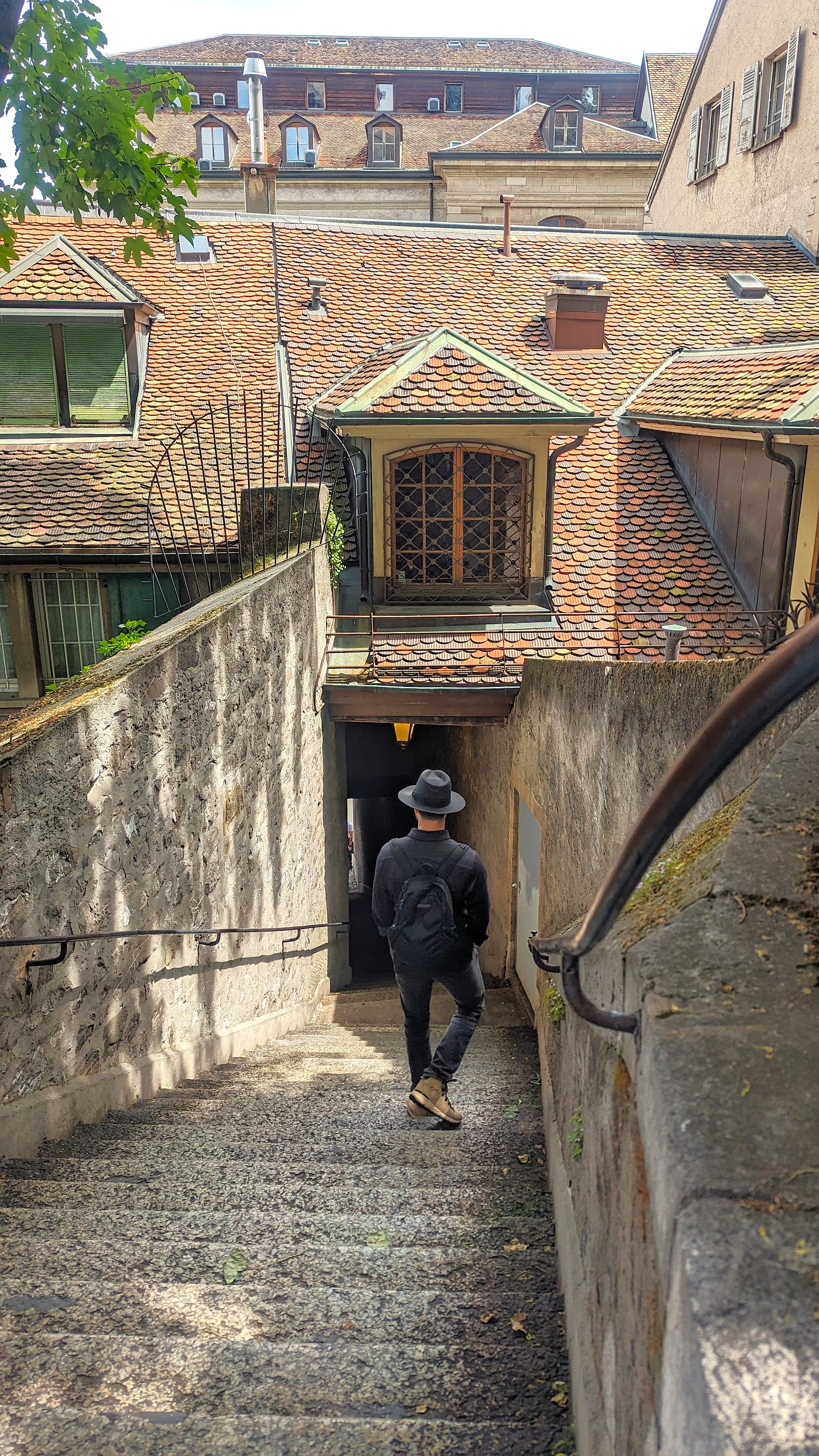
We rounded the cathedral and took the short Passage des Degrés-de-Poules to Geneva’s oldest square, Place du Bourg-de-Four. Geneva is full of secret passageways like this one, once used for speedy and unnoticed soldiers’ transfers and civilians’ escapes. The most famous one, Passage De Monetier, is only open for visitors one weekend a year, during L’Escalade festival.
At some point it became obvious to us that an unexpectedly quiet vibe in the city wasn’t just due to a workday Monday. All shops were closed, including food markets and pharmacies, and people were out strolling and lunching with their families. A local told us it was Pentecost Monday. And while he couldn’t explain what the holiday was about, it was just that, a public holiday.
We were getting tired and ready to continue to our final destination, so we walked back to the train station and set off on a short 20 minute train ride to Nyon.
Nyon
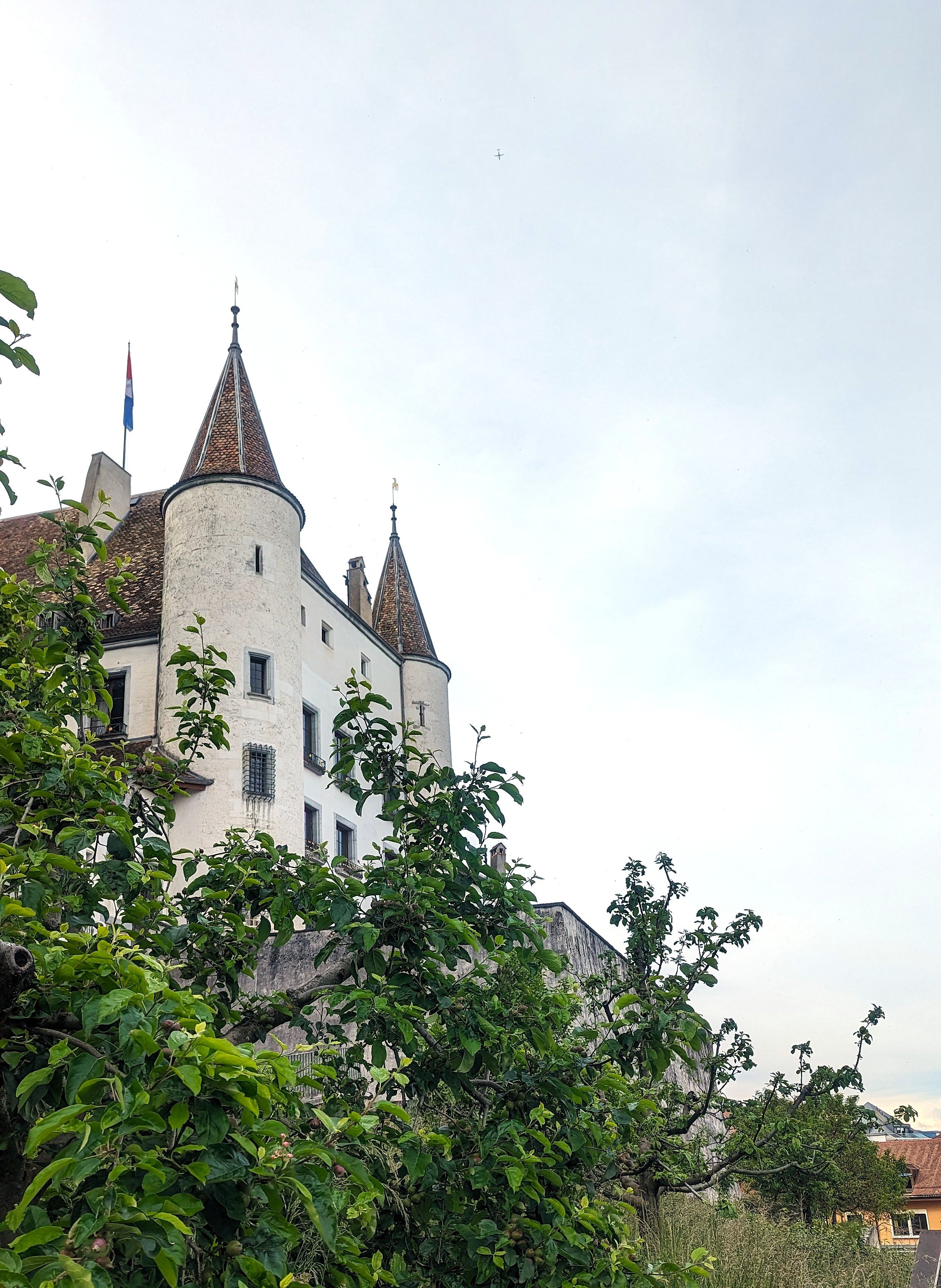
We chose Nyon as the first destination of our trip to relax and appreciate the beauty and tranquility of the Swiss riviera. Located on Lac Leman and easily connected via the rail network, this town is mostly overlooked in favor of Lausanne or Montreaux. Good! We’d like to keep this place all to ourselves.
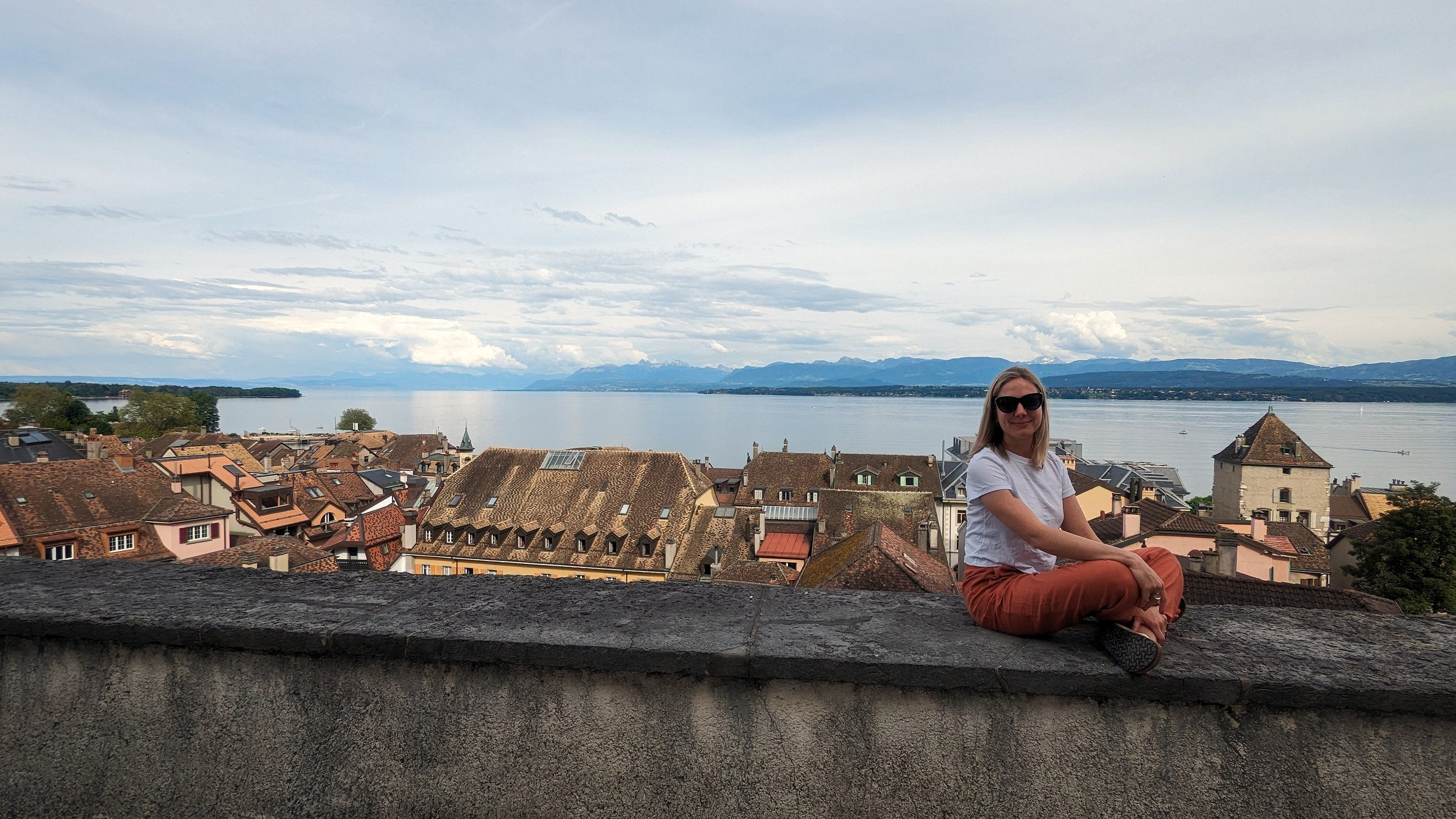
View from the Nyon Castle
After checking into our hotel, we stopped at the Coop grocery store by the station and made our way to the terrace of Chateau de Nyon and joined a few groups of locals for a casual dinner with a view. The terracotta roofs, the blooming gardens below, the shimmering water of the lake, and the Jura mountains on the horizon made for the best backdrop possible (we could almost spot the tallest European peak Mont Blanc!). And if it couldn’t get any more perfect, a local couple’s small bulldog went for a swim through the castle fountain just as we were sitting down to eat.
The next morning we started our day with a visit to Steve Rougemont bakery, great not only for a morning cup of coffee with an eclair or cherry tart, but also to stock up on the fresh sandwiches for the day of exploring.
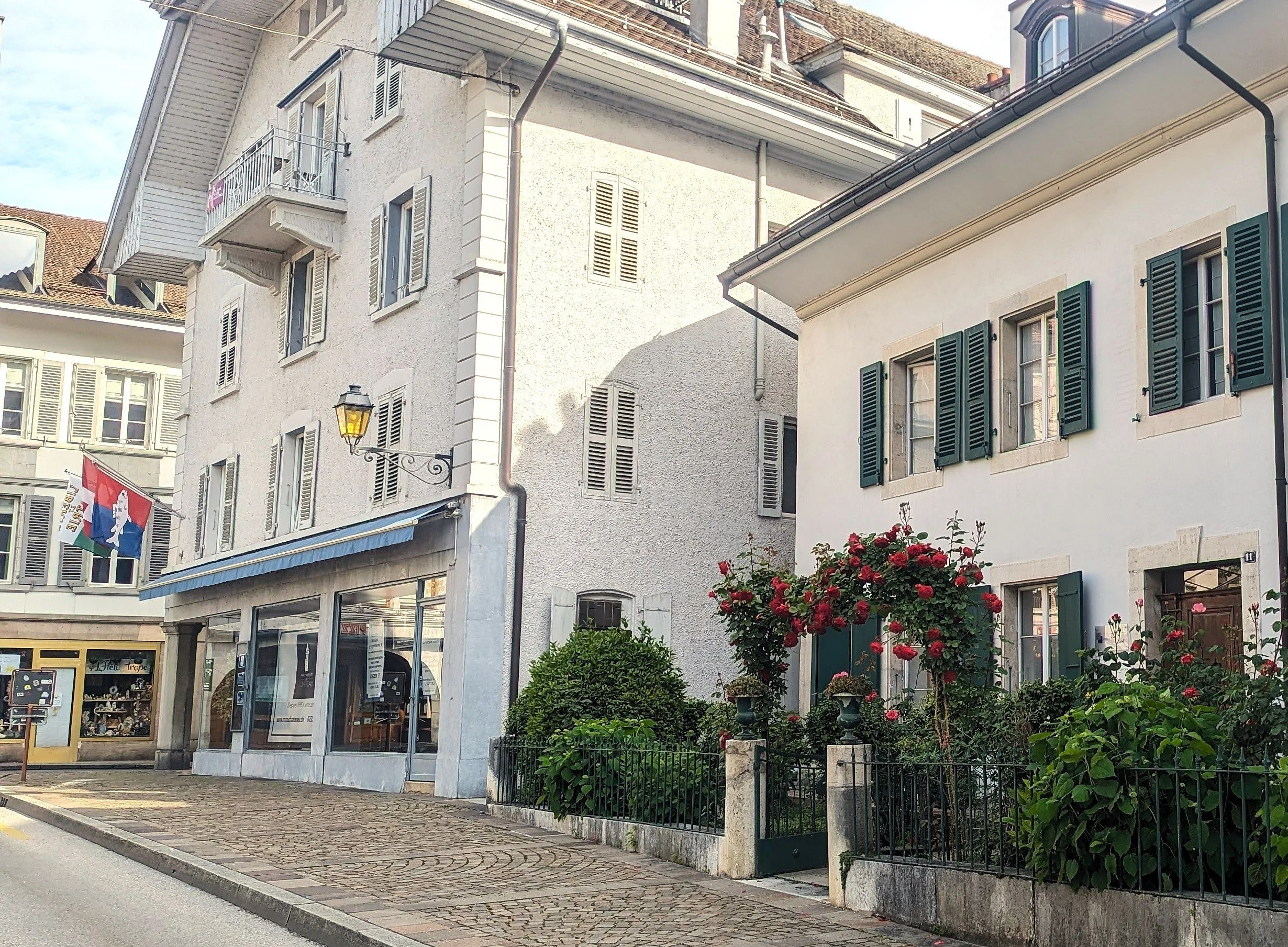
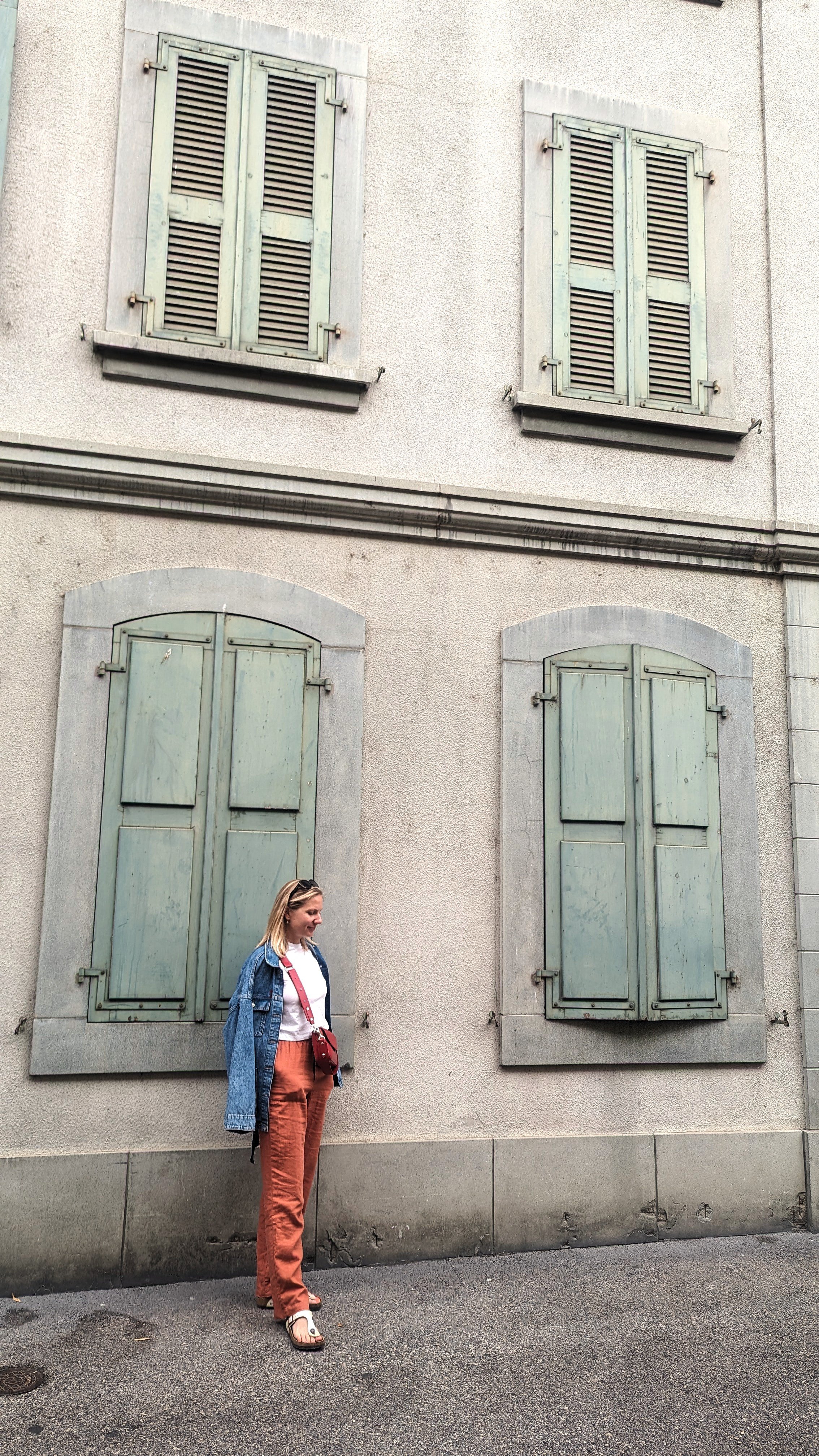
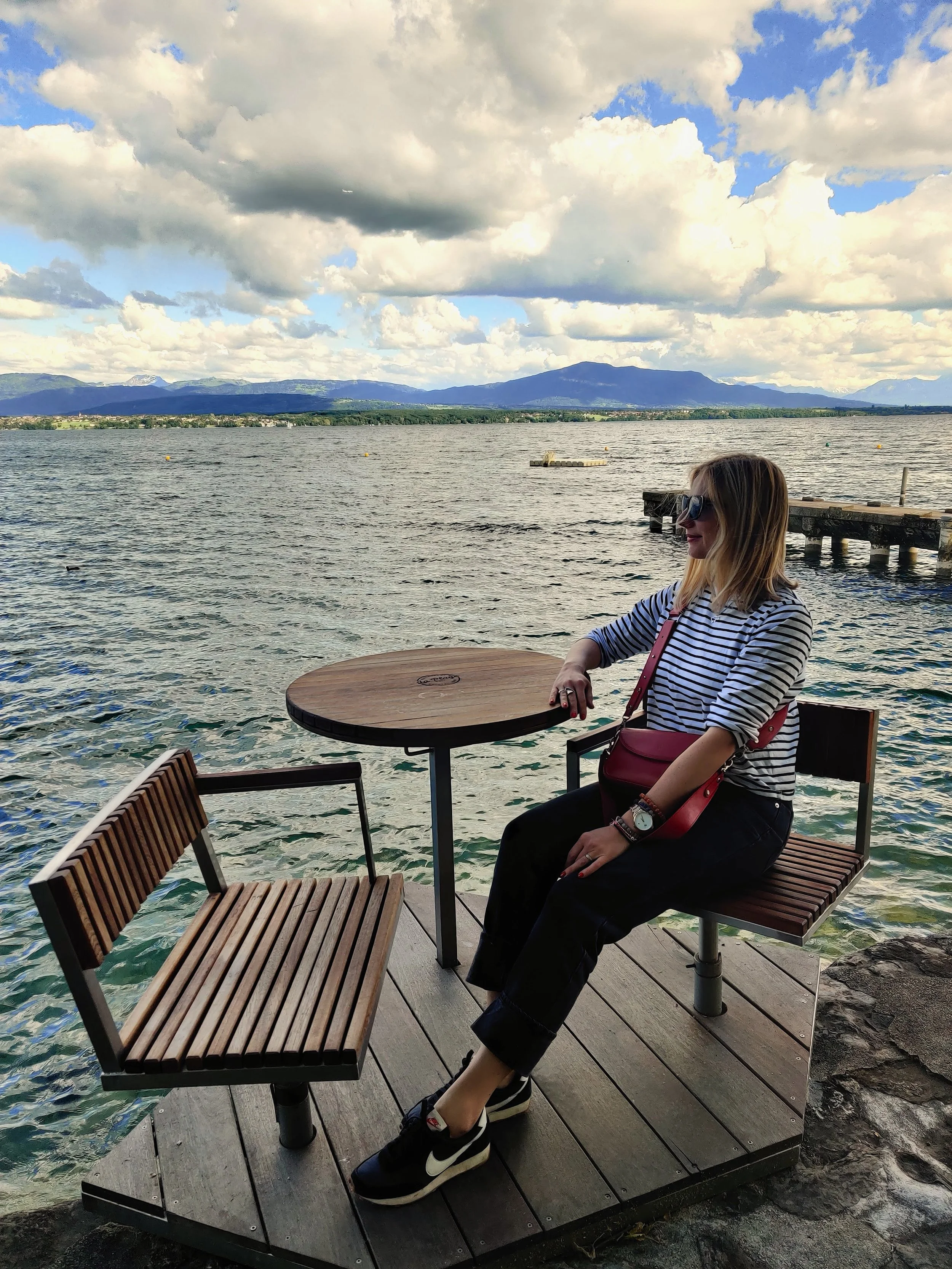
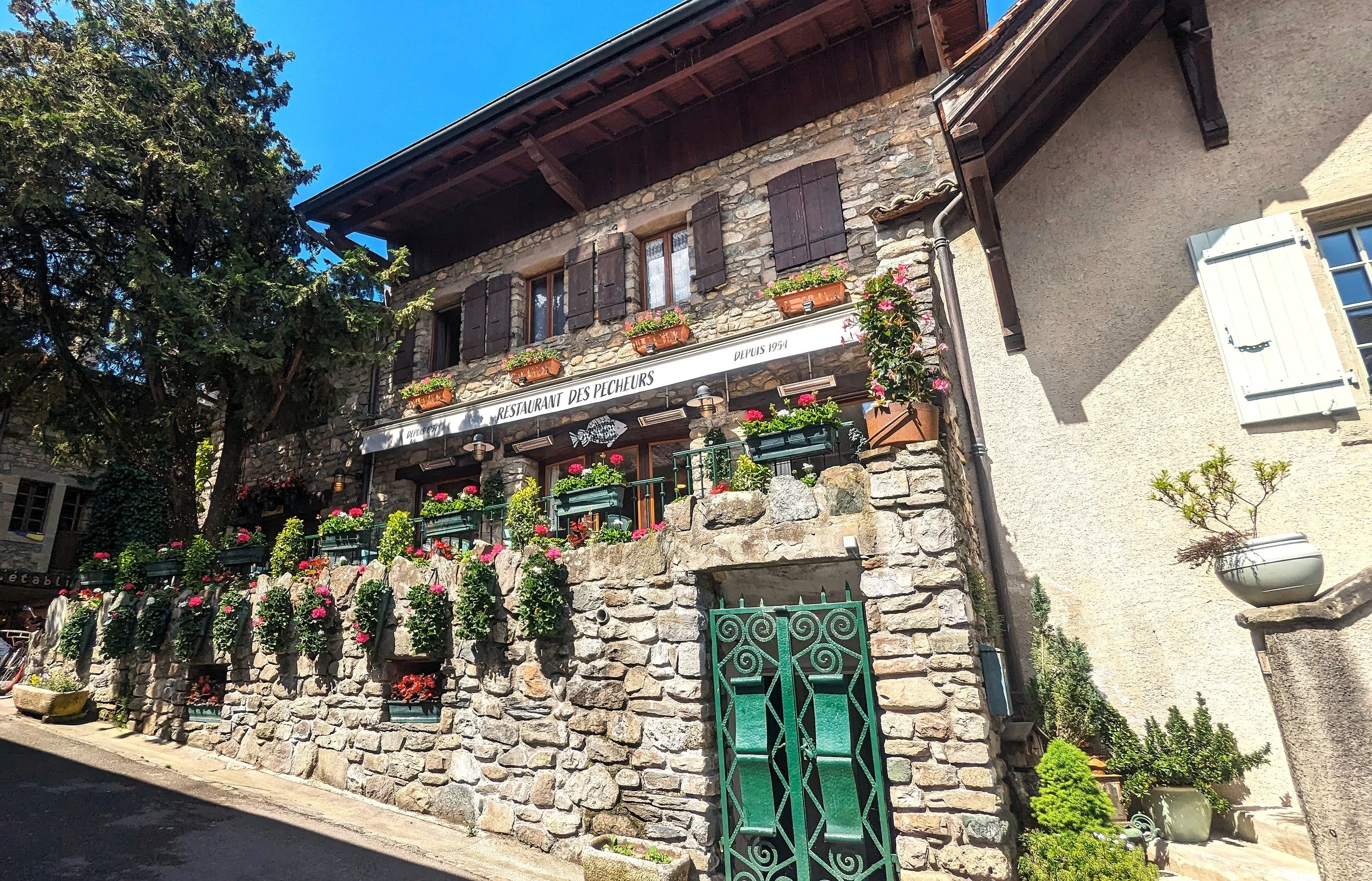
Nyon’s old town is small and walkable so we allowed ourselves to get lost in its quiet streets and admire flowers and colorful houses. The city flag features a perch. One of the staple fish of Lac Leman, perch used to be the town’s livelihood. You can still try it at most restaurants, but be prepared to pay more than you would anticipate. Even fresh filets sold by fishermen at the waterfront are pricey.
Yvoire
One of the reasons we chose Nyon as our base is the easy connection it has with the french village of Yvoire. The ferry service, run by CGN, not only connects most cities and towns on the lake but also provides a variety of cruises. In classic Swiss style, CGN interfaces perfectly with the rest of the transport network and if you have downloaded the SBB app (which I highly recommend!), you will access your ferry tickets there. As with Swiss trains, look for discounted tickets if you purchase ahead of time. Or, simply show up to the waterfront and board the next available boat.
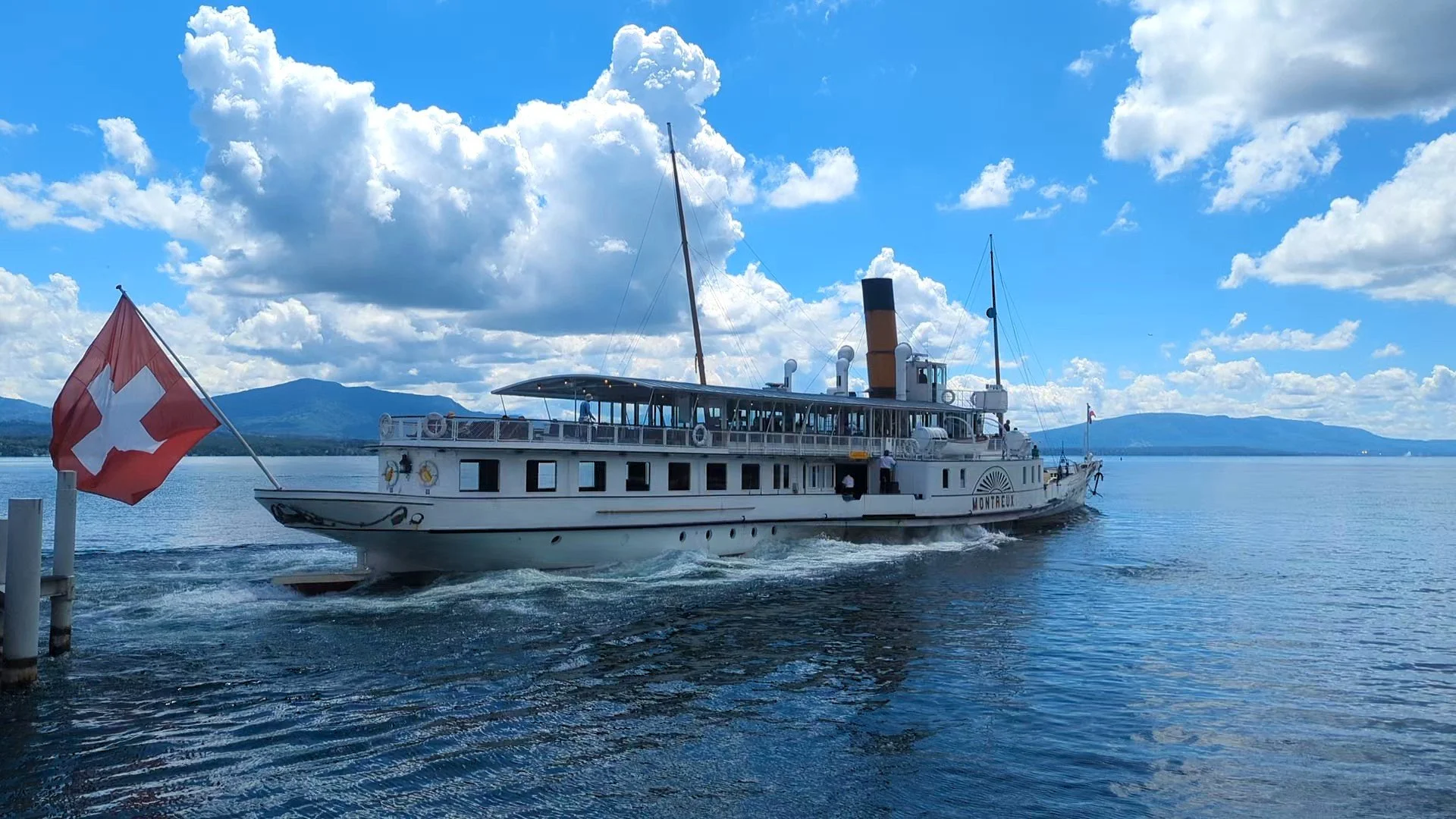
Yvoire Ferry
A beautiful 20-minute ferry ride later we were docking at Yvoire. We were now in France, but the biggest difference we noticed was switching from Francs to Euros.
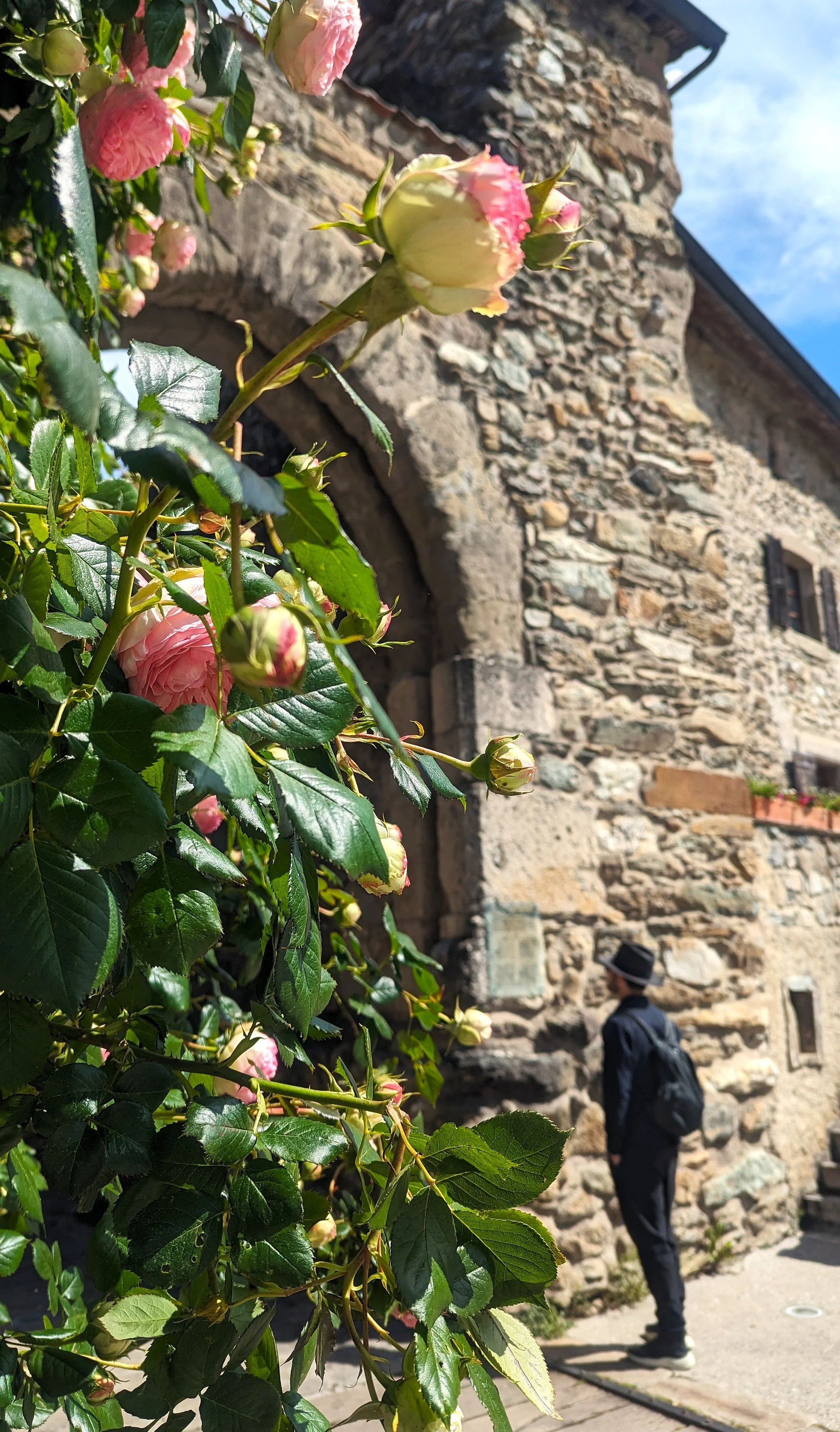
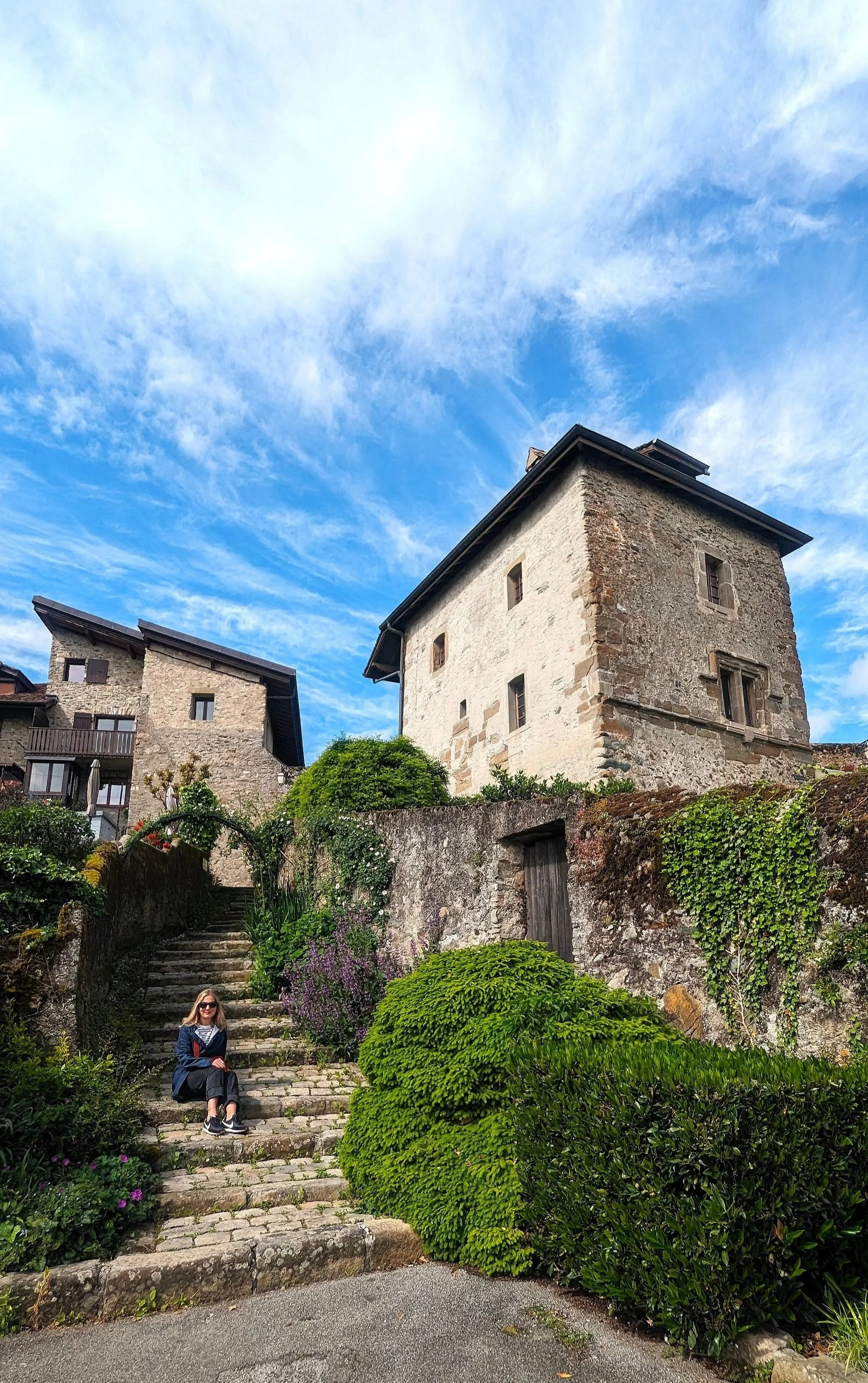
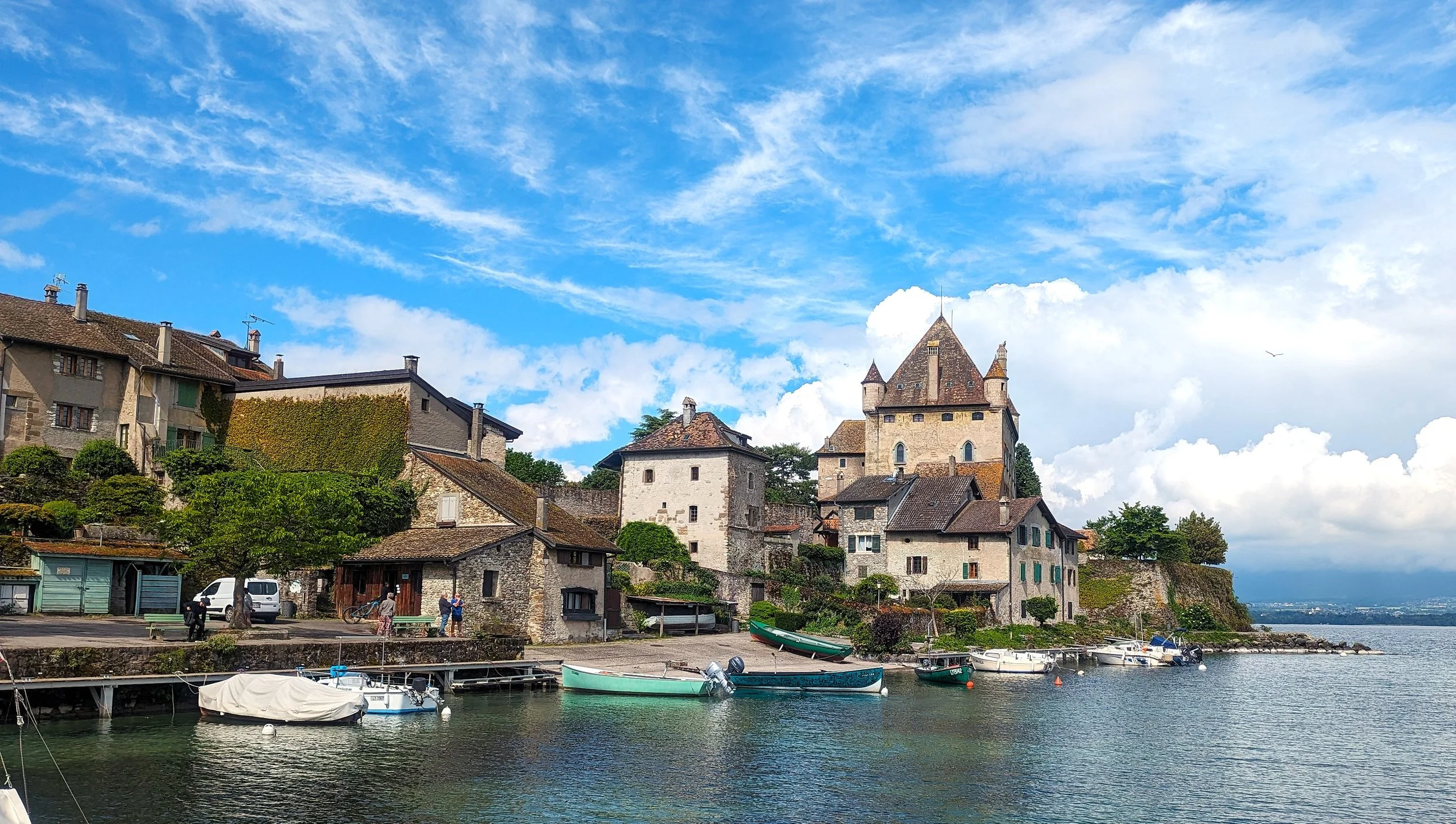
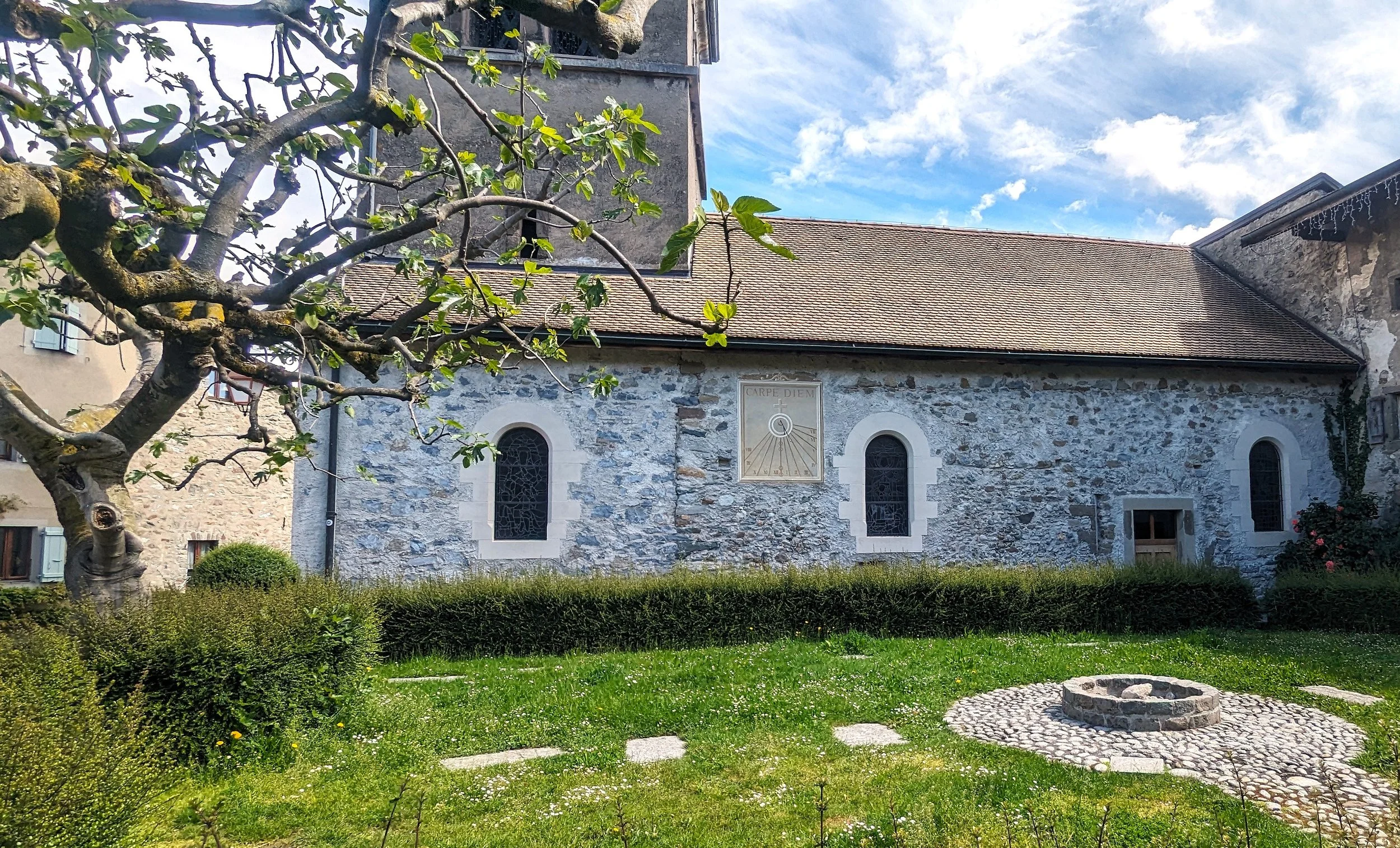
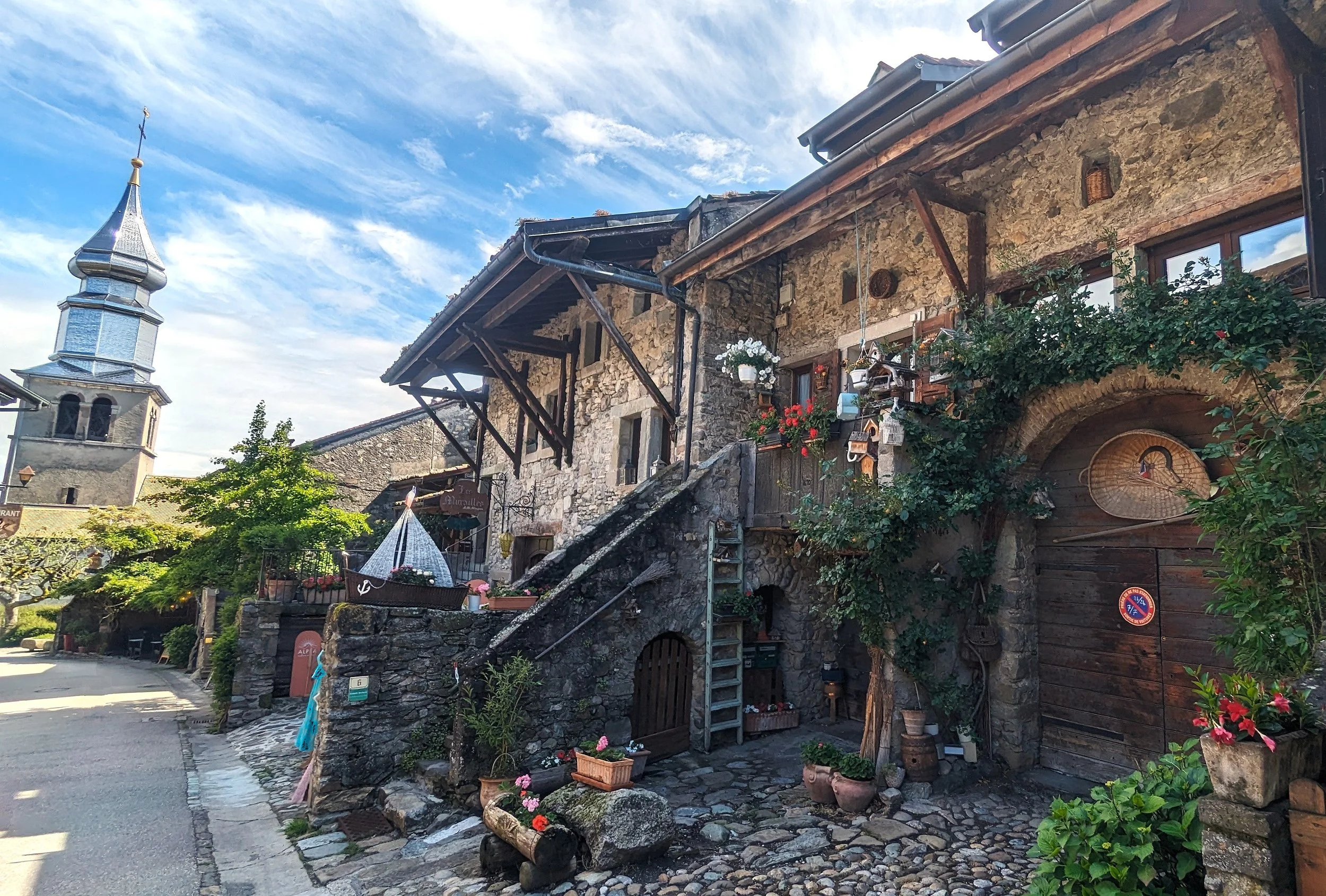
Yvoire, built in the 14th century, is considered one of the most beautiful villages in France. Yes, there is an official list. Flowers are absolutely everywhere - in gardens, pots, window boxes, climbing the medieval walls and cascading down to the lake. The village even boasts a large pollinator garden with beehives and insect hotels.
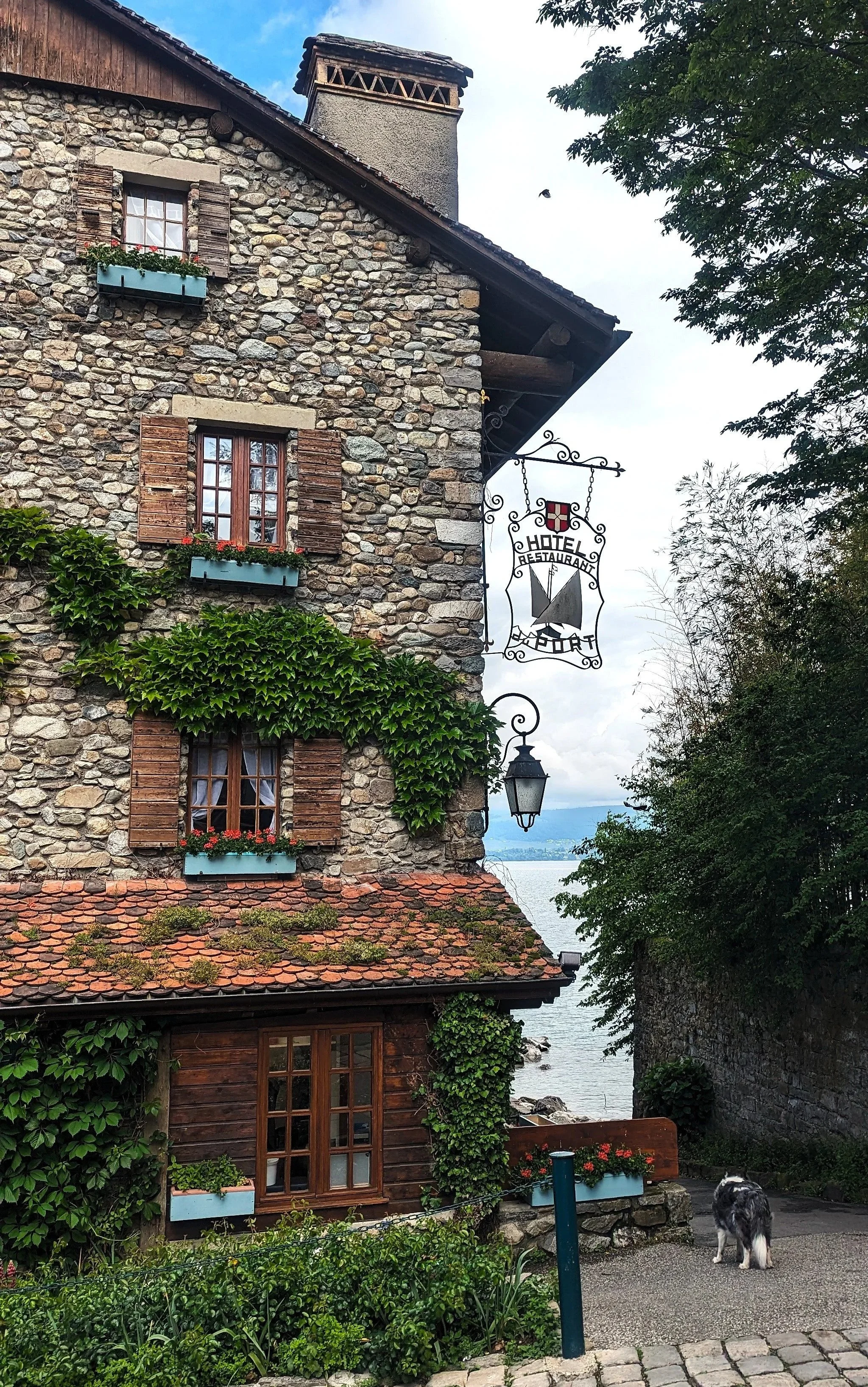
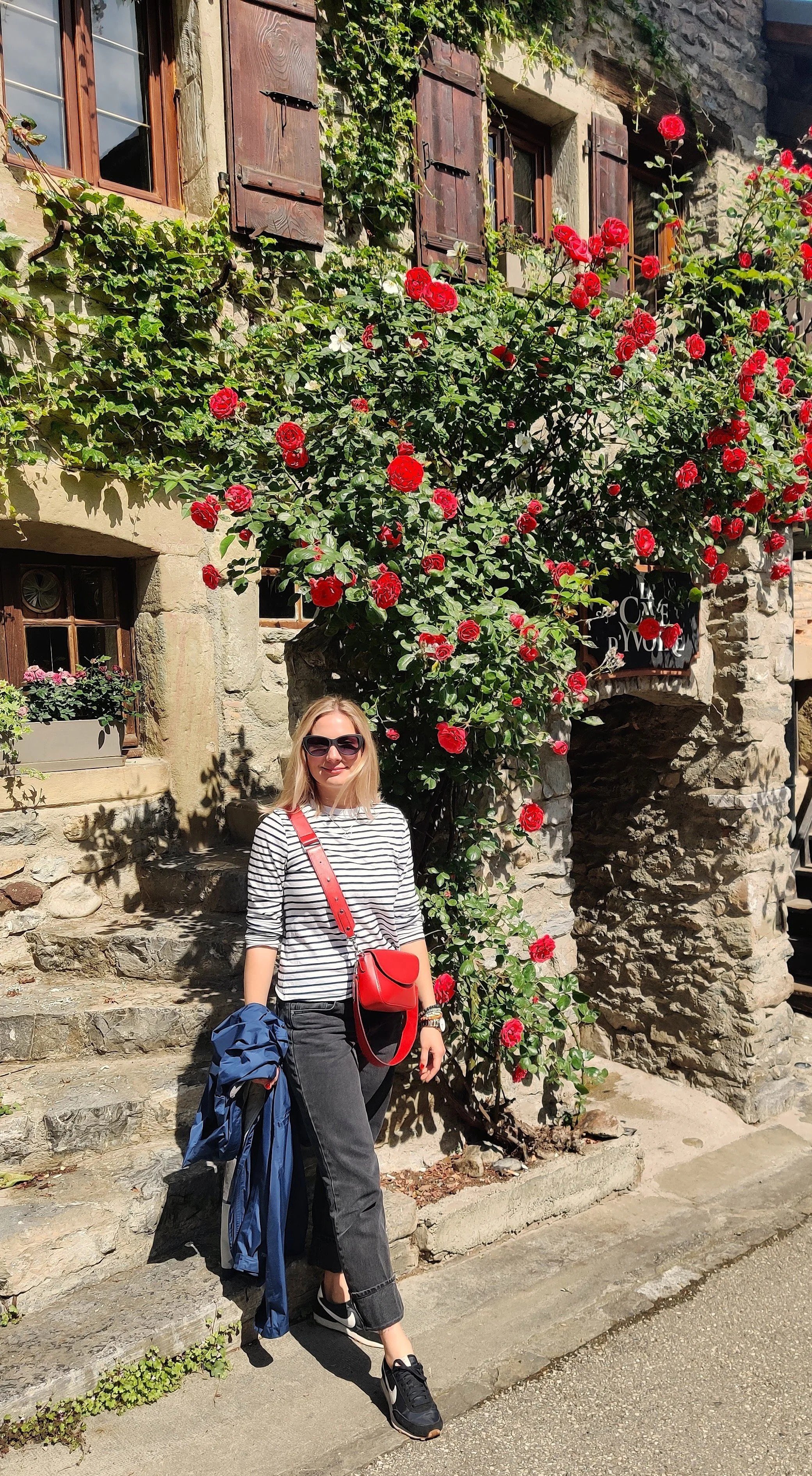
Perch is on menus here too (and it is as expensive as across the lake in Switzerland), but we didn’t pursue it. Instead, we enjoyed a crepe filled with emmental, comté, and beaufort cheeses at La Creperie D’Yvoire and later popped into a tiny grocery store in the town square.
Yvoire is very small so 2-3 hours including lunch was a great amount of time to explore at a leisurely pace. We even found a lakeside bench to watch a pair of Eurasian coots haul sticks and twigs to their nest in the stones of the marina.
After returning to Nyon we spent the rest of the day relaxing, recovering from lingering jetlag, and enjoying the sunshine and fresh breeze coming off the lake.
Nyon to Bernese Oberland
We left Nyon after breakfast the following morning. We really enjoyed Lac Leman, and I would definitely recommend spending a few days enjoying the tranquility and beauty of the area.
It was time for us to continue on to the Alps, so we readied for a long travel day. From Nyon we took a train to Bern where we changed trains to Interlaken. At Interlaken, another transfer to a Lauterbrunnen train. Then a bus and two cable car rides to our final destination of Mürren.
Public transportation in Switzerland is unparalleled. Not a single train, bus, boat, funicular, or cable car runs even a minute late. All transfers are carefully planned and scheduled to allow enough time for passengers. The trains are clean, quiet, and the staff are courteous and knowledgeable. But a ticket controller in front of us did not hesitate to remove from the train a person riding without a valid ticket.
Given how nice the system is, it is not cheap. To help residents and visitors save the SBB offers over 20 discount passes. Depending on your plans, some will work better than others. This was definitely a worthy puzzle for the travel planning geeks, to calculate and compare the costs and choose the best options. I highly recommend My Swiss Alps website. It is a fantastic resource and even has a spreadsheet template to help with the calculations.
In addition to making our plans and calculations ahead of time, we also downloaded the SBB app. It shows travel options in real time, helps plan your route, and allows you to purchase and store tickets for all modes of transportation. Why use a machine at the station when you can plan your next move while still sipping coffee, get your ticket with one click and just walk on when the time comes?
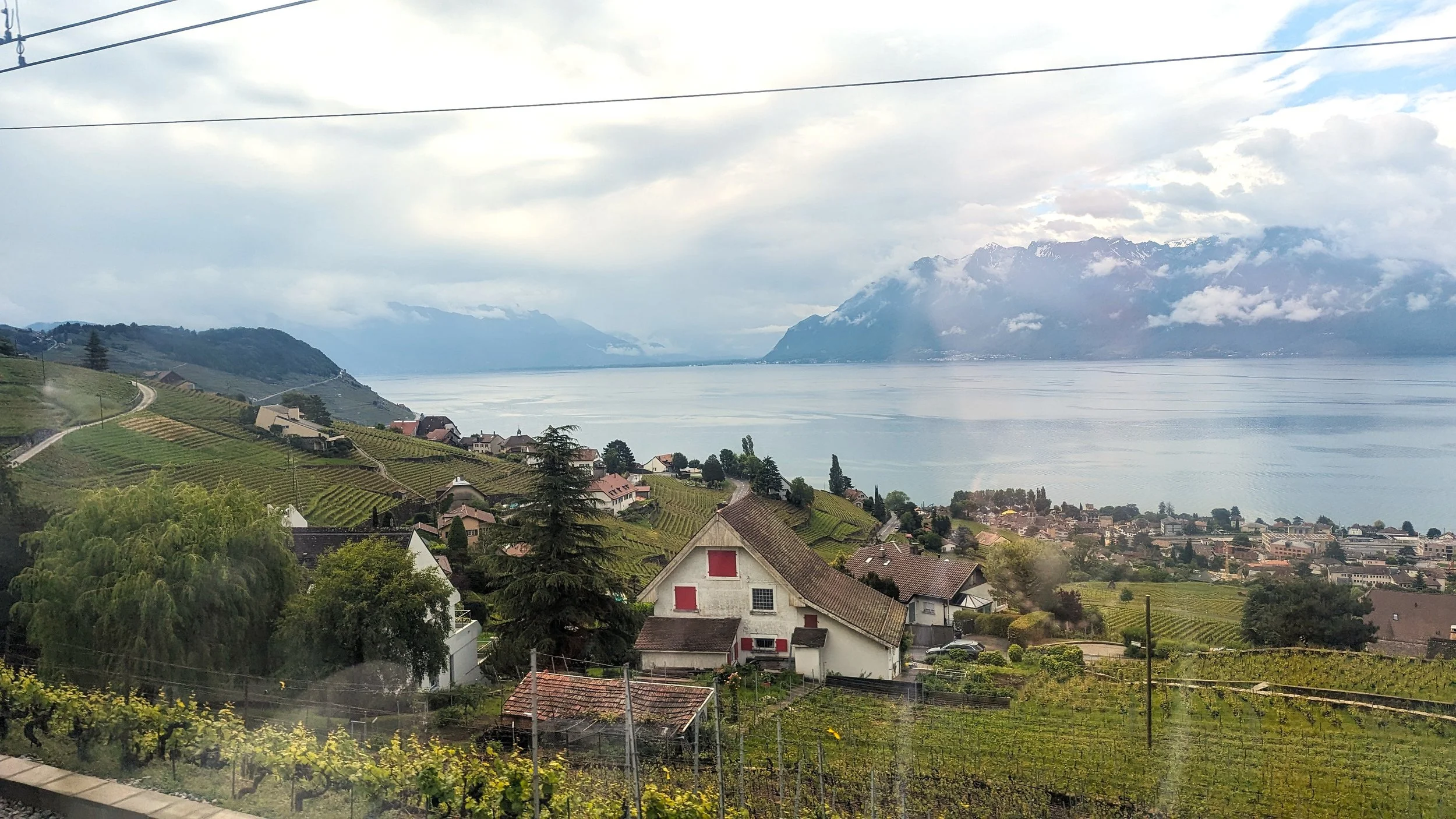
View from the train
Bernese Oberland
Wilkommen! You are now in Swiss German speaking Switzerland.
When we switched trains in Bern no one around us spoke French anymore. We were now in the German speaking part of the country.
Bernese Oberland is a region of the country famous for its world class skiing in winter and the unparalleled Alpine views in the summer. Between the two distinct tourism seasons there are two off seasons, when most hotels, restaurants, and cable cars are closed. If traveling on the shoulders you will definitely avoid the crowds and the high prices, but be prepared to have limited access in return.
We decided to base ourselves in Mürren, on the western side of the Lauterbrunnen valley. The eastern part (with the Jungfrau mountain range) features another popular village of Wengen. Further to the east, the village of Grindelwald is also a reliable base. I recommend choosing a place to stay based on the top hikes and peaks, as different villages offer more proximity to different attractions of this gorgeous region.
Mürren and Gimmelwald
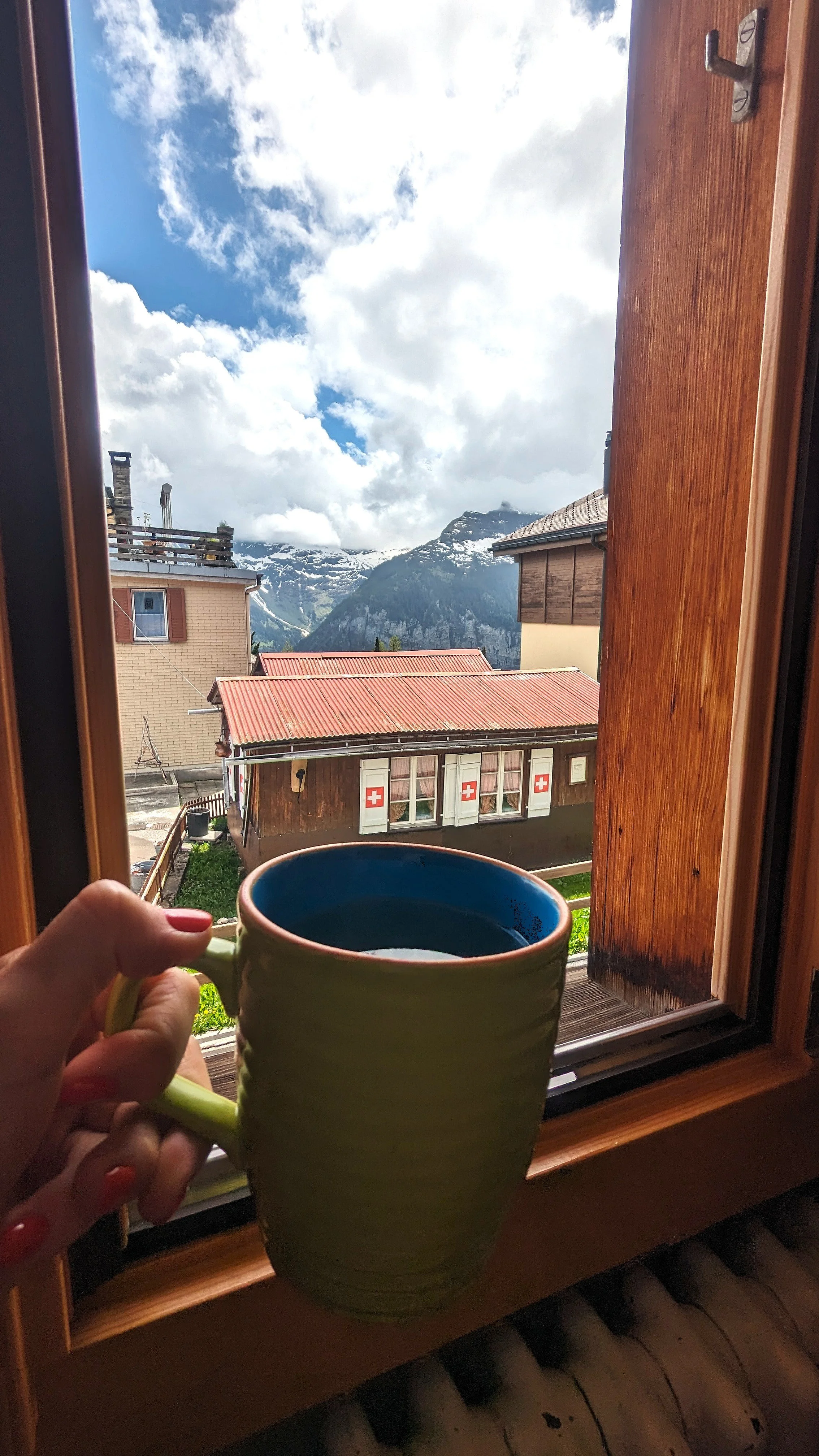
We arrived at the very start of the summer season which falls to the end of May. Our home base of Mürren, located 5300 ft above sea level, had spring blooms galore, while up 6500+ ft the snow cover was still going strong. Multiple transportation and hiking trails on both sides of the Lauterbrunnen valley were not open yet.
Just as we arrived in Mürren the sun came out and we were rewarded with a stunning view of the Eiger, Mönch, and Jungfrau peaks. According to the local legend, the monk guarded the maiden from the ogre, but there are a few more theories here.
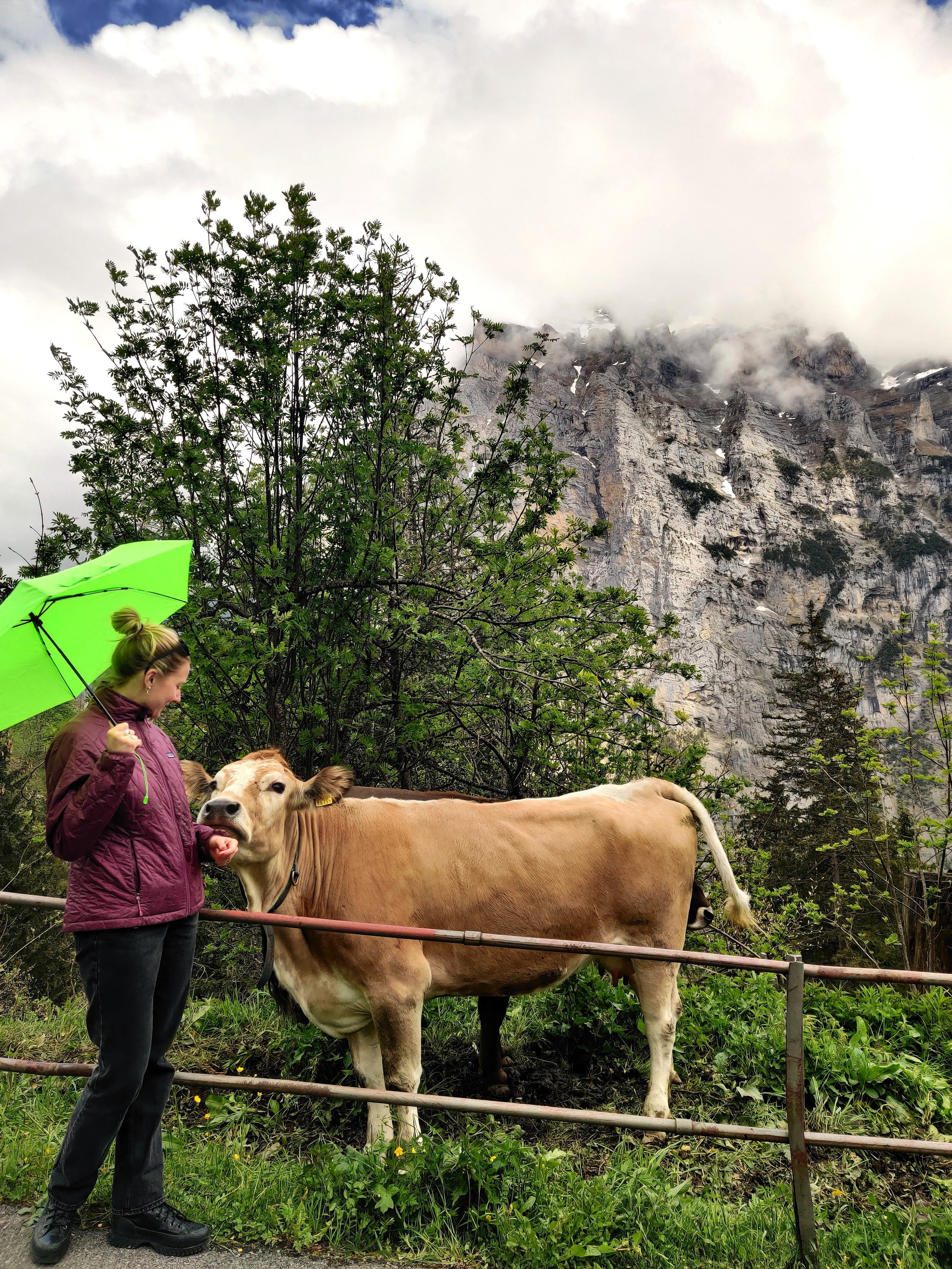
After we checked into our guesthouse the clouds rolled in and a heavy rainfall started. The weather can change in a matter of minutes. We walked down to Gimmelwald, an even smaller Alpine village at 4500 ft. While the rain clouds were covering the tops of the mountains we enjoyed meadows full of flowers and the grazing cows and sheep.
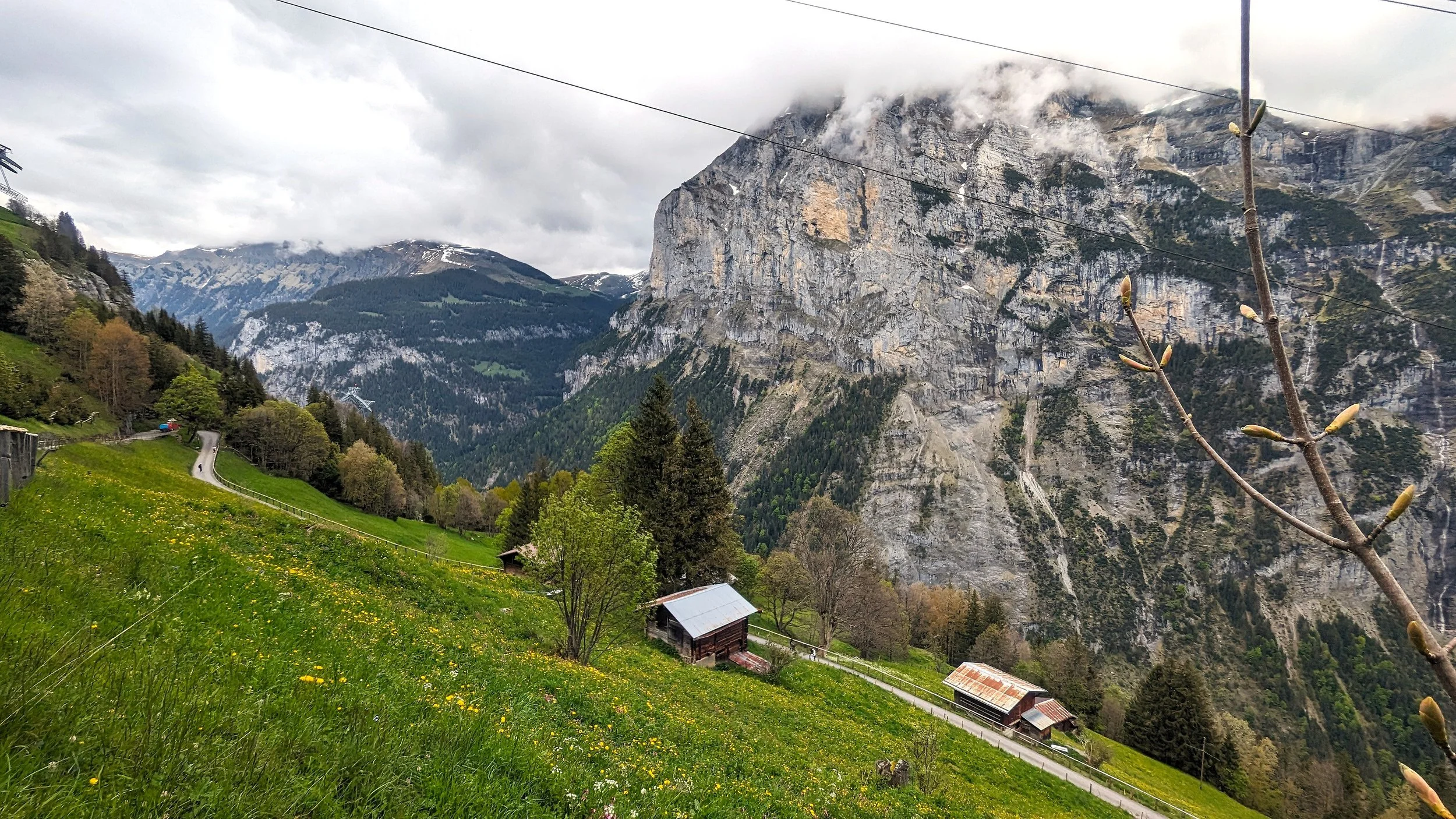
On the way to Gimmelwald
On our way down we stopped at one of the multiple farm stands in the area. Most of them feature cheese, but this one also had the most beautiful Alpine blossom tea. We thought it might make a great gift for friends back home but ended up keeping it for ourselves.
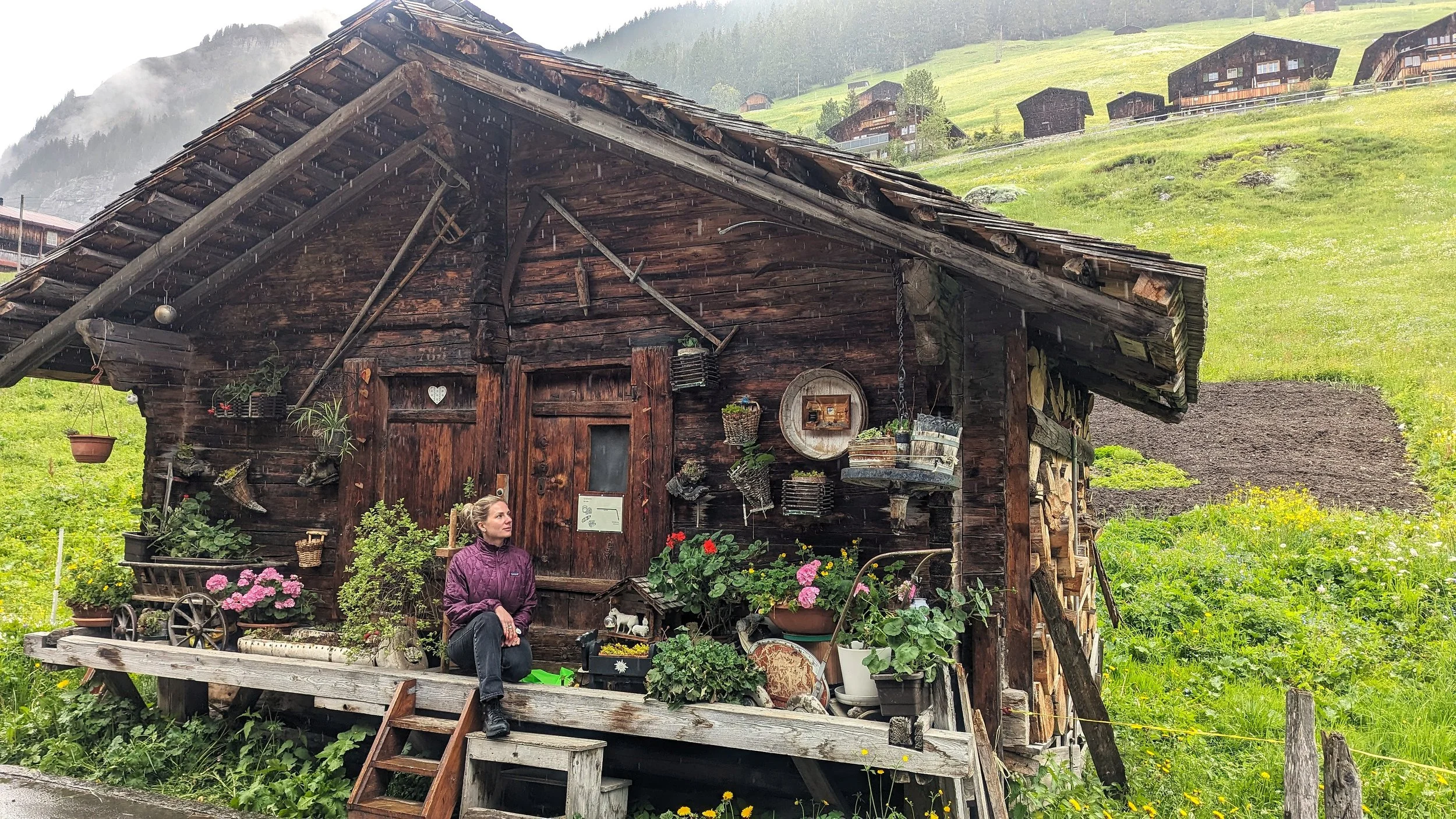
In Gimmelwald we followed Rick Steves’ walking tour and learned a lot of fun tidbits along the way. The village is really small so this allowed us time to pause and notice the cow bells, the stacked wood and the cheese storage huts on stilts.
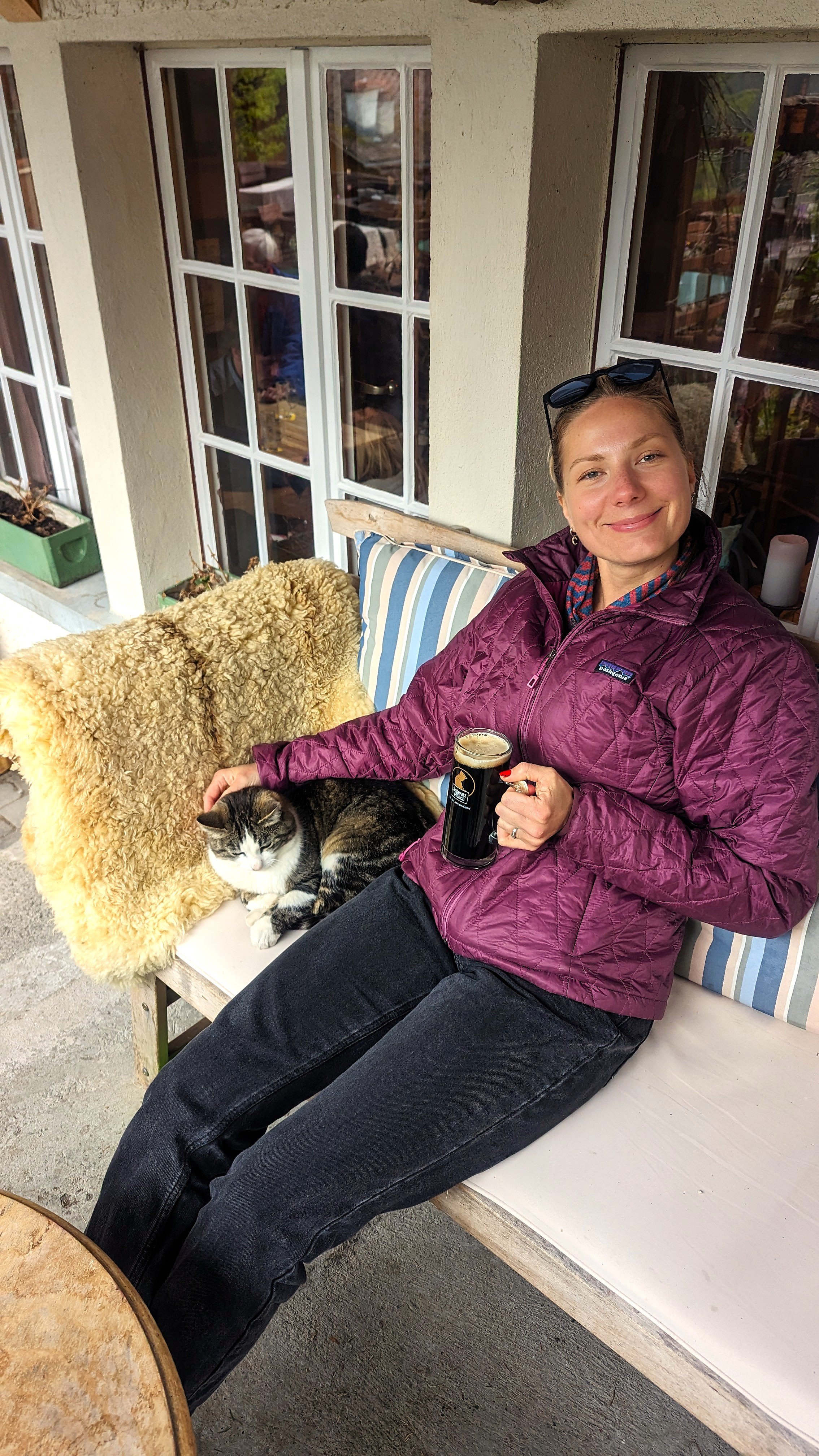
As the rain intensified we stopped in at the Pension Gimmelwald to try their famous Schwartz Mönch beer. On their covered terrace we enjoyed shelter from the rain, a delicious beverage, and the company of a friendly cat. The cat turned violent shortly thereafter and even drew some blood. But the magical atmosphere could not be spoiled by a mercurial feline.
Mürren to Winteregg and Allmendhubel
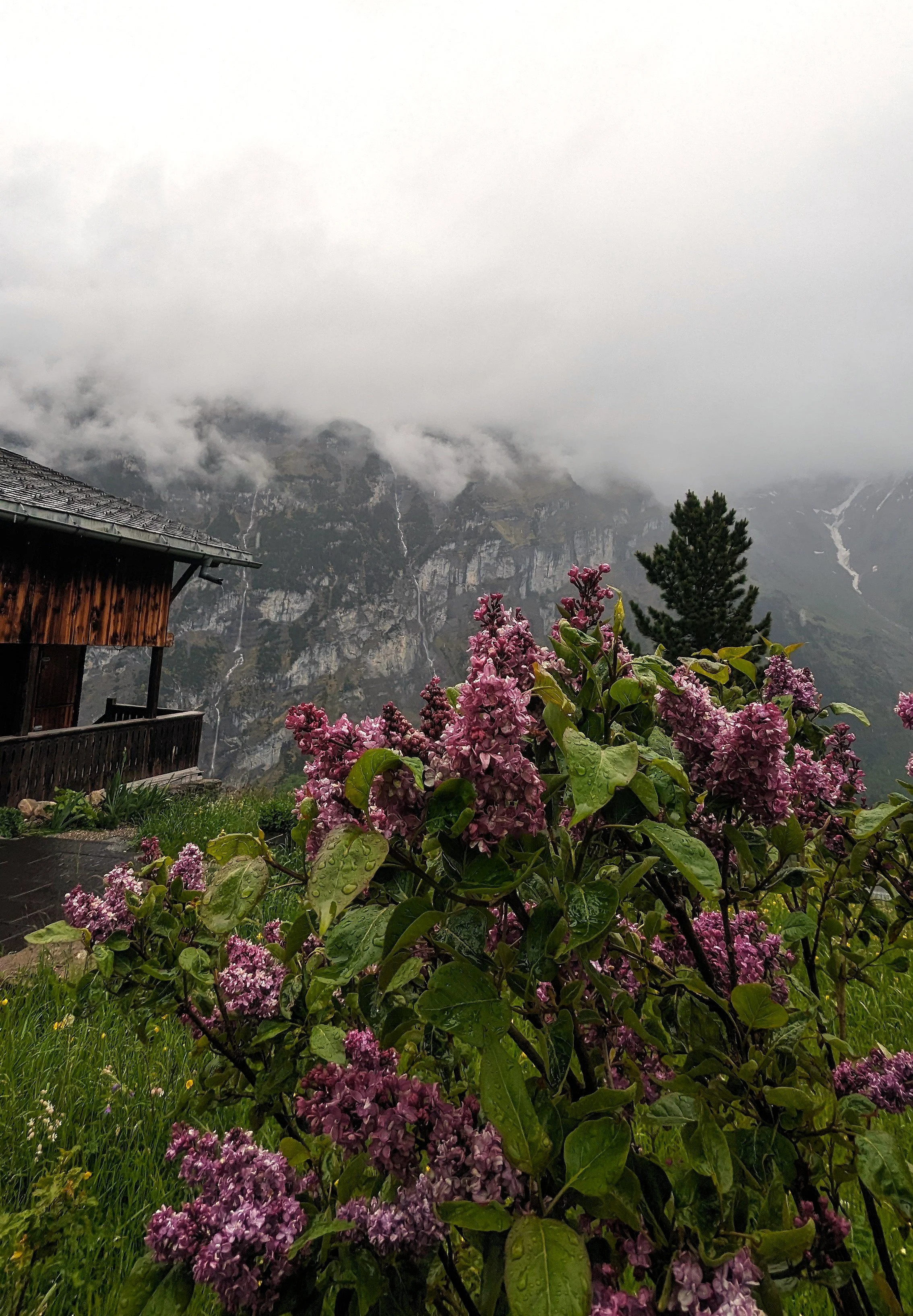
The following morning the rain was coming down strong, the fog clouds were limiting visibility, and the temperature hovered around balmy 38-40 degrees.
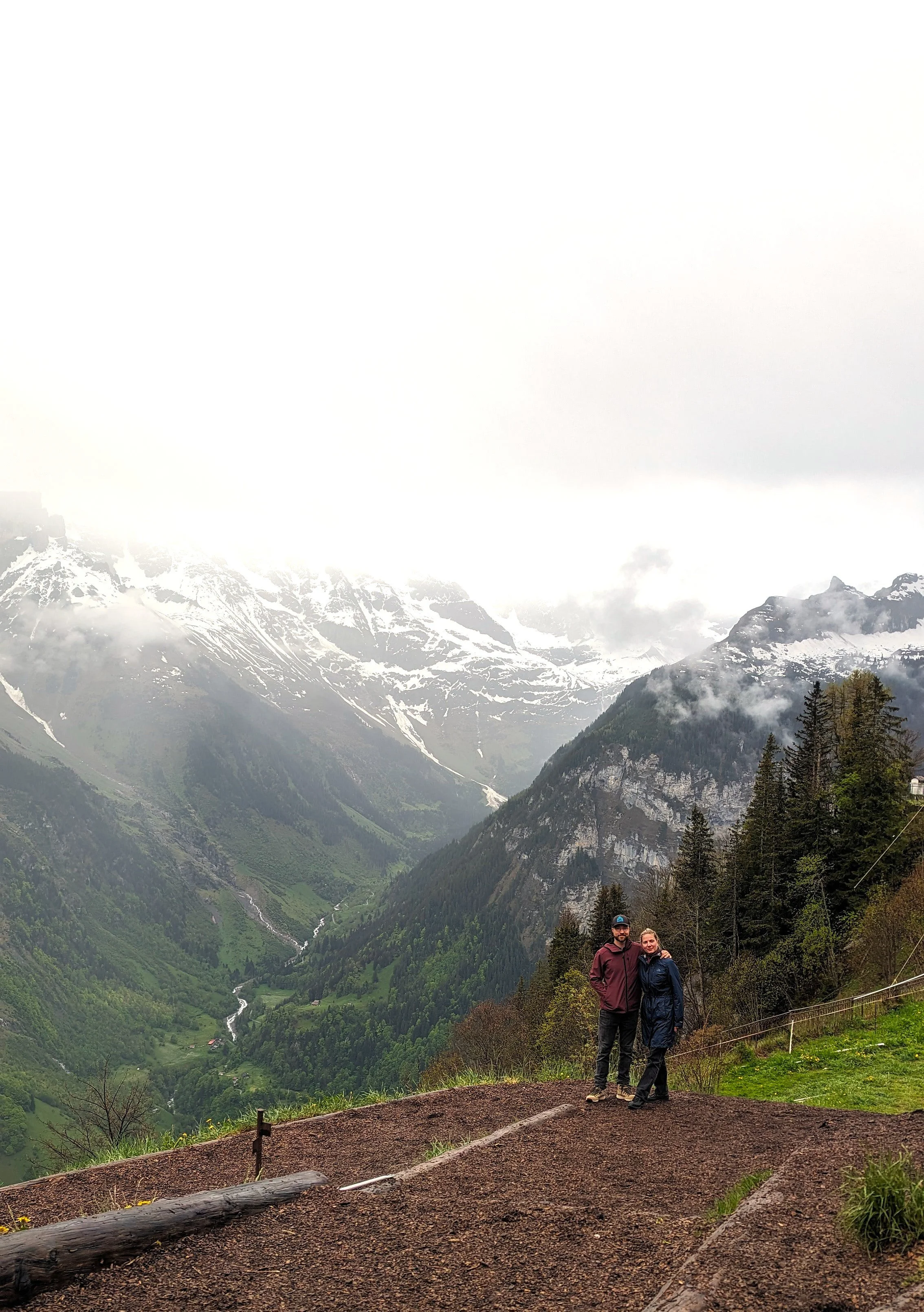
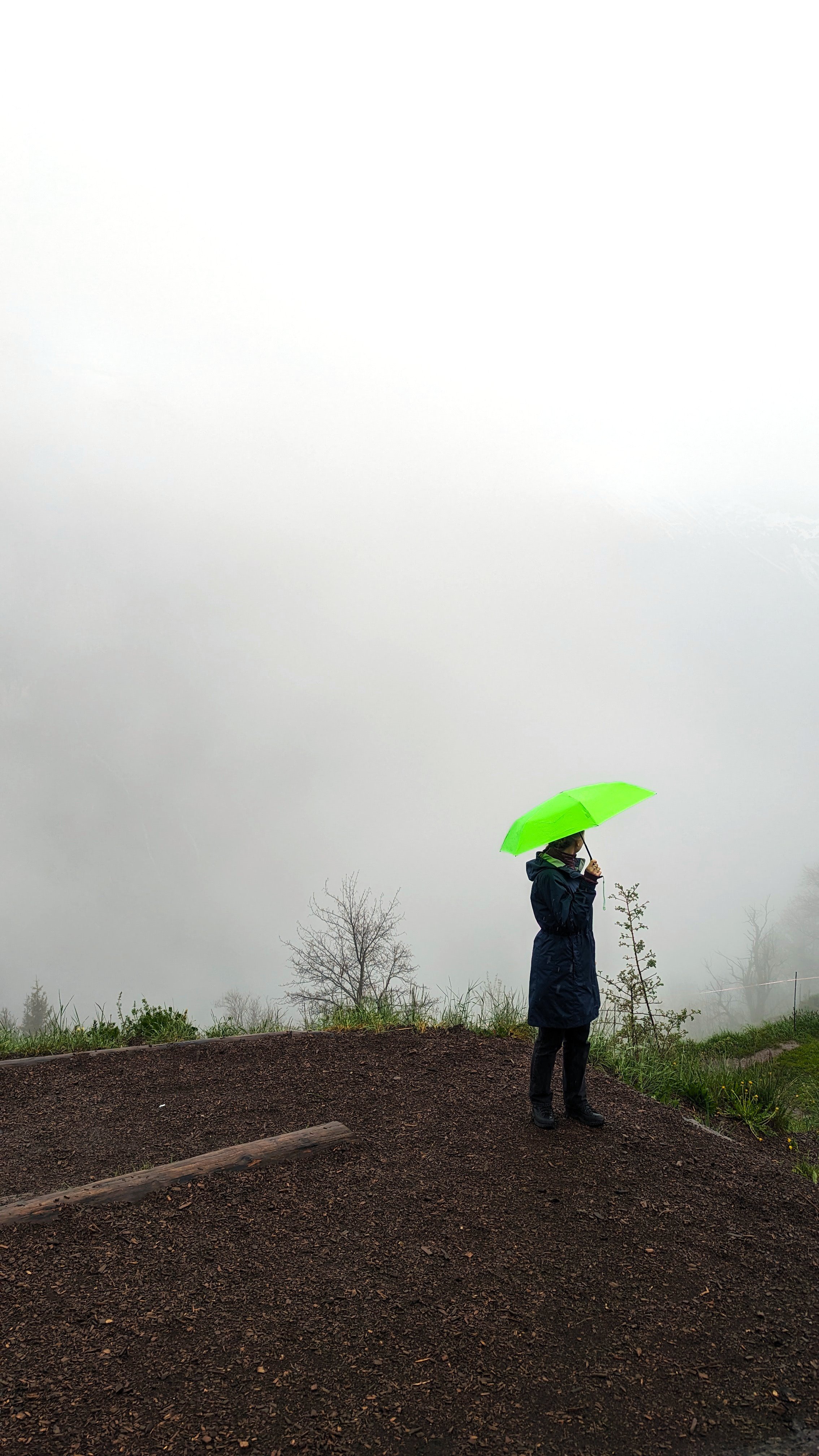
Given the weather, we asked our host about stoves or bonfires. She laughed and said, “You came in summer, so of course there are none”. Looking out on the dreary rainy 38-degree day, we nodded and quietly resumed our breakfast.
Undeterred, we set off to at least find a hot cup of cocoa with a view.
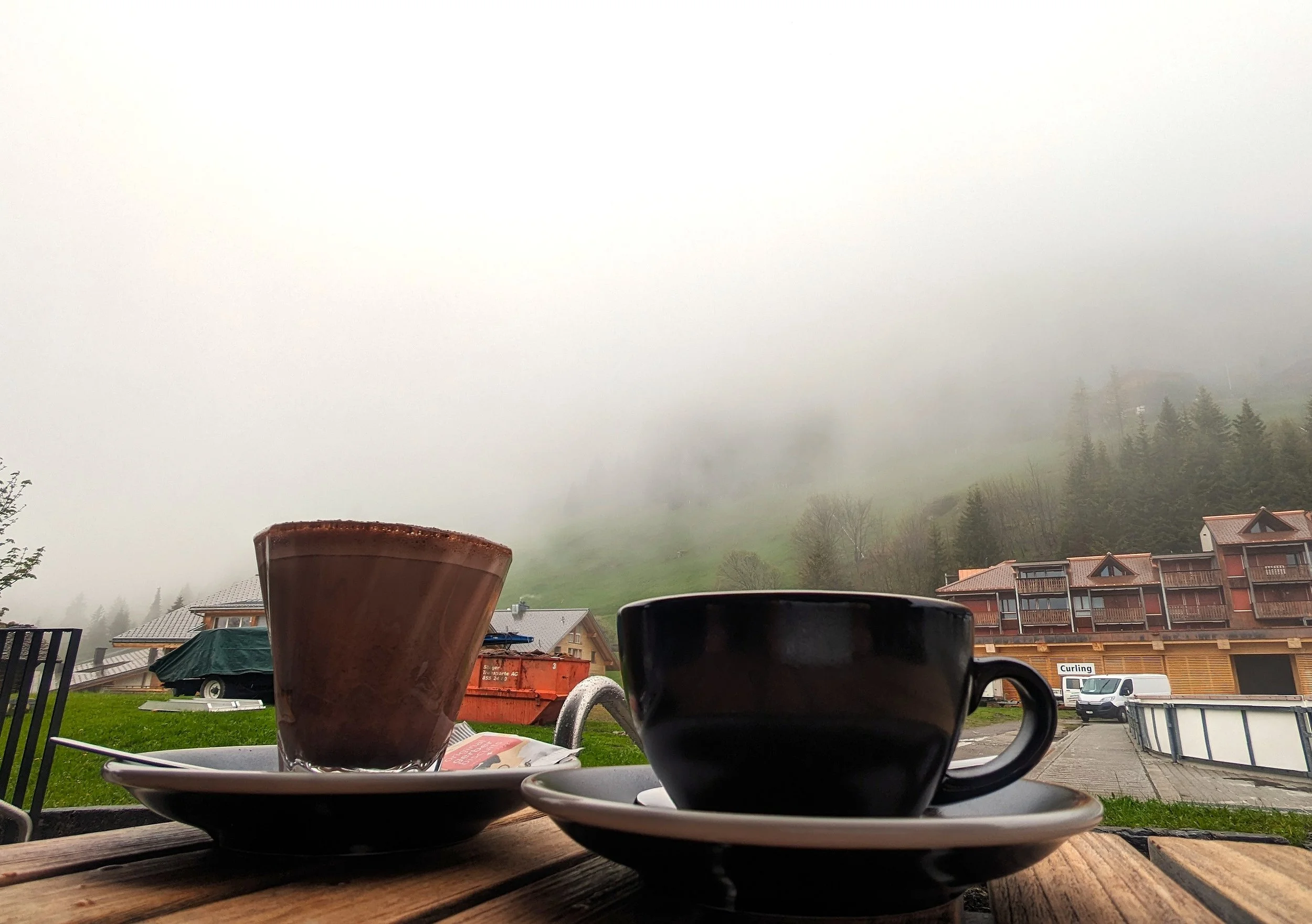
Hot cocoa with a view
Mission accomplished! Afterwards we decided to walk along the rail track (not in use due to ongoing construction) to the Winteregg station. This is a level paved path, and given the weather we were alone the whole way there and back.
Multiple scenic overlooks with benches punctuate the walk. Of course, not being able to see much farther past our noses, we focused instead on the alpine forest next to us. The trees growing at a steep incline, the mosses, the tiny flowers, and the multitude of little streams and waterfalls more than made up for the lack of the mountain view.
Winteregg features a restaurant, which was closed, and a cheese farm, which was also closed. We peeked inside the windows at the cheese making equipment, and purchased some Alpkäse from the self service fridge.
Hopeful that the weather would improve for the afternoon, we took a short funicular from Mürren to Allmendhubel. The top station (6300 ft) is famous for its restaurant and a fun flower themed children’s playground. We had a small lunch and enjoyed the warmth of a wood fired stove happily crackling inside (found one!).
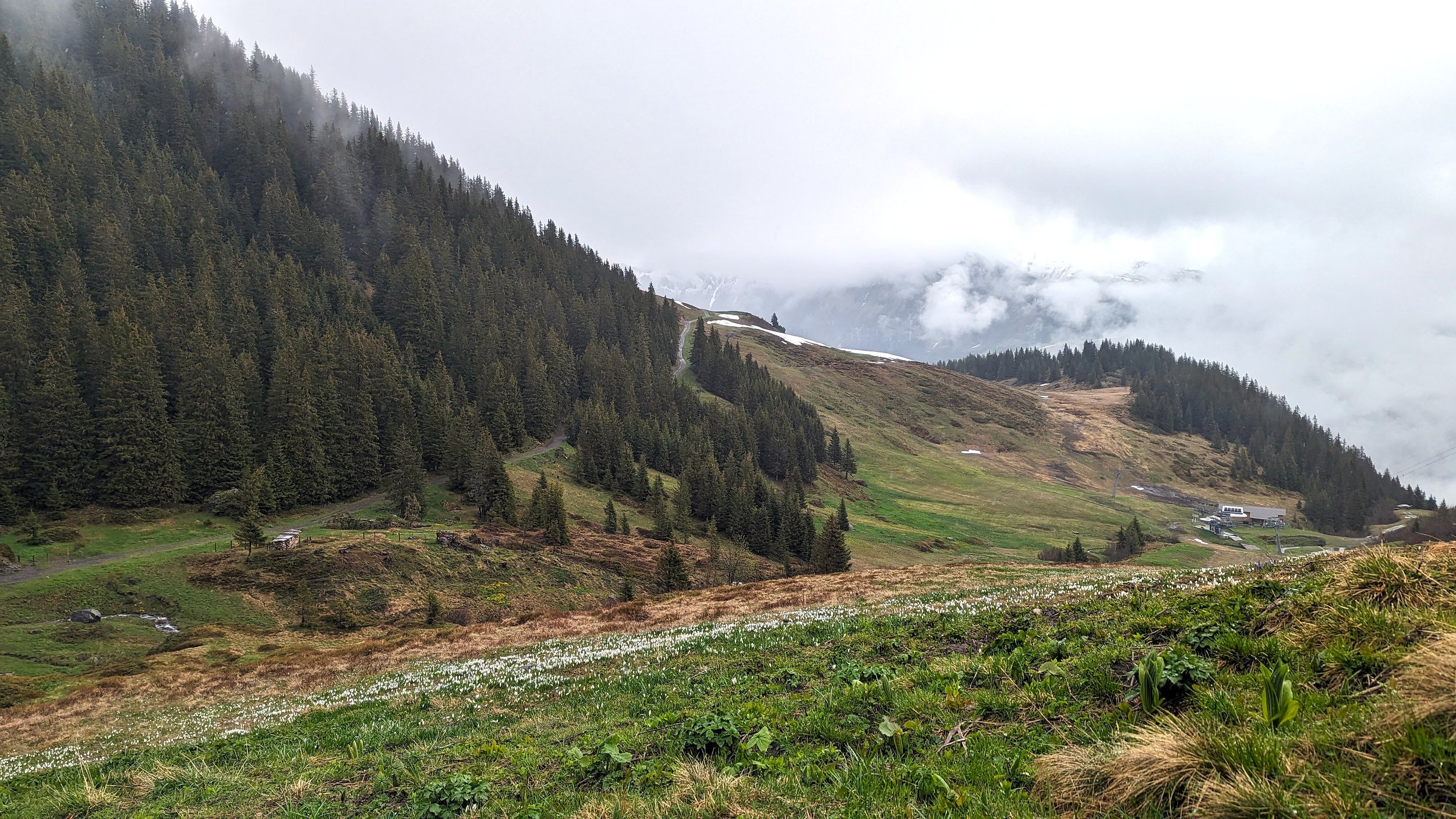
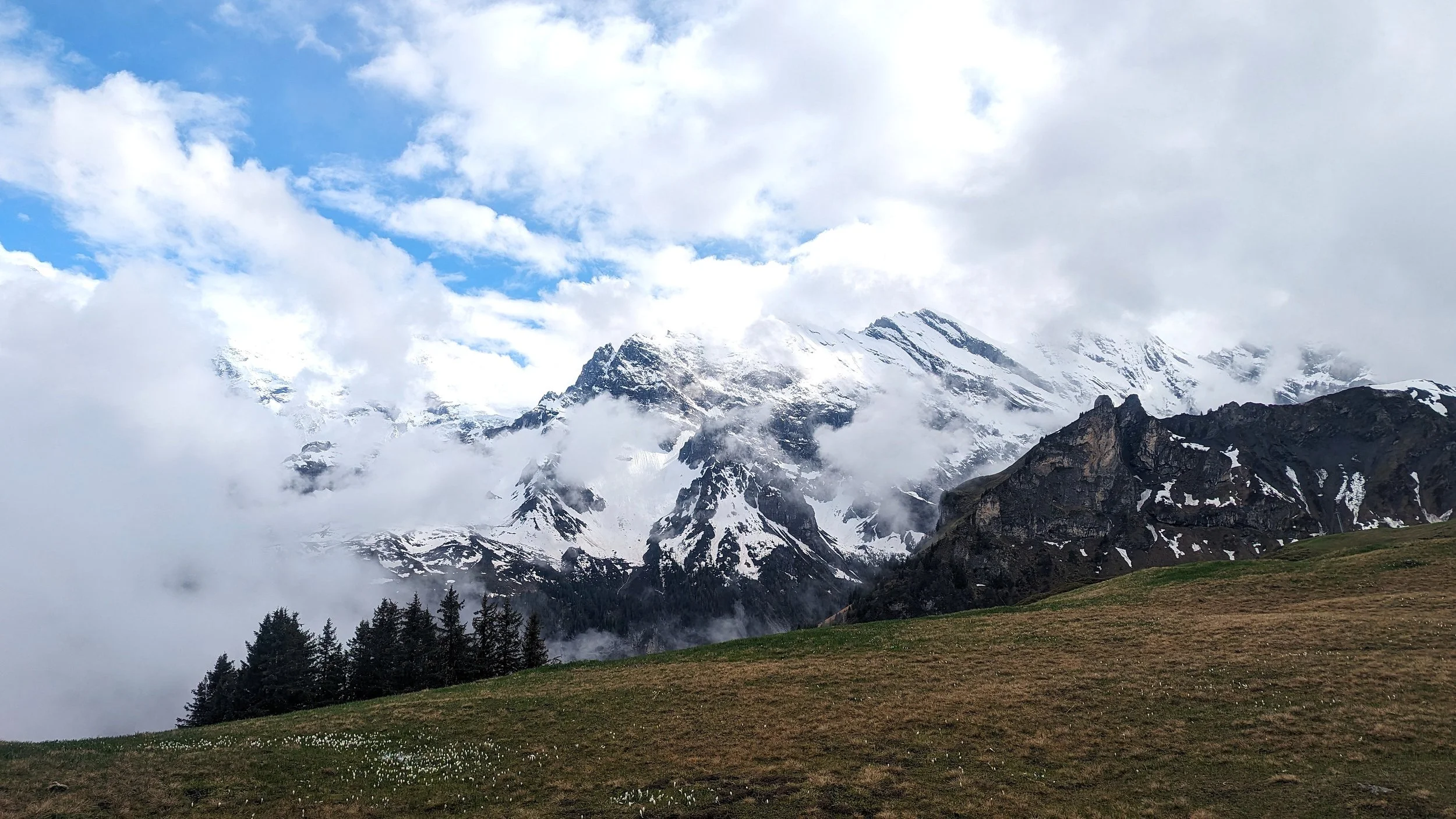
From Allmendhubel we hiked the North Face trail back down to Mürren. We passed large patches of snow on our way. The spring at this altitude was weeks behind Mürren and Gimmelwald. Our reward for venturing out in the rain was white crocus flowers carpeting the meadows and hillsides we passed. This was one of those once in a lifetime experiences you read about but never think you’ll see for yourself.
As we continued on the rain stopped, the sun peeked out, and we finally got a perfect view of all the peaks and the blue sky. We even saw (and heard!) an avalanche sliding off the top of Jungfrau.
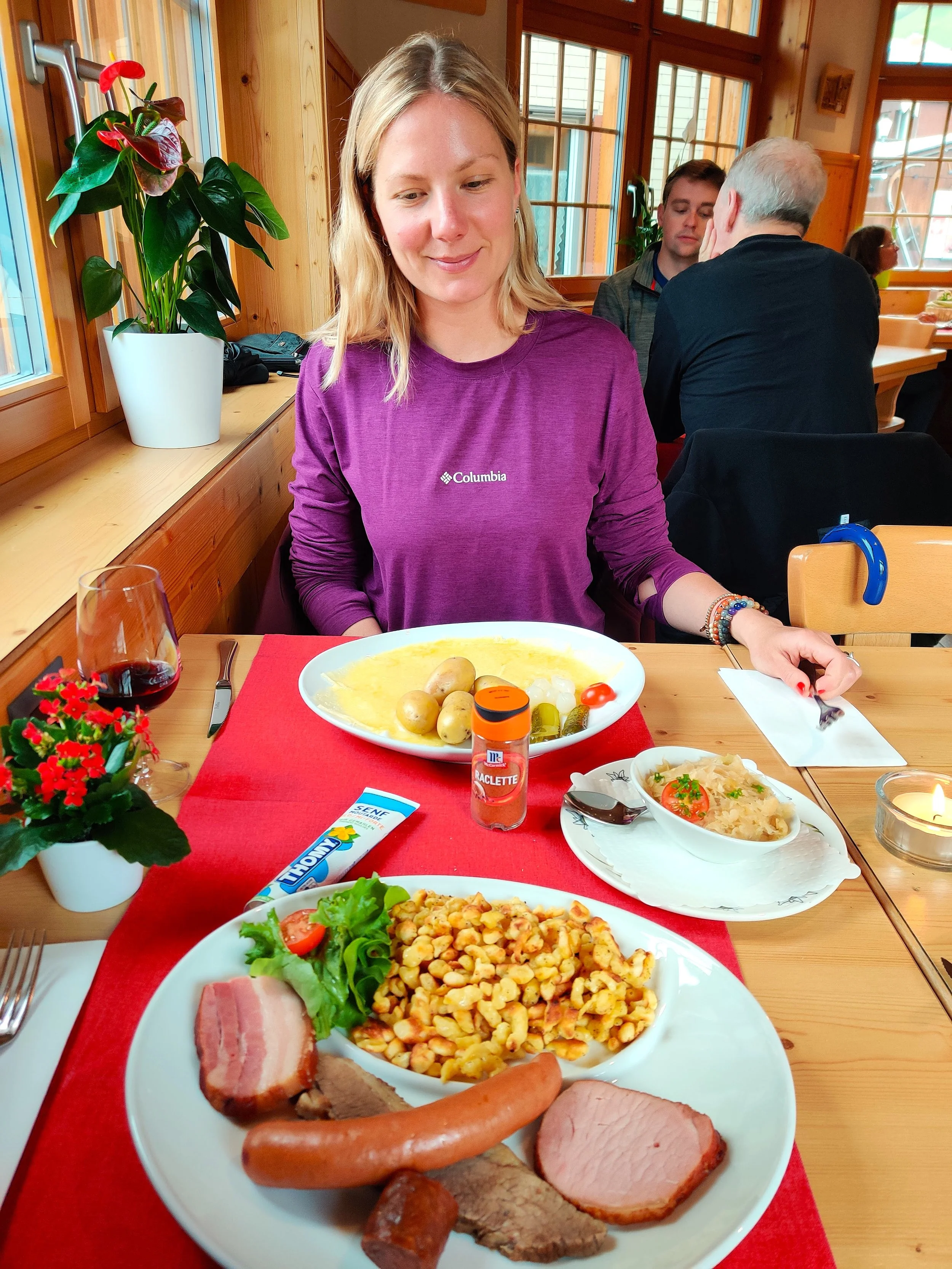
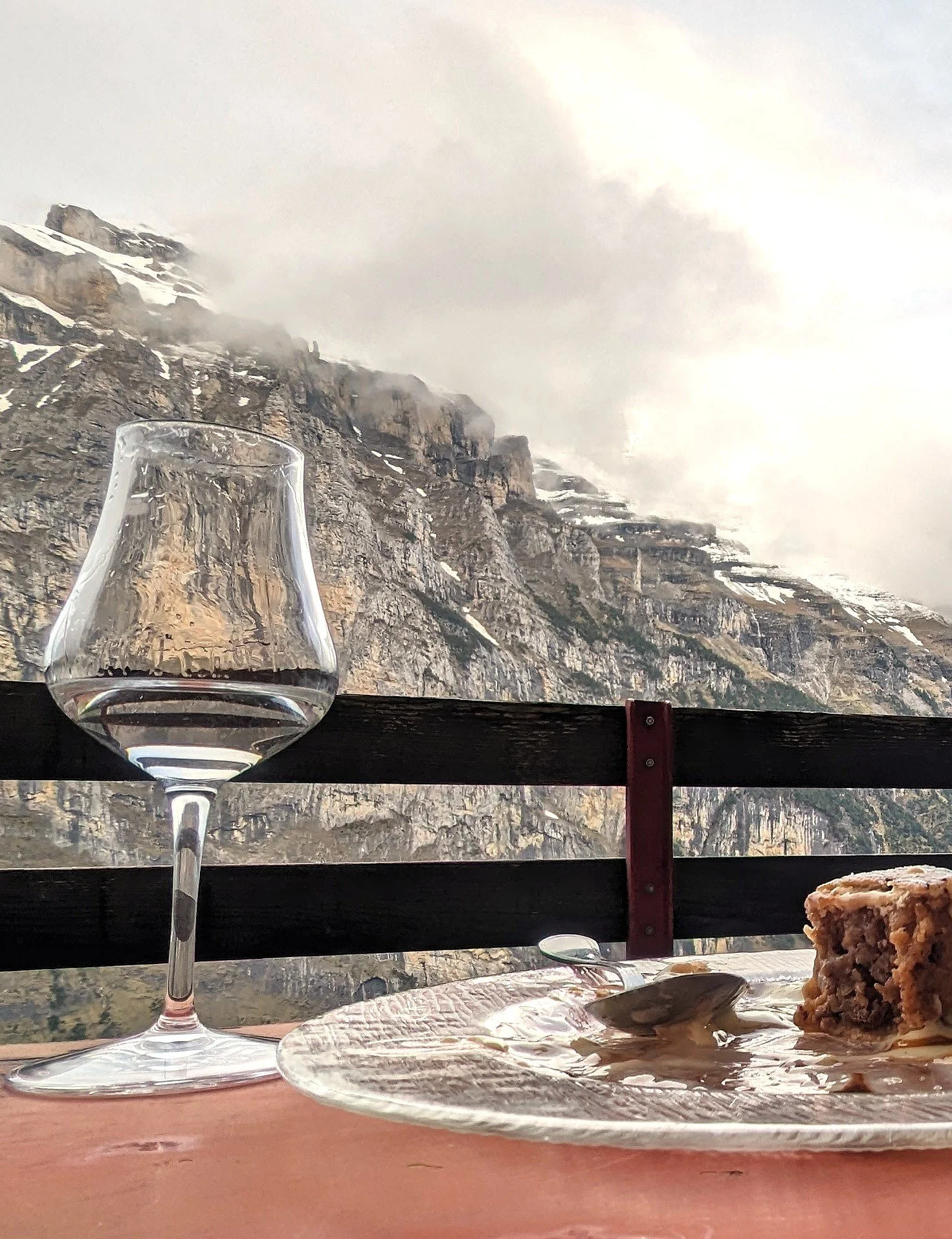
We capped off the day by digging into some authentic Swiss food at Stägerstübli followed by an apple strudel and delicious Pflumli plum brandy on the patio of the Edelweiss restaurant.
Lauterbrunnen Valley
Waking up to another cloudy day on the mountain, we made our way down to Lauterbrunnen to meet a friend of ours who drove down from Germany.
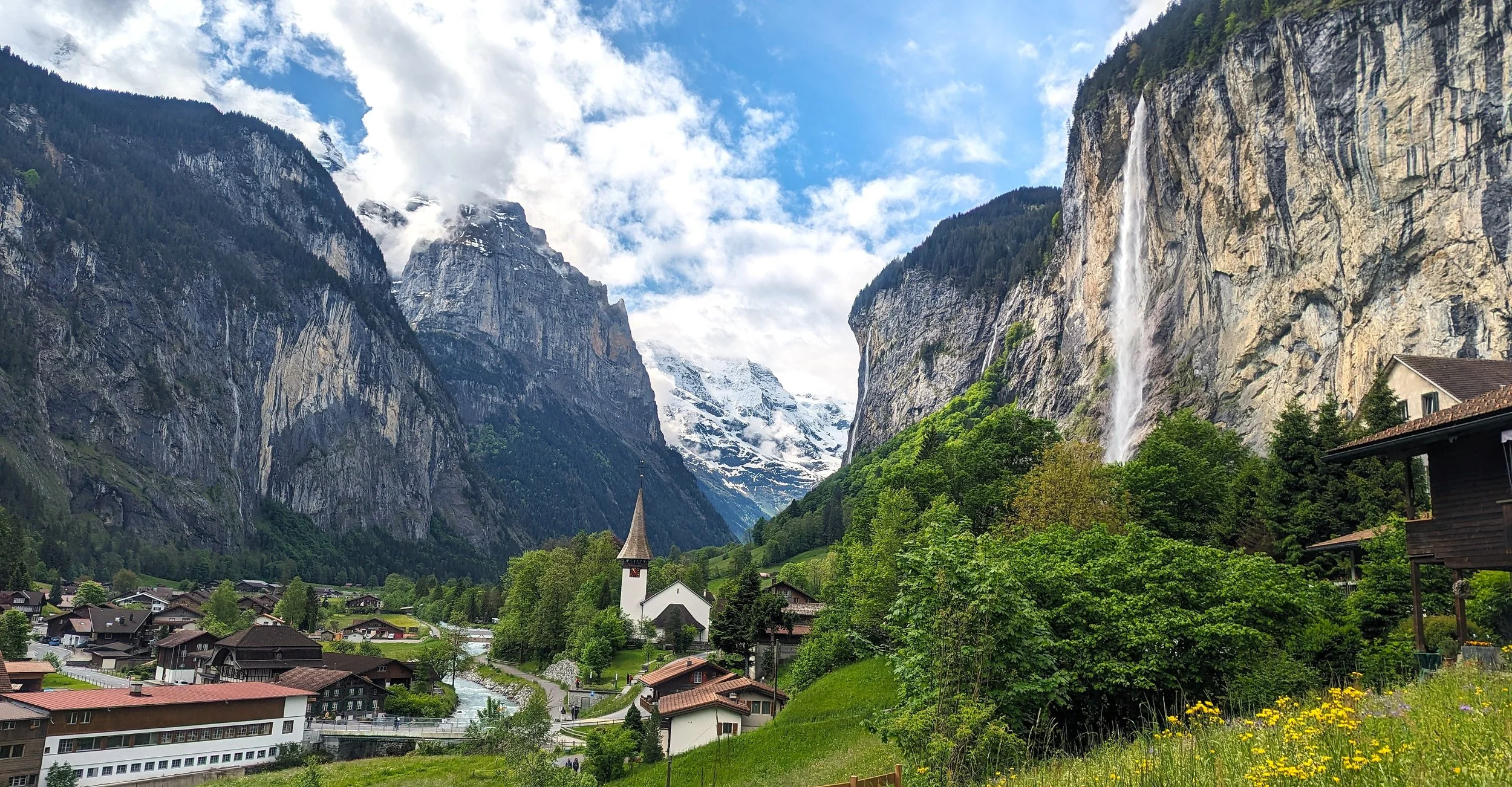
The Lauterbrunnen valley is known as the valley of 72 waterfalls and as a place that inspired J. R. R. Tolkien to create Rivendell, the mythical Elven land of the Middle Earth.
The beauty is stunning and inspiring. Even on a cloudy day you can see dozens of waterfalls plunge straight down the vertical face of the surrounding cliffs. The blooming meadows below are made even more picturesque by the presence of ubiquitous cows.
Contrary to what some might assume, the Alpine farmers here do not make a lot of money but are instead subsidized by the government and maintain the profession out of ancestral tradition. And we are lucky they do! The melodious jingling of cow bells blends well with the sounds of waterfalls to create an unforgettable memory of the perfect Alpine adventure. I highly recommend reading Rick Steves about the local cow culture to gain a better appreciation of the region, where local animal rights laws are among the strictest in the world. In fact, all animals in Switzerland have to be treated with dignity, and cows must be allowed to spend 26 days per month on pasture in the spring and summer and 13 days per month on pasture in the fall and winter.
The town of Lauterbrunnen is centered around the main street, crowded with tourists and overrun by lodging options, restaurants, and souvenir shops. We even heard the town is considering implementing an entry day pass for a small fee similar to Venice to help balance the overload. Needless to say, we did not linger. On our way out of town we stopped by this popular scenic overlook and then continued south along the river.
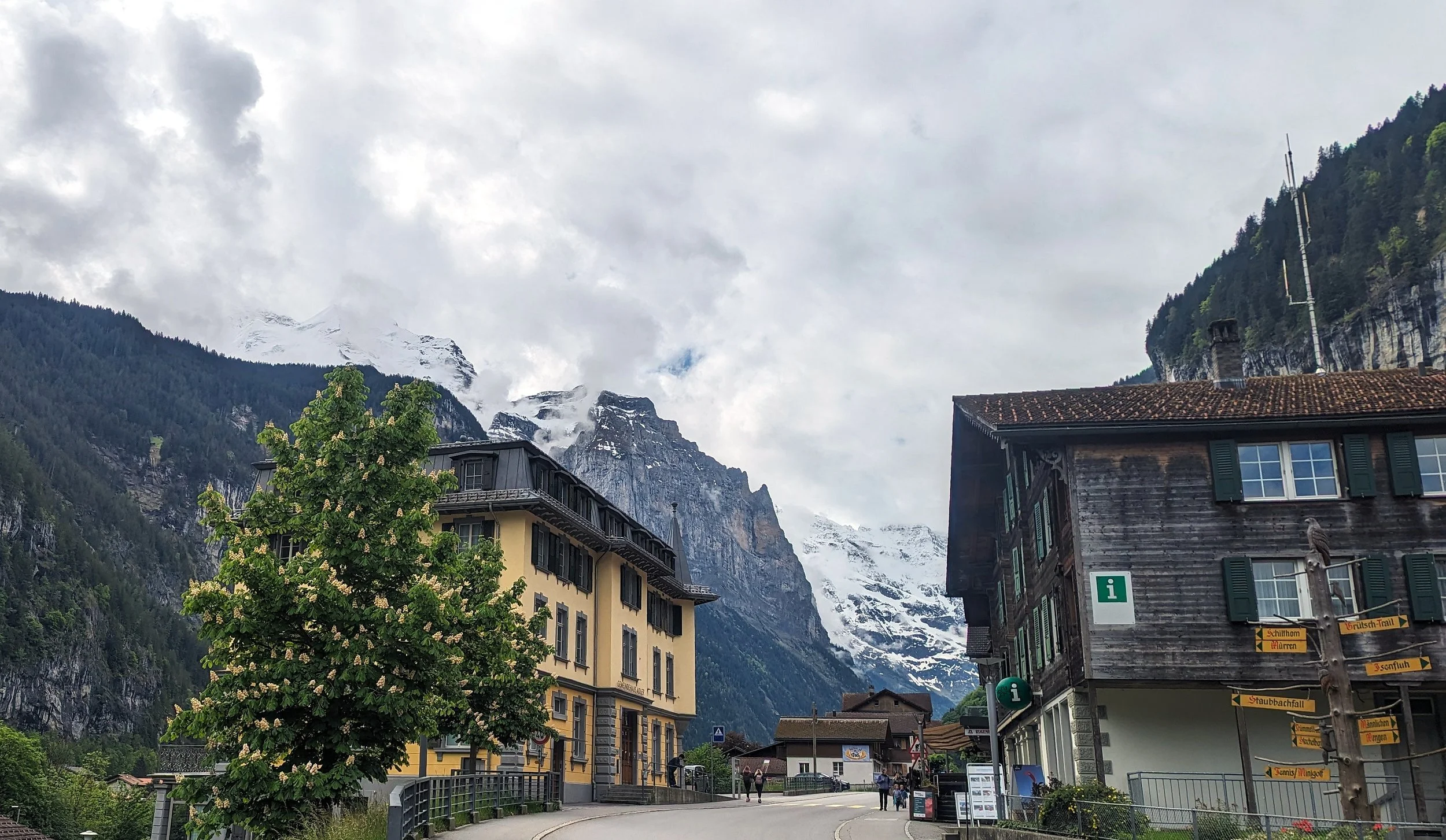
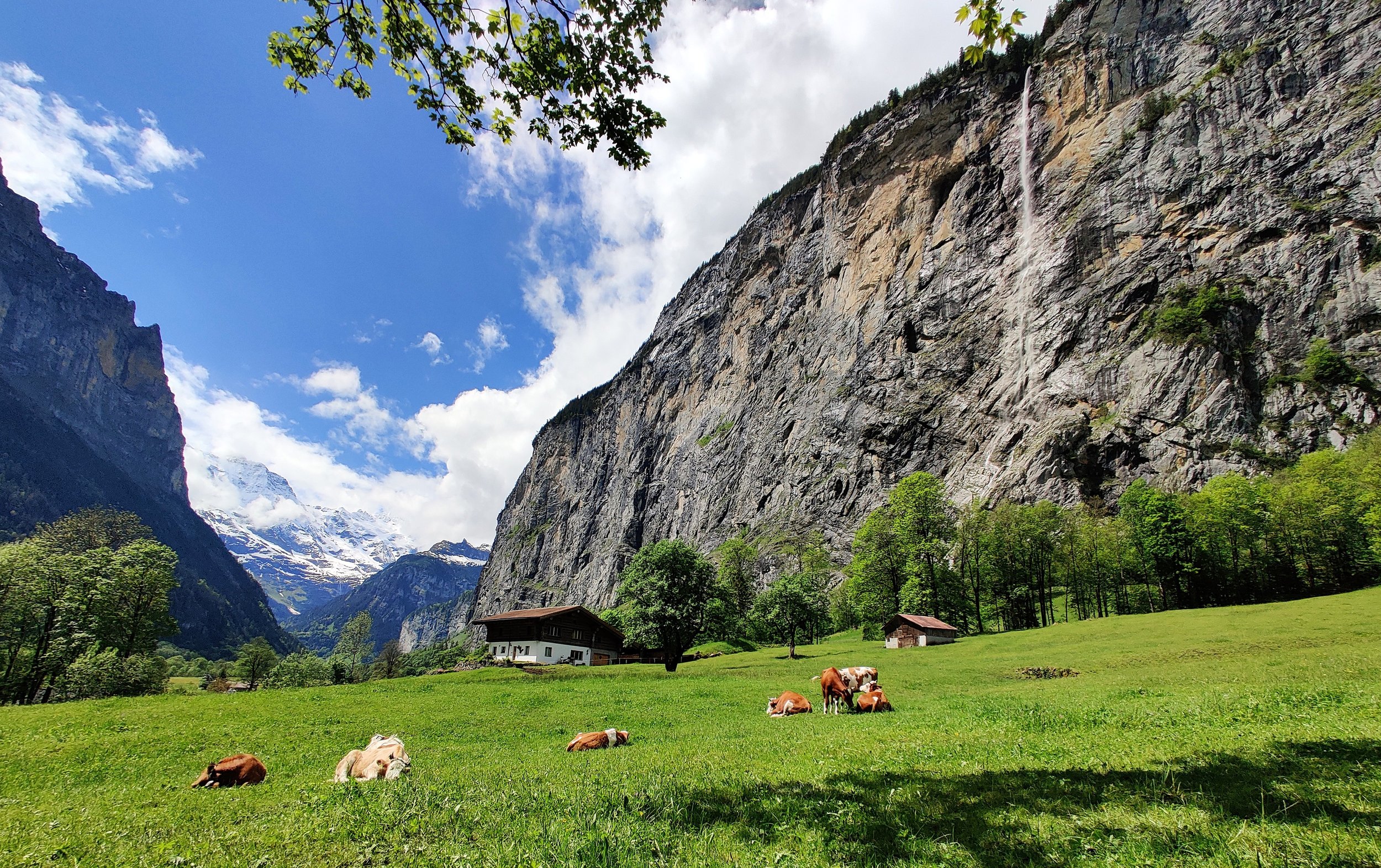
At the church the paved walking and biking trail splits off the main road. As elsewhere in the area you can find many farm stands with cheese, jam, and other local goodies, which make for an excellent picnic. There are even spaces to grill with the view.
A peaceful day in the valley was perfect to wrap up our time in Switzerland. It was time for us to move to warmer and drier places. The next day we would continue on to Italy.
